
The Moveee team
Free coaching · a real route for every ride
Ask cyclists whether the trainer or the open road builds a better rider and you'll start a fight. But it's a false binary. Almost every fast rider — from the winter-grinding amateur to the WorldTour pro — uses both, and switches between them on purpose. The real question isn't "which is better?" It's "which one should I choose today, for this session?" Get that call right week after week and you get the best of both: the precision of the pain cave and the specificity of the road.
- Go indoor when you want precision, time-efficiency, or the weather is against you.
- Go outdoor when you need bike skills, event specificity, or a hit of long-term motivation.
- Do both. The strongest weeks blend a couple of tight indoor sessions with the long, skill-rich rides only the road can give.
The case for indoor
The trainer's superpower is control. In ERG mode the smart trainer simply holds the target watts — you can't slack on a climb or freewheel down the other side, so a prescribed interval is executed exactly as written. There are no junctions, no traffic lights, no descents where you stop pedalling. That means an indoor hour can pack in more genuine time-in-zone than a 90-minute outdoor ride, because almost none of it is wasted coasting. Add clean, repeatable data (same trainer, same room, same position), weatherproofing, and the safety of never sharing a lane with a truck, and you have the ideal tool for hard, specific interval work.
- Total control — ERG holds the watts for you
- Higher quality per minute — no coasting or stops
- Weatherproof and safe, any hour of the day
- Precise, repeatable intervals executed to the letter
- Clean data from a consistent environment
- Easy to squeeze into a lunch break
The case for outdoor
The road teaches things a trainer never can. Bike handling — cornering, braking, descending, holding a wheel in a bunch — is a skill you only build by doing it at speed in the real world. Outdoor riding is also where specificity lives: if your goal event has a 20-minute climb, cross-winds and rough tarmac, the only true rehearsal is riding climbs, wind and rough tarmac. Real-world power is variable and messy in a way that builds durability, and — not to be underrated — sunlight, scenery and fresh air are what keep most riders mentally fresh and coming back season after season. A plan you enjoy is a plan you'll actually finish.
- Bike handling — cornering, descending, pack skills
- Event specificity — real climbs, wind and surfaces
- Variable real-world power builds durability
- Mental freshness and genuine enjoyment
- Sunlight, scenery and fresh air
- The long endurance rides that anchor fitness
Head to head
The same seven dimensions, side by side. clear edge · partial · weak. Neither column sweeps the board — which is exactly the point.
| What matters | Indoor | Outdoor | Why |
|---|---|---|---|
| Intensity control | ERG mode holds the exact watts; the road argues back. | ||
| Time efficiency | No coasting, no junctions — more time in zone per minute. | ||
| Skills & handling | Cornering, descending and pack craft only happen outside. | ||
| Long-term motivation | Sunlight and scenery keep most riders showing up for years. | ||
| Weather-proof | Ice, dark and storms never cancel a trainer session. | ||
| Event specificity | Real climbs, wind and surfaces prep you for the real thing. | ||
| Cost to start | A bike and a road cost nothing; a smart trainer doesn't. | ||
| Clear edges | 3 | 4 | Split roughly down the middle — use each for what it does best. |

When to choose which
Most decisions come down to four everyday situations. Find yours:
Short weekday intervals
Go indoor. When you've got 60 minutes and a hard interval set to hit, the trainer's precision and zero wasted time make it the obvious call.
Long endurance & skills
Go outdoor. Base miles, handling practice and durability are all best built on real roads — and they're far more pleasant there.
Dark, wet or icy
Go indoor. Don't risk a crash or bail on the session — a warm, safe, controlled hour keeps the plan on track when the weather doesn't.
Event-specific prep
Go outdoor. Rehearse the actual climbs, cross-winds, surfaces and group dynamics you'll face on the day. Specificity wins races.
The hybrid week
You don't have to choose in the abstract — you choose seven times a week. A common, well-balanced pattern puts the hard, precise quality indoors (two sessions) and the long and skill-based riding outdoors (one to two rides, including the all-important long ride). Here's what a typical week can look like:
Legs up. Optional easy spin or stretch.
45–60 min, ERG-controlled. The hardest quality of the week.
60–90 min Z2 outside — recovery you actually enjoy.
60 min of precise sub-threshold blocks, no traffic.
Full recovery before the weekend load.
2–4 hr on real terrain — the cornerstone of the week.
Cornering, climbs or a social bunch ride. Specificity.
That's two focused indoor sessions, two to three outdoor rides, and two days of rest — roughly 40% of ride time indoors, 60% out. Shift the balance toward the trainer in deep winter and toward the road as your event approaches and specificity matters more.
Many riders find their indoor power reads roughly 5–10% lower than the same effort outdoors — heat build-up, limited cooling and a more static position all take a toll. If you test your FTP outside and train to it indoors, the trainer numbers can feel brutally hard. Consider setting slightly lower indoor targets, run a fan, and don't panic if the watts look smaller in the pain cave. Treat this as a general finding, not a hard rule — the exact gap is personal, so check your own data across both environments.
The bottom line
Indoor and outdoor aren't rivals — they're two tools for two jobs. Reach for the trainer when you need control, efficiency and a session that happens regardless of weather. Get out on the road when you need to handle a bike, rehearse an event, or simply remember why you ride. The riders who improve most aren't loyal to one or the other; they pick the right tool for each day and keep the whole week pointed at the same goal.
That's exactly how Moveee is built. For every training day it writes a structured workout and, for the outdoor ones, hands you a real, terrain-matched route to ride it on — build one in the route builder. When it's a trainer day, the same structured session goes straight to your head unit or Zwift, unchanged. So the plan genuinely doesn't care where you ride — indoors or out, you're always doing the right session. It's free, it learns your engine from your own rides, and you can start with Strava in a couple of clicks.
Sources 7
Where this article summarises a study, the study itself is linked — not a write-up of it.
- 1 Mieras ME, Heesch MWS, Slivka DR Physiological and Psychological Responses to Outdoor vs. Laboratory Cycling · Journal of Strength and Conditioning Research · 2014
- 2 Bertucci W, Betik AC, Duc S, Grappe F Gross Efficiency and Cycling Economy Are Higher in the Field as Compared with on an Axiom Stationary Ergometer · Journal of Applied Biomechanics · 2012
- 3 Périard JD, Eijsvogels TMH, Daanen HAM Exercise under heat stress: thermoregulation, hydration, performance implications, and mitigation strategies · Physiological Reviews · 2021
- 4 Laursen PB, Jenkins DG The Scientific Basis for High-Intensity Interval Training · Sports Medicine · 2002
- 5 Seiler S What is Best Practice for Training Intensity and Duration Distribution in Endurance Athletes? · International Journal of Sports Physiology and Performance · 2010
- 6 Thompson Coon J, Boddy K, Stein K, Whear R, Barton J, Depledge MH Does Participating in Physical Activity in Outdoor Natural Environments Have a Greater Effect on Physical and Mental Wellbeing than Physical Activity Indoors? A Systematic Review · Environmental Science & Technology · 2011
- 7 Atkinson G, Peacock O, St Clair Gibson A, Tucker R Distribution of Power Output During Cycling: Impact and Mechanisms · Sports Medicine · 2007
Your own roads, indoors, in a browser tab
Moveee Indoor pairs your smart trainer over Bluetooth and rebuilds a route you have saved as a 3D road — real gradients, ERG for the intervals, and the ride saved with full power data. Nothing to install. Free while it is in alpha.
Start an indoor rideKeep reading

Which cycling coach app should I use?
We put the 10 most popular cycling training apps of 2026 — paid and free — head to head, with honest pros and cons for each, so you can pick the right coach for the way you actually ride.

Browser vs installed app: why riding indoors shouldn't need a 12 GB download
Installed apps still win on a couple of things — but fewer than you'd think. Here's an honest head-to-head between browser-native and installed indoor cycling, feature by feature.
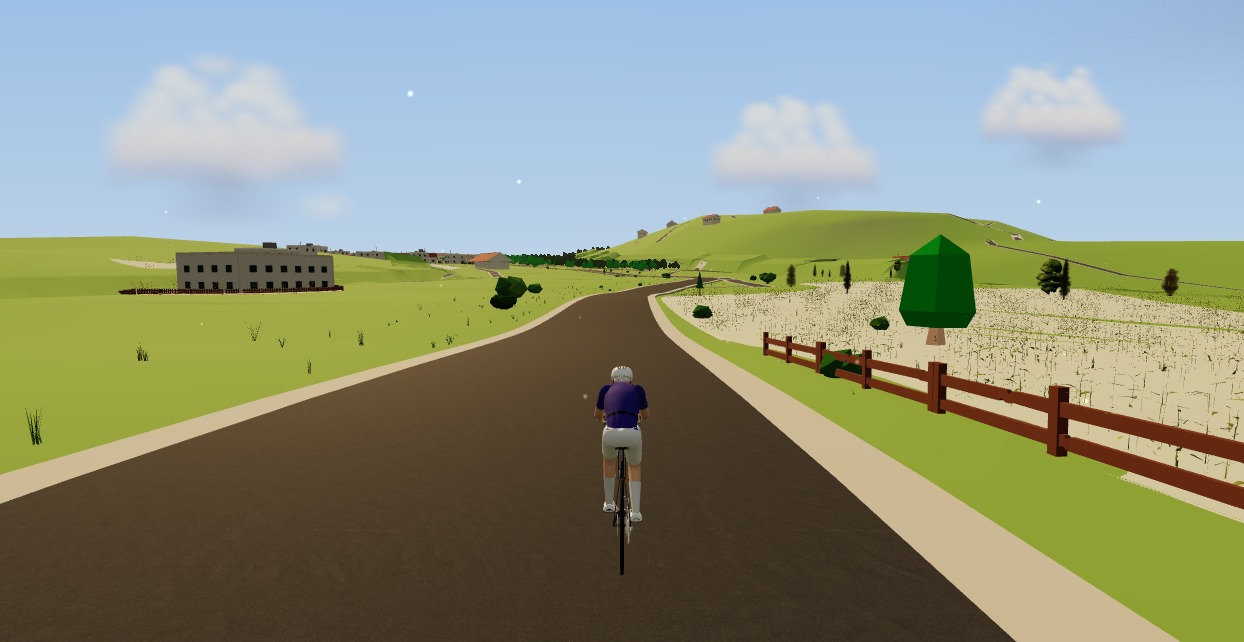
The best indoor cycling apps in 2026 (an honest round-up)
Zwift, TrainerRoad, Rouvy, MyWhoosh and the rest — what each one is actually for, what it costs, and how to pick the app that matches how you like to ride indoors.
How to use an indoor cycling app without a smart trainer — a speed sensor is enough
A £30 wheel speed sensor turns any dumb trainer into a real route in a 3D world, with the ride saved to your calendar. What you need, how to set it up, and the one thing about hills you should know before your first session.

Turn a dumb trainer smart with a power meter and your browser
You don't need to buy a smart trainer to train with power indoors. Here's how to turn a dumb trainer smart with a power meter (or speed sensor) and a free browser app — including how virtual power fills the gap if you have neither.

An indoor cycling app for Windows with nothing to install
No admin rights, no 12 GB download, no launcher updating itself before every session. Here's how to run a full indoor cycling app on Windows with nothing to install — a browser tab, your smart trainer, and a real 3D road.

How accurate is your smart trainer's power? (and why it disagrees with your power meter)
Your trainer says 250 W, your pedals say 262 W — and neither of them is lying. What the accuracy claims on the box actually mean, why drivetrain loss makes a hub always read lower than a crank, when calibration matters, and why consistency beats absolute truth for training.
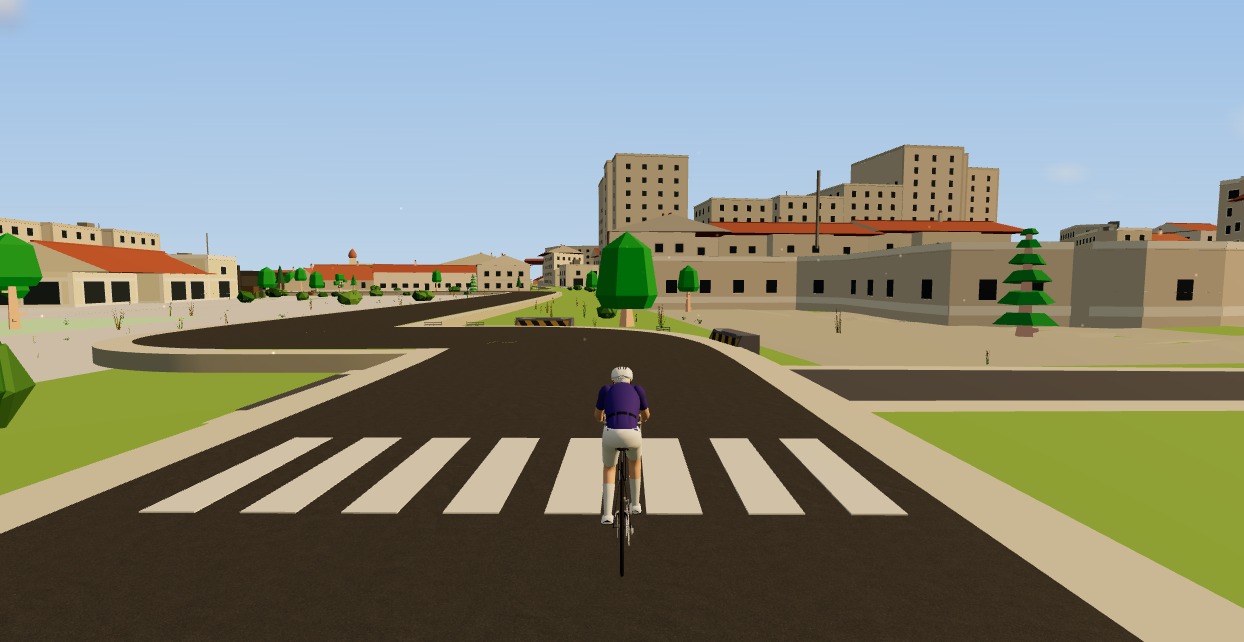
No ERG mode? How to use your gears as the resistance dial on a dumb trainer
How to run a structured indoor session with no power and no ERG — the way everyone did it until about 2015. Four sessions that work, how to steer by heart rate despite its lag and drift, and the one caveat about your training plan.
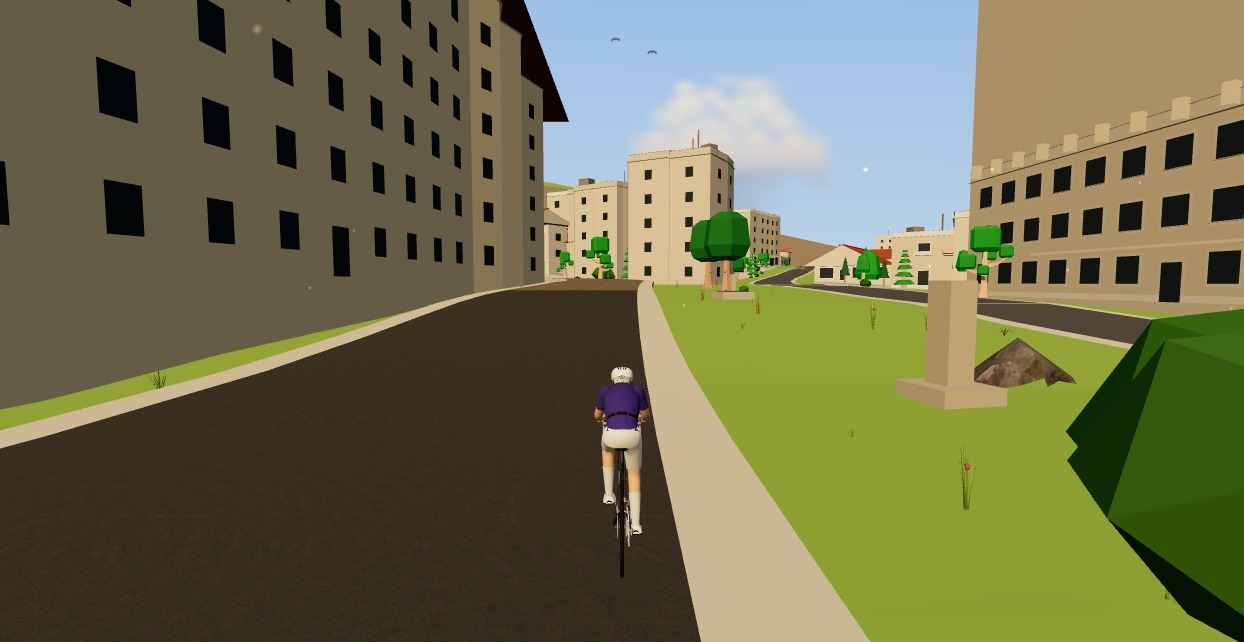
Try indoor training right now: open Moveee Indoor in your browser
No account wall, no 20-minute download before your first pedal stroke. Here's how to go from cold trainer to riding a real 3D road in about five minutes, straight from a browser tab.

Can you use a spin bike with cycling apps? What works and what doesn't
The gym-style spin bike in your spare room and the cycling apps on your laptop live in different worlds — but there are honest bridges between them. What a dumb spin bike can and can't do, the sensors that unlock app compatibility, which smart bikes broadcast openly, and when a used smart trainer is simply the better buy.

Gears explained: what the numbers on your cassette mean
Tooth counts to gear ratios to speed at a cadence, why steps matter more than the number of gears, what cross-chaining costs, and how to pick a gear on a climb.

Gravel vs road: how to pick the right surface for every ride
Two disciplines, one love of riding. Here's an honest look at gravel vs road — the bikes, the skills, the training value — and how to choose for any given day.