
The Moveee team
Free coaching · a real route for every ride
One hundred kilometres. Written down it looks enormous — a number for "real" cyclists, the kind of ride you assume takes years of training to reach. Here's the good news, and it's the whole reason for this post: with a gentle, patient build, almost anyone who can already ride a bike for half an hour can get to their first century in a couple of months. You don't need to be young, light or fast. You need a plan that grows one step at a time, and the discipline to not rush it. That's it. Let's map the road from zero to 100 km.
- Ride consistently. Three easy rides a week beats one heroic weekend that leaves you sore and demoralised for the next ten days. Little and often builds fitness; big and rare just builds fatigue.
- Grow one longer ride each week. Pick one ride — usually the weekend — and let it stretch a little further than last time. That single progressing ride is what carries you to 100 km.
Are you ready to start?
You need almost no fitness to begin — just a fair, honest baseline. If you can comfortably ride for about 30 to 40 minutes, covering roughly 10 to 15 km at a relaxed pace where you're not gasping, you're ready for week 1. That's the bar. It's deliberately low.
Not there yet? No problem at all — that's genuinely the smartest place to start. Spend two or three weeks just riding easy, three times a week, building from wherever you are today until a relaxed 30–40 minutes feels comfortable. Then come back to week 1. Skipping this step is the single most common way beginners end up sore, frustrated and off the bike. There's no prize for starting harder than you're ready for.
The 8-week roadmap
Eight weeks, one longer ride that grows from 30 to 100 km, and a deliberate easy "step-back" week in the middle so your body catches up. Everything else is easy, conversational riding. Here's the whole plan on one page:
Week by week
| Week | Long ride | Rides/week | Focus |
|---|---|---|---|
| Week 1 | 30 km | 3 | Settle in. Three easy rides, one a little longer. |
| Week 2 | 40 km | 3 | Same rhythm, stretch the weekend ride a touch. |
| Week 3 | 45 km | 3 | Longer ride starts to feel normal. Practise eating on the bike. |
| Week 4 | 55 km | 4 | Add a fourth short spin midweek if you can. |
| Week 5 | 65 km | 4 | Your longest ride yet — take a café stop, no rush. |
| Week 6 | 50 km | 3 | Step-back week. Ride less so your body absorbs the work. step-back |
| Week 7 | 80 km | 4 | Dress rehearsal. Same food, same kit you'll use on the day. |
| Week 8 | 100 km | 3 | Easy early week, then your first century. You're ready. |
Numbers are guides, not gospel. If a week feels hard, repeat it before moving on — nobody's checking, and the century isn't going anywhere.
Your long ride, week by week
30 km → 100 kmBar height is the distance of that week's single longest ride. Notice week 6 dips on purpose — that's the step-back that lets you go bigger afterwards.
back
See the shape of it? Each week the long ride nudges up, until week 6 pulls back on purpose — that dip is not a setback, it's the whole trick. Rest is where fitness actually sticks. You come out of the step-back week fresher, and then jump to 80, then to the full 100.
The three things that matter most
Forget marginal gains and expensive gadgets for now. At this stage, three simple habits do 90% of the work — get these right and the plan more or less rides itself.
Just ride. The most important thing is simply being on the bike three times a week, most weeks. Consistency compounds — every easy hour is money in the bank.
Eat before you're hungry and drink before you're thirsty. On rides over an hour, take a snack every 30–45 minutes. Bonking once teaches this fast — better to just avoid it.
Start easy — genuinely easy. If you can hold a conversation, you're doing it right. Going out too hard is the number-one beginner mistake, and it always costs you later in the ride.

Gear & prep checklist
You don't need a carbon superbike or a wardrobe of kit. You need a bike that fits and a few things that turn "stranded by the roadside" into "minor five-minute delay". Sort this before week 1 and you'll never think about it again:
- A comfy bike and a basic fit — saddle height roughly right, brakes working. A quick shop fit or a friend's eye is plenty; comfort matters far more than speed.
- A spare tube, a pump (or CO₂) and tyre levers — the holy trinity of not walking home. And know how to use them.
- Food and two full bottles — a banana, a couple of bars or gels, and water or drink mix. Always take more than you think you'll need.
- Weather-appropriate layers — a packable gilet or arm warmers cover most days. It's easy to shed a layer; impossible to add one you didn't bring.
- Phone and ID — for navigation, a photo of the route, and peace of mind if anything goes sideways.
- The know-how to fix a flat — practise once in your kitchen, calmly, before you ever need it at the roadside in the rain.
Ride day: how to actually cover 100 km
The training's done, the bike's packed. Now the century itself is far more about patience and pacing than raw fitness. Four simple disciplines will carry you to the finish smiling:
- Pace easy from the gun. The first 20 km should feel almost too gentle. Fresh legs and excitement will beg you to push — don't. The rider who feels easy at halfway is the rider still riding well at the end.
- Eat and drink on a schedule. A bite every 30–45 minutes and regular sips, from the very start — long before you feel you need it. Once you're hungry on a long ride, you're already behind and it's hard to recover.
- Break the 100 into 4×25 km chunks. Nobody rides "a hundred kilometres" — you ride to the next town, then the next café, then the next signpost. Small, finishable pieces keep the big number from getting in your head.
- Keep pedalling on the climbs. Drop into an easy gear, spin, and let the hill come to you. Steady and slow beats hard and blown-up every single time. Soft-pedal the descents and recover.
Do that, and somewhere around the 90 km mark you'll realise the impossible number is about to become a memory you'll keep forever. Your first century isn't a test of talent — it's a plan, ridden patiently, one easy week at a time.
If you'd rather not juggle the calendar yourself, that's exactly what Moveee is for. Connect your rides and it builds a beginner-friendly plan that ramps your long ride safely toward your first 100 km — with the same gentle step-backs built in — and hands you a real, terrain-matched route for every single training day, so you never have to wonder where to ride. It plans around the days you actually have free, and it's completely free to use. Point it at your century, and let's get you there.
Sources 7
Where this article summarises a study, the study itself is linked — not a write-up of it.
- 1 Garber CE, Blissmer B, Deschenes MR, et al. Quantity and quality of exercise for developing and maintaining cardiorespiratory, musculoskeletal, and neuromotor fitness in apparently healthy adults (ACSM position stand) · Medicine & Science in Sports & Exercise · 2011
- 2 Gabbett TJ The training—injury prevention paradox: should athletes be training smarter and harder? · British Journal of Sports Medicine · 2016
- 3 Thomas DT, Erdman KA, Burke LM Nutrition and athletic performance: joint position statement of the Academy of Nutrition and Dietetics, Dietitians of Canada, and the American College of Sports Medicine · Medicine & Science in Sports & Exercise · 2016
- 4 Jeukendrup A A step towards personalized sports nutrition: carbohydrate intake during exercise · Sports Medicine · 2014
- 5 Sawka MN, Burke LM, Eichner ER, Maughan RJ, Montain SJ, Stachenfeld NS Exercise and fluid replacement (ACSM position stand) · Medicine & Science in Sports & Exercise · 2007
- 6 Abbiss CR, Laursen PB Describing and understanding pacing strategies during athletic competition · Sports Medicine · 2008
- 7 Reed JL, Pipe AL The talk test: a useful tool for prescribing and monitoring exercise intensity · Current Opinion in Cardiology · 2014
Plan backwards from your event
Give Moveee your event date and it works back from it — the long rides where they belong, the sharpening in the right week, and a taper that arrives on time. It adapts when you miss a session, because you will.
Plan my eventKeep reading

Your first century: 100 miles, and how to arrive with legs left
Build the long ride to about 120 km, ride the first two hours slower than feels necessary, eat from the first hour and sit in the group. A race-prep guide to 161 km that finishes well rather than merely finishes.
Your first criterium: position, corners and the accordion effect
A crit's average power is often below your FTP, which tells you nothing. What actually decides your first one is where you sit in the bunch — and why the rider at the back is doing a completely different race at the same speed.

How to train for your first gran fondo (a 12-week plan you can actually follow)
A gran fondo is a long day in the saddle — but it's very doable with the right build. Here's a realistic 12-week plan, the key workouts, and how to pace and fuel the big day.
Your first road race: what actually happens, and how to not get dropped
A road race is not a hard group ride — it's several hundred surges with recoveries you don't control. What the power profile of a bunch race looks like, why the first ten minutes hurt most, and how to prepare for it.

Your first track session: the boards, the fixed gear and the rules
No brakes, no freewheel, and a line painted on the boards that decides where you are allowed to ride. What an accreditation session involves, the two road-rider habits that catch everyone out, and why the banking holds you up.

Everesting indoors: how to climb 8,848 m without leaving your pain cave
One climb, repeated until you've ascended the height of Everest — indoors, where there's no weather, no traffic, and absolutely nowhere to hide. The gradient maths, the pacing (it's an eating contest with pedalling attached), the two-fan setup, and the fitness you honestly need before you try.

How to pace a time trial with power
The first two minutes decide most time trials, and usually badly. How to pick a target, why even pacing wins on flat courses but not hilly ones, and how to spend your energy above threshold deliberately.
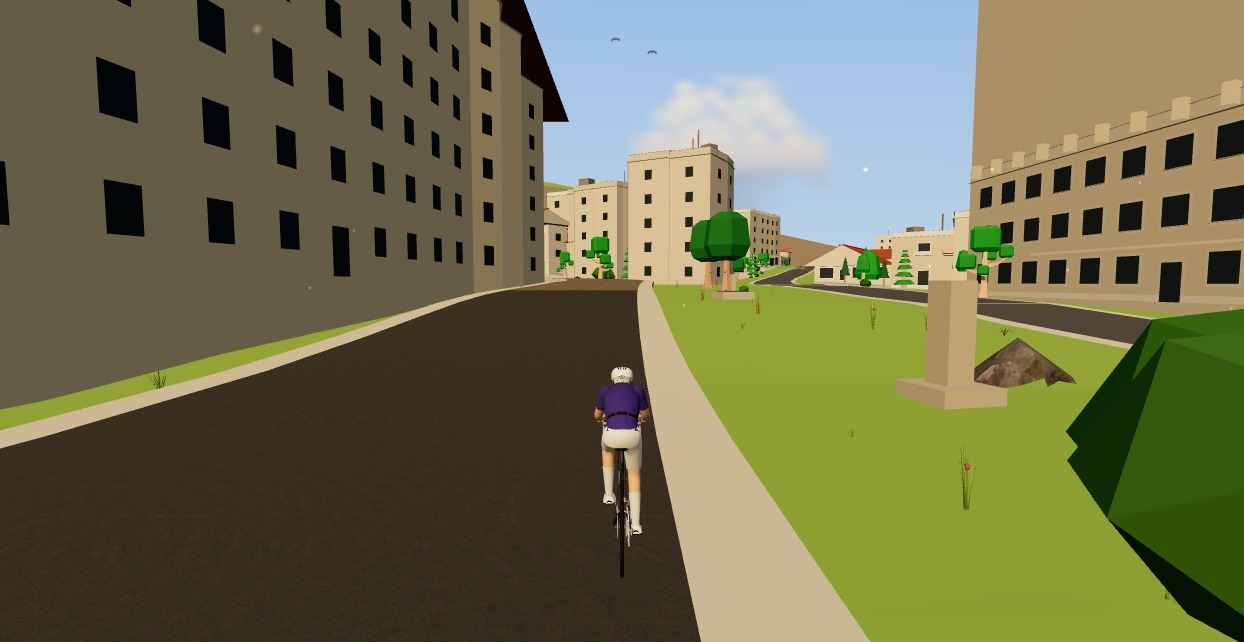
How to preview a race course indoors before you ride it
The best way to know a course is to have ridden it. Here's how to preview a race course indoors — corner by corner, climb by climb — from its GPX file, in 3D, on your smart trainer, weeks before the start line.

Your first cyclocross race: 60 minutes of the hardest fun in cycling
An hour of starting, surging and running with your bike on your shoulder, in the mud, in November. What the power profile of a lap actually looks like, the three skills that beat fitness, and how little kit you really need for race one.

How to ride a hilly sportive you're underprepared for
Four weeks out and short of training? The fitness is what it is — but pacing, gearing and fuelling are all still in play, and together they matter more on the day than the training you didn't do.

Racing in the heat: pace it differently or pay for it
Riders rebuild a training plan over a 3% change in threshold, then ride a 34°C event on their April pacing plan. What heat does to your engine, which cooling tricks are worth doing, and the signs that mean stop immediately.

Winter route design: ice, shade and the roads that thaw first
In January the north-facing lane stays frozen until lunchtime and the valley bottom is colder than the hill above it. Designing routes around aspect, cold-air drainage, gritting priority and the hours of daylight you actually have.