The Moveee team
Free coaching · a real route for every ride
Ask any experienced racer for their edge and a lot of them will say the same thing: they'd already ridden the course. Knowing where the road bites is worth watts. And you don't need to travel to get it — you can preview a race course indoors, corner by corner and climb by climb, from its GPX file, in 3D, on your smart trainer, weeks before the start.
Why course recon is a genuine advantage
A route profile is a cartoon of the road. It flattens the pitch that ramps to 11% just as you think the climb is over, hides the false flat that eats your legs, and says nothing about the technical descent where the race splits. Riding the course — even indoors — turns that cartoon into knowledge.
Where the real climbs are
Not the profile's headline number — the specific pitches, false flats and where a climb secretly kicks up near the top.
Where you can recover
The descents and flat sections where you can eat, drink and let the legs breathe before the next effort.
How to pace the hard bits
Ride the decisive climb a few times and you'll know exactly what wattage you can hold to the top without blowing.
Where it gets technical
Tight sequences of corners and junctions you'll want to have seen once before race day.
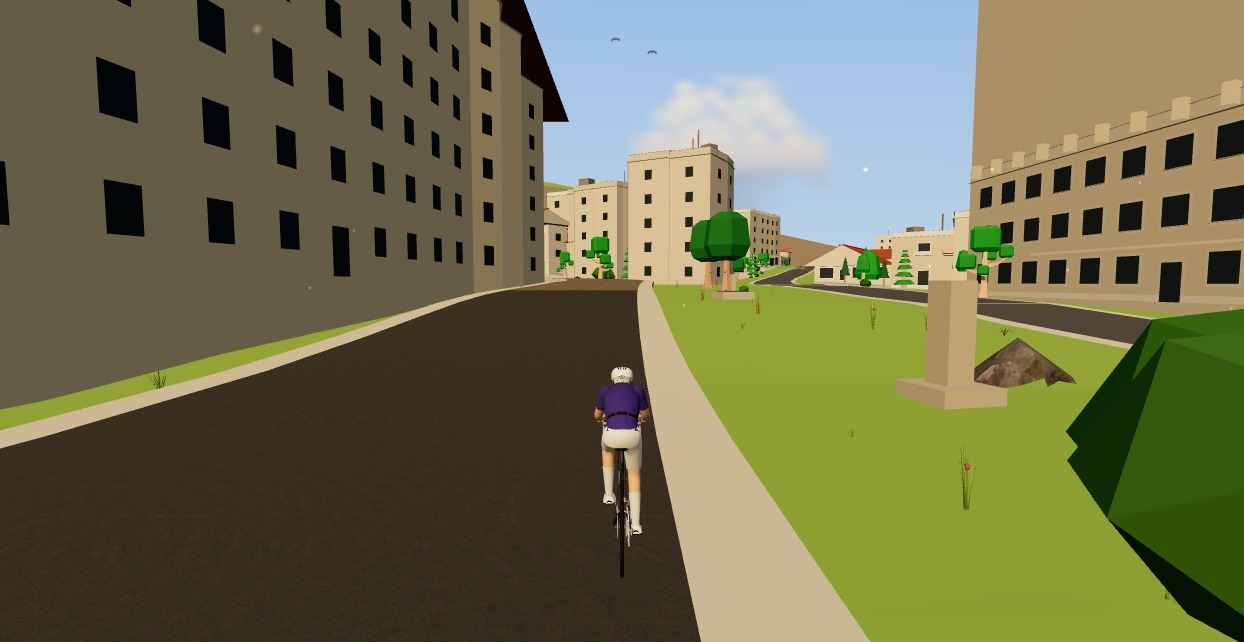
How to preview a course indoors
- Get the course GPX — most events publish it; otherwise plan it on a map tool and export.
- Load it into a browser trainer app that rebuilds routes in 3D, and pair your smart trainer.
- Ride the decisive sections — the key climb, the run-in to the finish — with real gradient-linked resistance, so your legs learn the effort, not just your eyes.
- Repeat closer to race day to lock in the pacing.
Turn the whole GPX into a rideable 3D course, free
This is one of the things Moveee Indoor is genuinely good at. Load the course's route and it rebuilds it in 3D from real OpenStreetMap and elevation data — the actual streets, corners and climbs — then drives your trainer's resistance from the real gradient as you ride. It runs in the browser with nothing to install, it's free while in alpha, and the recon rides save with full power data to your Moveee plan and Strava, so you can compare your climb wattage session to session.
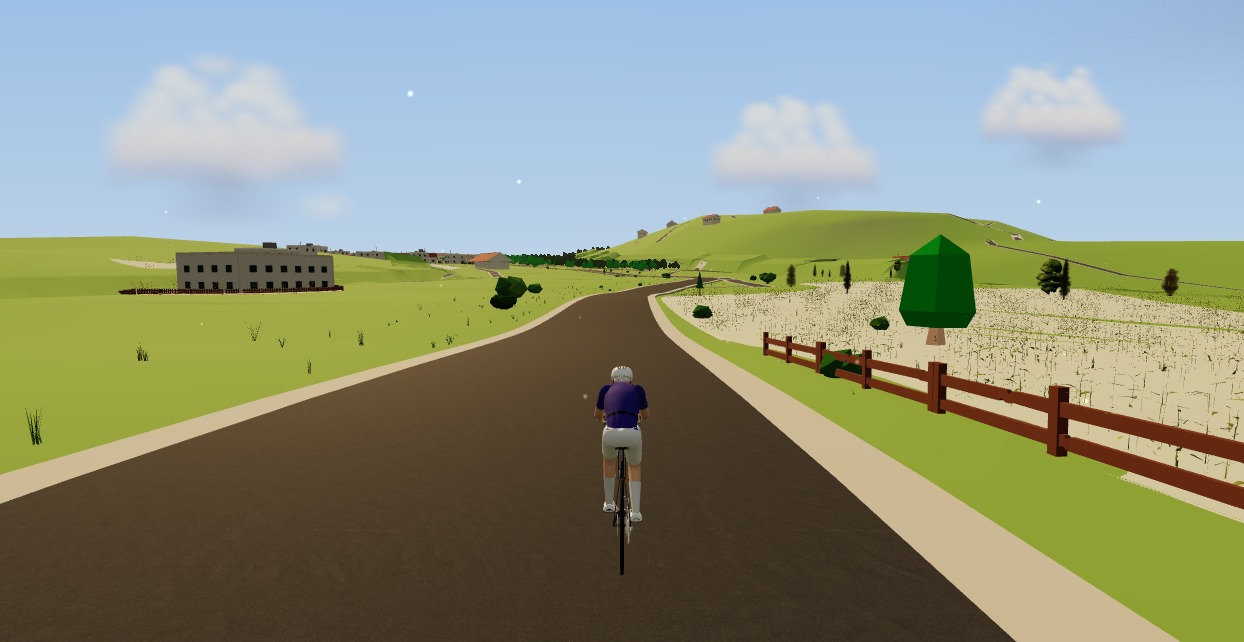
Show up already knowing where the road hurts. That's a race advantage you can build in the pain cave.
Sources 6
Where this article summarises a study, the study itself is linked — not a write-up of it.
- 1 Micklewright D, Papadopoulou E, Swart J, Noakes T Previous experience influences pacing during 20 km time trial cycling · British Journal of Sports Medicine · 2010
- 2 Abbiss CR, Laursen PB Describing and understanding pacing strategies during athletic competition · Sports Medicine · 2008
- 3 GPX: the GPS Exchange Format (GPX 1.1 schema) · TopoGrafix · 2004
- 4 About OpenStreetMap · OpenStreetMap Foundation · 2025
- 5 Copernicus DEM — Global and European Digital Elevation Model · Copernicus Data Space Ecosystem (ESA / European Union) · 2024
- 6 Fitness Machine Service 1.0 (FTMS) specification · Bluetooth SIG · 2017
Your own roads, indoors, in a browser tab
Moveee Indoor pairs your smart trainer over Bluetooth and rebuilds a route you have saved as a 3D road — real gradients, ERG for the intervals, and the ride saved with full power data. Nothing to install. Free while it is in alpha.
Start an indoor rideKeep reading

Racing in the cold and wet: staying warm enough to still be racing
Cold rain ends races for riders who were fit enough to finish them, and it usually does it on the descent rather than the climb. Losing your hands before you lose your legs, and the clothing decisions that are really race decisions.

The week before: everything that is not training
The physiology of the taper is a solved problem. This is the other half — admin, travel, packing and the sequence of small decisions that decides whether you reach the start line calm or already tired.

Pre-race openers: the day-before session that wakes your legs up
Complete rest the day before an event often leaves you feeling flat. What an opener session does, what it should look like, and how long before the start it's worth doing.

Everesting indoors: how to climb 8,848 m without leaving your pain cave
One climb, repeated until you've ascended the height of Everest — indoors, where there's no weather, no traffic, and absolutely nowhere to hide. The gradient maths, the pacing (it's an eating contest with pedalling attached), the two-fan setup, and the fitness you honestly need before you try.

Climbing in a bunch: where to sit before the road goes up
The climb rarely loses the race; the two kilometres before it do. Why drafting fades as the road steepens, what the surge at the base costs in W′, and where to be when it starts.

How to taper for a big ride: the last two weeks
The event is booked and the training is done — the last two weeks are where riders either bank their fitness or quietly throw it away. Drop the volume, keep the intensity, and follow a day-by-day fortnight that arrives at the start line fresh instead of flat.

Race day nutrition plan: hour by hour
Breakfast, the hour before, the start, and every hour after that. A concrete fuelling timeline for a two-hour race and a six-hour one, with the carbohydrate and fluid numbers the research supports.

Cornering under pressure: the racing lines nobody practises
A bad corner costs you twice: once in it, again on the exit. The physics of lean and grip, where to look, how to countersteer on purpose, and the race-day corners you can only learn by doing.

Racing abroad: six things that are not like home
The riding is the familiar part. Licences, race manuals, bunch culture, terrain you cannot rehearse, heat and altitude — and the alpine descent that riders underestimate far more often than the climb.

The warm-up, matched to the ride you're about to do
The shorter and harder the effort, the longer the warm-up — and vice versa. Four protocols, from a 10-minute roll-out to a full pre-race routine, plus what to stop doing beforehand.

Race weight: how to get lean without losing power
Watts per kilo has a numerator as well as a denominator, and cutting weight during a build block usually damages the numerator. Safe rates of loss, when in the season to do it, and the warning signs to stop.

The same roads backwards: why reversing a route changes the ride
The descent you know by heart is a climb you have never paced, the tailwind is now waiting for you at the wrong end, and the low winter sun is in your eyes at every junction. Why the loop you have ridden forty times is still one ride you haven't done.