
8 indoor cycling workouts that actually make you faster
The Moveee team
Free coaching · a real route for every ride
Most indoor training fails for a boring reason: no session. The rider clips in, rides at "quite hard" for fifty minutes, gets hot, gets bored, gets off. That accumulates fatigue without a clear stimulus — the worst of both worlds.
The fix is a written session. Below are eight that cover the whole range, from the aerobic foundation to flat-out sprints, with the reps spelled out. All targets are percentages of your FTP, and they're guidance rather than laboratory rules — if a session feels wrong for you, adjust it and note why.
Many riders push meaningfully less power indoors than out — heat is the usual culprit. If you set these targets from an outdoor FTP test, they'll feel savage in the pain cave and you'll fail sessions that aren't actually too hard. Test indoors, or knock your targets down a touch. More on this in why your indoor FTP is lower.
The eight sessions
Sweet spot 3 × 12
Sweet spot · 70 min · TSS ~75
The set
3 × 12 min @ 88–93% FTP, 5 min easy between
Builds: Aerobic power and threshold, at a cost you can repeat twice a week.
When: The bread and butter of winter. If you only do one session type, make it this.
Over-unders 4 × 9
Threshold · 75 min · TSS ~85
The set
4 × 9 min alternating 2 min @ 95% / 1 min @ 105% FTP, 5 min easy between
Builds: The ability to clear lactate while still working hard — the skill of surviving surges.
When: Late base into build, when you want race-realistic discomfort.
Threshold 2 × 20
Threshold · 70 min · TSS ~90
The set
2 × 20 min @ 95–100% FTP, 10 min easy between
Builds: Raw FTP. The classic, and still one of the most effective sessions ever written.
When: Build phase. Brutal but simple — and a reliable fitness benchmark.
VO2 max 5 × 3
VO2 max · 60 min · TSS ~70
The set
5 × 3 min @ 115–120% FTP, 3 min easy between
Builds: Maximum aerobic capacity — the ceiling everything else sits under.
When: 6–10 weeks out from a target event. Once a week, no more.
Short VO2 30/30s
VO2 max · 55 min · TSS ~60
The set
3 sets of 10 × (30 s @ 120% / 30 s easy), 5 min between sets
Builds: Time at high oxygen uptake with less mental agony than long reps.
When: When you need VO2 stimulus but can't face 3-minute efforts.
Anaerobic 8 × 1
Anaerobic · 50 min · TSS ~55
The set
8 × 1 min @ 130–140% FTP, 3 min easy between
Builds: The punch you need for attacks, steep ramps and closing gaps.
When: Close to racing. Very fatiguing — use sparingly.
Sprints 10 × 15 s
Neuromuscular · 50 min · TSS ~45
The set
10 × 15 s all-out from low speed, 4 min full recovery between
Builds: Peak power and leg speed. Almost no aerobic cost if recoveries are honest.
When: Any time. Pairs well with an otherwise easy day.
Endurance 90 min Z2
Endurance · 90 min · TSS ~70
The set
90 min steady @ 60–70% FTP, cadence 85–95
Builds: The aerobic base everything else is built on. Fat oxidation, capillaries, mitochondria.
When: Whenever you can. The most underrated indoor session there is.
How to string them together
Don't do all eight in a week — that's a recipe for a hole you won't climb out of. Pick two hard sessions a week, matched to where you are in the season:
- Early base (Nov–Dec): Endurance Z2 + Sweet spot 3 × 12.
- Late base (Jan): Sweet spot 3 × 12 + Over-unders 4 × 9.
- Build (Feb–Mar): Threshold 2 × 20 + VO2 max 5 × 3.
- Sharpening (pre-event): Anaerobic 8 × 1 + Short VO2 30/30s, volume reduced.
- Any time: Sprints, tacked onto an easy day.
Five rules that apply to all of them
Warm up properly
10–15 minutes with a few short lifts. Indoors you start cold and stiff.
One quality per session
Don't bolt VO2 reps onto a sweet-spot day. Pick a job and do it.
Pedal the recoveries
Easy spinning, not stopping. Coming to a halt makes the next rep worse.
Two hard days a week
Three at the very most. The rest is easy riding or rest.
Cool down five minutes
Costs nothing, and your evening will be considerably better for it.
Making them happen
A session on paper is easy to abandon at minute forty. A session your trainer is actively holding you to is much harder to quit — which is the real argument for ERG mode. Set the targets, and the trainer simply applies the resistance needed to keep you there, rep after rep. (There are sessions where you shouldn't use it — see ERG mode explained.)
All eight of these are in the Moveee workout library, alongside 150+ others, and you can build your own block by block in the workout builder. Drop one onto a training day and it'll go to Zwift, your Garmin or Wahoo unchanged.
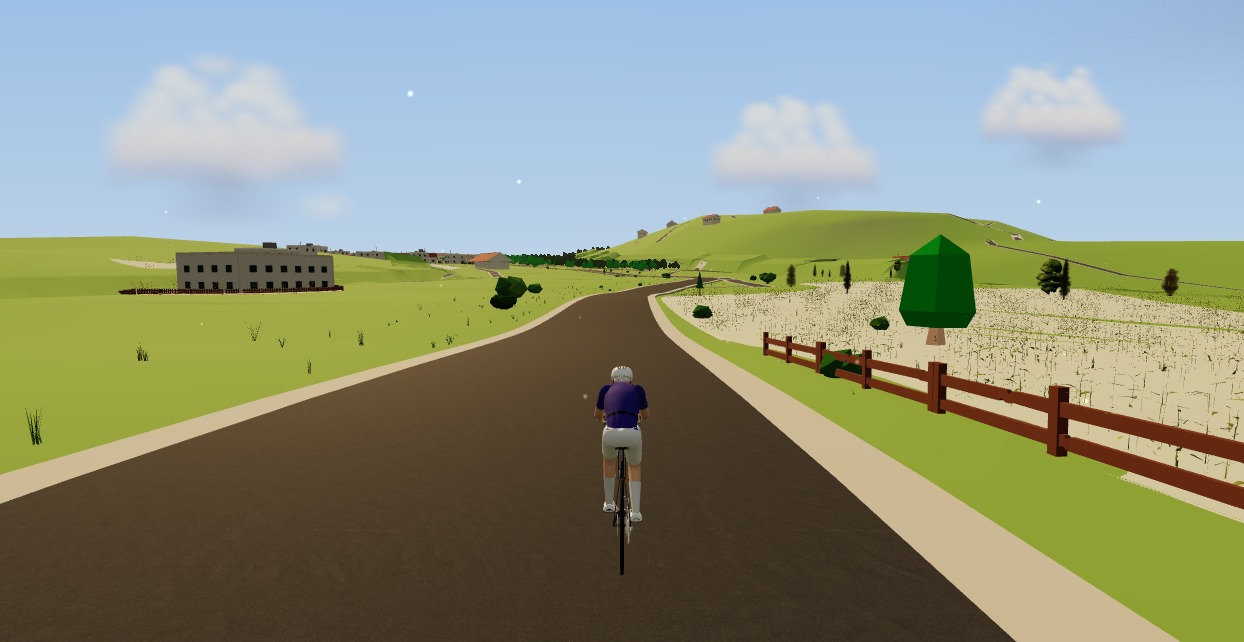
Or ride it in Moveee Indoor: pick the workout, pair your trainer, and it holds each interval's watts in ERG while you ride one of your own real routes rendered in 3D from map data — so the 12-minute sweet-spot block passes on a road you actually know rather than in front of a wall. It runs in your browser, nothing to install, free while in alpha, and the finished ride saves with full power data straight into your training log.
Print one of these out, stick it on the wall by the trainer, and do it twice a week. That's genuinely most of the secret.
Sources 7
Where this article summarises a study, the study itself is linked — not a write-up of it.
- 1 Seiler S, Jøranson K, Olesen BV, Hetlelid KJ Adaptations to aerobic interval training: interactive effects of exercise intensity and total work duration · Scandinavian Journal of Medicine & Science in Sports · 2013
- 2 Rønnestad BR, Hansen J, Vegge G, Tønnessen E, Slettaløkken G Short intervals induce superior training adaptations compared with long intervals in cyclists – an effort-matched approach · Scandinavian Journal of Medicine & Science in Sports · 2015
- 3 Laursen PB, Jenkins DG The scientific basis for high-intensity interval training · Sports Medicine · 2002
- 4 Seiler S What is best practice for training intensity and duration distribution in endurance athletes? · International Journal of Sports Physiology and Performance · 2010
- 5 Bishop D Warm up II: performance changes following active warm up and how to structure the warm up · Sports Medicine · 2003
- 6 Galloway SD, Maughan RJ Effects of ambient temperature on the capacity to perform prolonged cycle exercise in man · Medicine & Science in Sports & Exercise · 1997
- 7 Holloszy JO, Coyle EF Adaptations of skeletal muscle to endurance exercise and their metabolic consequences · Journal of Applied Physiology · 1984
Your own roads, indoors, in a browser tab
Moveee Indoor pairs your smart trainer over Bluetooth and rebuilds a route you have saved as a 3D road — real gradients, ERG for the intervals, and the ride saved with full power data. Nothing to install. Free while it is in alpha.
Start an indoor rideKeep reading

Over-unders: the interval that teaches you to ride through lactate
The session that turns "I blew on the third climb" into "I was there at the top" — and one of the most frequently botched workouts in cycling. Four versions in order of difficulty, and the four ways riders ruin them.

VO2 max for cyclists: what it is, and how to actually raise it
It's the ceiling your whole engine sits under — and it responds fast, then fades fast. Four proven sessions, how often to run them, and what to watch instead of a lab number.

Base miles aren't dead: how to build an aerobic engine over winter
Long, steady, unglamorous riding is still the foundation everything else is built on. Here's why base matters, how much you really need, and how to make winter miles count.
How to train indoors: turning trainer time into real fitness
An hour on the trainer can be worth ninety minutes on the road — or completely wasted. Here's how to structure indoor sessions so every minute you spend in the pain cave counts.

How long does it take to get cycling fit? A realistic timeline
Two weeks until rides stop feeling awful, six to eight until the numbers move, a season until club runs feel comfortable, years until the engine matures. An honest milestone-by-milestone timeline of cycling fitness — what genuinely speeds it up, what doesn't, and why coming back is faster than starting.

How to test your FTP without a 20-minute test
Ramp tests, eight-minute protocols, critical power from three efforts, or simply reading it off your ride data. How each method works, how far it lands from a true hour of pain, and which suits you.

Zone 2 training on a smart trainer: how to actually stay in zone
Everyone agrees Zone 2 builds the engine — and almost nobody actually rides it, because outdoors every junction, hill and ego bump pulls you out of zone. On a smart trainer with ERG mode the discipline problem disappears. How to set the right watts, manage drift, and make 90 steady minutes genuinely bearable.

Sweet spot, threshold or polarized: which training method actually works for you?
Three training philosophies, endless internet arguments. Here's what sweet spot, threshold and polarized actually mean — and how to pick the one that fits your hours, your goals and your life.

Detraining: how fast you lose fitness (and how fast it comes back)
Two weeks off costs less than most riders fear, and eight weeks costs more than they hope. A week-by-week look at what actually declines — blood volume, enzymes, muscle — and how quickly it returns.
Aerobic threshold: the test you can do on any trainer
Three field methods for finding your aerobic threshold without a lab: the talk test, heart-rate drift over a steady hour, and DFA alpha 1. What each is validated against and how far to trust it.

The cycling year: how to plan twelve months from off-season to peak
Transition, base, build, peak, race: what each block is for, how long it runs for an amateur with one summer goal, and where the neat diagram and the messy year part ways.

10 changes that make you a genuinely faster cyclist
Ten improvements ordered by return on effort — only some of which involve producing more watts. Plus four things you can fix in your garage this afternoon for free.