The Moveee team
Free coaching · a real route for every ride
The physiology of the final week is a solved problem and lives in taper: the last two weeks. This article is about the other half, which is where amateur events actually go wrong: the admin, the travel, the packing, and the sequence of small decisions that decide whether you arrive at the start line calm or already tired.
The principle: nothing you do this week makes you fitter
Fitness takes weeks to build and this is not one of them. That single fact should govern every decision in the final seven days — because it means the only two things you can change are your freshness and your preparation, and panic training damages the first while eating the time for the second.
The rider who spends Wednesday doing a "confidence session" and Saturday frantically looking for a bike shop has got both exactly backwards.
A workable week
Monday — Register, print, read the rulebook
Number collection times, road closures, kit rules, whether a hard-shell helmet or a licence is required. The week's admin done on day one is admin that cannot ambush you on Saturday.
Tuesday — The mechanical check
A week out is the last point at which a shop can order a part for you. See our race-day mechanical checklist — the timing is the whole point of it.
Wednesday — Last proper session, then it is all maintenance
Short and sharp. Nothing you do from here adds fitness; everything you do can subtract freshness.
Thursday — Plan the route and the pacing
Climb by climb, with target numbers. Write them on a strip of tape on your stem so the plan survives contact with the first climb.
Friday — Pack, travel, eat normally
Lay everything out the night before and photograph it. Travel days are where riders forget shoes, and no amount of fitness solves that.
Saturday — Openers, recce the start, early night
Fifteen easy minutes with two or three short efforts. Find the start line, the parking and the toilets in daylight rather than at 6am.
The packing list, laid out the night before
- Shoes, helmet, glasses — the three most-forgotten items, in that order
- Two kit options: the forecast will change
- Race number pins, or expect to borrow four
- All the food for the event, plus breakfast in case the hotel is closed
- Charged head unit, charger, and the cable it actually uses
- Spare tube, levers, inflator, multi-tool, quick link
- Warm dry clothes for afterwards — the most underrated item on the list
Photograph the pile once it is laid out. It takes two seconds and it is a far more reliable memory than a list you wrote and did not re-read.

Eating in the final week
Keep it ordinary until the last day or two, then raise carbohydrate while training volume is low. The classic error is the reverse — cutting back on food because you are training less, which arrives at the start line under-fuelled. Carb loading before a gran fondo covers the approach properly.
Two practical notes. Do not experiment: this is not the week for a new breakfast, a new gel or a restaurant you have never tried — and if you are travelling, eating abroad and stomach trouble is the relevant article. And drink more than usual in the final two days, particularly if the forecast is hot; arriving well hydrated is easier than catching up mid-event.
The morning itself
- Eat 2–3 hours before the start. Familiar, carbohydrate-heavy, not enormous.
- Arrive earlier than feels necessary. Parking, toilets and number collection all take longer than the organisers' timings suggest, and stress before a long day is a cost you pay later.
- Warm up according to the event. A five-hour sportive needs almost nothing — you will warm up in the first 30 km. A short sharp event needs a proper warm-up, and pre-race openers covers it.
- Check the bike one final time. Axles, brakes, bars straight. Ten seconds, every time — the full version is in the race-day mechanical checklist.
- Re-read your pacing plan. Especially the part about the first climb, which is the one you are about to ignore.
Knowing the course before you see it
The single most calming thing you can do in the final week is to already know what is coming: where the long climb starts, which descent is technical, where the exposed valley is. How to read a route profile covers extracting that from the organiser's picture, which distorts more than riders expect.
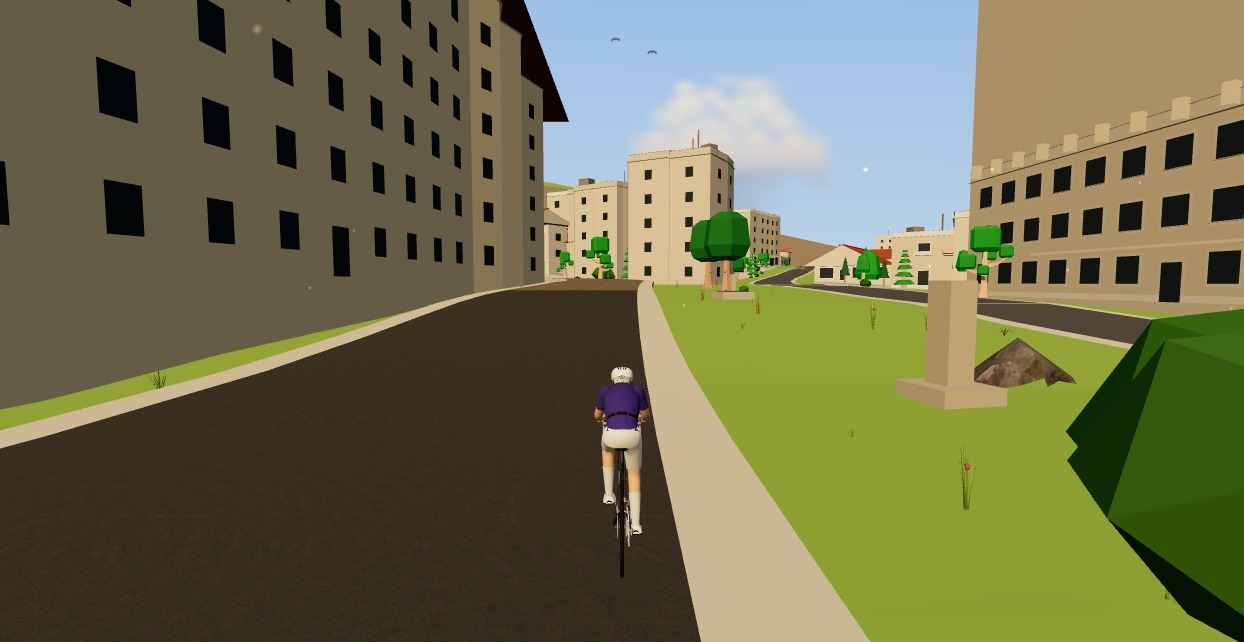
Better still, ride the decisive part. Moveee Indoor rebuilds a GPX as a 3D road in a browser tab with the trainer following the real gradient, so a 30-minute session on Wednesday can be the last 20 km of Sunday's course at the right steepness — a much better use of the final week than an extra interval session. Previewing a race course indoors covers the setup.
And if the week goes wrong
A missed session, a cold, a late flight, terrible weather. None of it changes the fitness you already have. Riders routinely talk themselves out of a good day because the preparation was imperfect — and the preparation is always imperfect. Turn up, ride your plan, and find out.
Sources 6
Where this article summarises a study, the study itself is linked — not a write-up of it.
- 1 Bosquet L, Montpetit J, Arvisais D, Mujika I Effects of Tapering on Performance: A Meta-Analysis · Medicine & Science in Sports & Exercise · 2007
- 2 Mujika I, Padilla S Scientific Bases for Precompetition Tapering Strategies · Medicine & Science in Sports & Exercise · 2003
- 3 Thomas DT, Erdman KA, Burke LM Position of the Academy of Nutrition and Dietetics, Dietitians of Canada, and the American College of Sports Medicine: Nutrition and Athletic Performance · Medicine & Science in Sports & Exercise · 2016
- 4 Sawka MN, Burke LM, Eichner ER, et al. American College of Sports Medicine position stand: Exercise and Fluid Replacement · Medicine & Science in Sports & Exercise · 2007
- 5 McGowan CJ, Pyne DB, Thompson KG, Rattray B Warm-Up Strategies for Sport and Exercise: Mechanisms and Applications · Sports Medicine · 2015
- 6 Bussau VA, Fairchild TJ, Rao A, Steele P, Fournier PA Carbohydrate loading in human muscle: an improved 1 day protocol · European Journal of Applied Physiology · 2002
Plan backwards from your event
Give Moveee your event date and it works back from it — the long rides where they belong, the sharpening in the right week, and a taper that arrives on time. It adapts when you miss a session, because you will.
Plan my eventKeep reading

How to taper for a big ride: the last two weeks
The event is booked and the training is done — the last two weeks are where riders either bank their fitness or quietly throw it away. Drop the volume, keep the intensity, and follow a day-by-day fortnight that arrives at the start line fresh instead of flat.
How to preview a race course indoors before you ride it
The best way to know a course is to have ridden it. Here's how to preview a race course indoors — corner by corner, climb by climb — from its GPX file, in 3D, on your smart trainer, weeks before the start line.

After the crash: what to check, when to ride again
Head first, then neck, then everything else. What the concussion consensus, the UCI protocol and the fracture literature say about getting back on the bike, and why a doctor decides.

Pre-race openers: the day-before session that wakes your legs up
Complete rest the day before an event often leaves you feeling flat. What an opener session does, what it should look like, and how long before the start it's worth doing.

Your first track session: the boards, the fixed gear and the rules
No brakes, no freewheel, and a line painted on the boards that decides where you are allowed to ride. What an accreditation session involves, the two road-rider habits that catch everyone out, and why the banking holds you up.

Racing in the cold and wet: staying warm enough to still be racing
Cold rain ends races for riders who were fit enough to finish them, and it usually does it on the descent rather than the climb. Losing your hands before you lose your legs, and the clothing decisions that are really race decisions.

Race day nutrition plan: hour by hour
Breakfast, the hour before, the start, and every hour after that. A concrete fuelling timeline for a two-hour race and a six-hour one, with the carbohydrate and fluid numbers the research supports.

Climbing in a bunch: where to sit before the road goes up
The climb rarely loses the race; the two kilometres before it do. Why drafting fades as the road steepens, what the surge at the base costs in W′, and where to be when it starts.
The triathlon bike leg: pacing so you can still run
The bike is the only leg where holding back makes you faster. How to pick a power target for your distance, why draft-legal racing changes everything, and what the run will tell you.

Everesting indoors: how to climb 8,848 m without leaving your pain cave
One climb, repeated until you've ascended the height of Everest — indoors, where there's no weather, no traffic, and absolutely nowhere to hide. The gradient maths, the pacing (it's an eating contest with pedalling attached), the two-fan setup, and the fitness you honestly need before you try.
Your first criterium: position, corners and the accordion effect
A crit's average power is often below your FTP, which tells you nothing. What actually decides your first one is where you sit in the bunch — and why the rider at the back is doing a completely different race at the same speed.

What to eat before a morning ride (and when there's no time)
What to eat before a 6 am ride, how long it really needs to settle, and what to do when you've got twenty minutes and no appetite. Including whether eating half an hour before genuinely causes a blood-sugar dip.