
The Moveee team
Free coaching · a real route for every ride
You've got a training plan, an event in eight weeks, and a scratchy throat. Do you ride or don't you? It's one of the most common questions in amateur cycling and one of the most consistently answered badly — usually by riders who don't want to hear "rest," which is quite often the correct answer.
What follows is general information gathered from widely repeated sporting guidance, not medical advice. If you are unwell, especially with anything involving your chest, your heart or a fever, speak to a doctor rather than a cycling blog.
Exercising with a fever or with a viral illness affecting the chest carries real risk — including, rarely, inflammation of the heart muscle. That's not a reason for anxiety, but it is a reason to be conservative. When in doubt, don't ride, and ask a doctor. No session in any training plan is worth it.
The neck check
The most widely repeated rule of thumb in endurance sport, and a reasonable starting point — though it's a heuristic, not a diagnosis.
Runny or blocked nose, sneezing, mild sore throat — and you otherwise feel basically fine.
Usually OK to ride easy. Keep it short and gentle, Z1–Z2 only, and stop if you feel worse. No intensity.
Chest cough, tight chest, fever, aching muscles, stomach upset, deep fatigue.
Don't ride. Rest completely until symptoms have gone, then return gradually. This is the case where pushing on does real damage.
Signs to stop and see a doctor
A fever, or a temperature that's still not normal
Chest tightness, a chest cough, or any shortness of breath at rest
A resting heart rate substantially above your normal
Aching muscles and joints all over (systemic symptoms)
Swollen glands, or feeling genuinely unwell rather than just blocked up
Anything that has already lasted more than a week or is getting worse

Coming back afterwards
The mistake that costs riders the most isn't training while ill — it's coming back at full intensity two days after the symptoms clear, feeling awful, and either relapsing or digging a hole that takes a fortnight to climb out of.
Rebuild gradually. A common and sensible approach is roughly one easy day for each day you were properly ill, before any real intensity:
30–45 min very easy
Z1Genuinely easy — conversational, low heart rate. If it feels like effort, stop and take another day.
60 min endurance
Z2Normal easy riding. Watch your heart rate: if it's still elevated at a given power, you're not recovered.
Endurance with a few short openers
Z2 + brief Z4Two or three one-minute lifts to see how the body responds. No full session yet.
First proper quality session
Z3–Z4Sweet spot or threshold — not VO2. If it goes well, you're back.
Return to normal training
AllRebuild volume before intensity, and don't try to make up the missed sessions.
Two things worth watching on the way back
- Heart rate at a given power. If riding 180 W now puts your heart rate 10–15 beats above where it normally sits, your body is still dealing with something. Back off.
- How you feel the next morning. The real test of a return ride isn't during it — it's whether you wake up fine or wrecked.
You will lose less fitness than you fear
This is the part riders never believe. A week completely off the bike costs you remarkably little — a few days of feeling flat and slightly heavy-legged when you return, and then you're essentially back. Meaningful losses in aerobic fitness take weeks, not days.
Set against that, training hard through an illness can extend it, cause a relapse, and cost you three weeks instead of one. The arithmetic is not close. Rest is the higher-performance choice.

Let the plan absorb it
A rigid plan is what makes illness stressful — you come back to four missed sessions glaring at you and the temptation to cram them in is enormous. That's precisely how a one-week illness becomes a three-week hole.
A plan should simply reshape around what happened. Moveee rebuilds your block from what you've actually ridden rather than what was scheduled, so a missed week gets absorbed instead of stacked on top of the next one. And when you are ready for that first cautious 30 easy minutes, Moveee Indoor is a good place to do it — indoors, warm, controlled, no wind or hills to accidentally push into, and easy to abandon halfway if it turns out you weren't ready after all. Free while in alpha, nothing to install.
Above the neck and feeling fine: ride easy. Below the neck, or a fever: rest, and talk to a doctor. Then come back slowly. It really is that simple, and it's almost never what you want to hear.
Sources 6
Where this article summarises a study, the study itself is linked — not a write-up of it.
- 1 Schwellnus M, Soligard T, Alonso JM, et al. How much is too much? (Part 2) International Olympic Committee consensus statement on load in sport and risk of illness · British Journal of Sports Medicine · 2016
- 2 Weidner TG, Anderson BN, Kaminsky LA, Dick EC, Schurr T Effect of a rhinovirus-caused upper respiratory illness on pulmonary function test and exercise responses · Medicine & Science in Sports & Exercise · 1997
- 3 Weidner T, Schurr T Effect of exercise on upper respiratory tract infection in sedentary subjects · British Journal of Sports Medicine · 2003
- 4 Pelliccia A, Sharma S, Gati S, et al. 2020 ESC Guidelines on sports cardiology and exercise in patients with cardiovascular disease · European Heart Journal · 2021
- 5 Mujika I, Padilla S Detraining: loss of training-induced physiological and performance adaptations. Part I: short term insufficient training stimulus · Sports Medicine · 2000
- 6 Nieman DC, Wentz LM The compelling link between physical activity and the body's defense system · Journal of Sport and Health Science · 2019
See this in your own numbers
Moveee builds your power curve, fitness and fatigue from every ride you upload, and writes a training plan around them. It is free, it takes one Strava connection, and it will tell you more about your riding in a week than any article can.
Start freeKeep reading

Why your hands go numb on the bike (and how to fix it)
Numb fingers are nerve compression, and which fingers go numb tells you which nerve. What causes it, what to change on the bike, and the symptoms that mean stop riding and see a doctor.
Bike fit basics: saddle height, setback and reach explained
Three measurements do most of the work, and the research on saddle height is better than you'd expect. What each adjustment changes, how small a change should be, and when to stop guessing and see a fitter.

How accurate is your smart trainer's power? (and why it disagrees with your power meter)
Your trainer says 250 W, your pedals say 262 W — and neither of them is lying. What the accuracy claims on the box actually mean, why drivetrain loss makes a hub always read lower than a crank, when calibration matters, and why consistency beats absolute truth for training.

Power meter vs smart trainer: which should you buy first?
They measure in different places, and neither is wrong. What independent validation studies show about accuracy, why your two numbers disagree, and which one earns its money first for the riding you actually do.

Gears explained: what the numbers on your cassette mean
Tooth counts to gear ratios to speed at a cadence, why steps matter more than the number of gears, what cross-chaining costs, and how to pick a gear on a climb.
How to use an indoor cycling app without a smart trainer — a speed sensor is enough
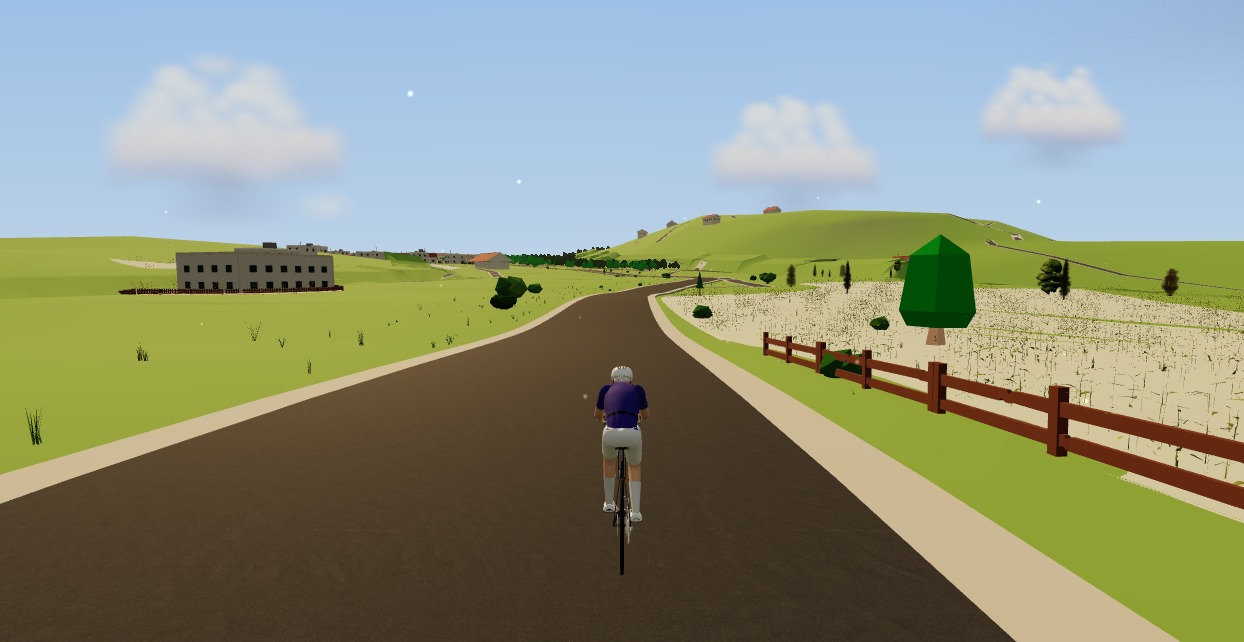
A £30 wheel speed sensor turns any dumb trainer into a real route in a 3D world, with the ride saved to your calendar. What you need, how to set it up, and the one thing about hills you should know before your first session.
Saddle sores: prevention, treatment and when to see a doctor
"Saddle sore" covers several different problems with different treatments, which is why the internet's advice contradicts itself. What is actually going on down there, what genuinely prevents it, and the signs that mean stop riding and get it looked at.

Rollers vs turbo trainer: which should you ride this winter?
One teaches you to ride; the other makes you fitter. Rollers build balance, souplesse and bike handling that a locked-in turbo never will — but the turbo owns structure, ERG and every hard interval you'll do all winter. An honest comparison, who should pick which, and why the real answer might be both.

Buying a used bike: the ten-minute inspection
Frame first, then wheels, drivetrain, brakes and bearings, then the paperwork. An ordered check that finds the deal-breakers early, with the honest caveat about carbon.
Speed sensor or smart trainer: when is the upgrade actually worth it?
Four signs you have outgrown a speed-only setup, what power actually unlocks, and three routes compared — including the one most people overlook, which is a power meter rather than a trainer. Plus the honest case for staying where you are.

A Tacx app alternative that runs in your browser (free)
If the Tacx Training app isn't for you, you don't have to jump straight to a Zwift subscription. Here's a free Tacx app alternative that controls your Tacx Neo, Flux or Flow from a browser tab — ERG, real roads and a Strava upload included.

Fitness, Fatigue and Form: reading your training load without overthinking it
Three numbers explain almost everything about your training — whether you're building, digging a hole, or ready to fly. Here's how Fitness, Fatigue and Form work, in plain English.