
The Moveee team
Free coaching · a real route for every ride
Warming up is the part of training riders are most likely to skip and most likely to over-think — sometimes on the same day. Turn up cold to a hill climb and the first three minutes are miserable and slow. Spend forty minutes warming up for a five-hour gran fondo and you've simply spent energy you'll want at kilometre 120.
The right warm-up depends almost entirely on how hard you'll be going in the first ten minutes. Here's how to match it.
The shorter and harder the event, the longer the warm-up. The longer and easier the event, the shorter the warm-up. A 20-minute hill climb deserves half an hour of preparation. A 160 km sportive deserves about ten easy minutes, because the first hour is the warm-up.
What a warm-up actually does
Three things, roughly. It raises muscle temperature, which makes them contract more efficiently. It opens up blood flow to the working muscles. And it gets your aerobic system running so that when you go hard, you're not relying so heavily on anaerobic energy — which is what produces that horrible strangled feeling in the first minutes of a cold-start effort.
That last point is the real one. Being warmed up doesn't raise your ceiling; it means you reach it without a miserable transition first.
Four protocols
Long event / road race
25–35 min- 1. 10 min easy spinning, Z1–Z2
- 2. 3 × 1 min building to threshold, 1 min easy between
- 3. 3 × 15 s fast-cadence spin-ups, 45 s easy
- 4. 1 × 2 min at race-start intensity
- 5. 5–10 min easy, finishing 10–15 min before the start
You're going hard from the gun, so you need to be fully open. The cost is fatigue — keep it efficient.
Short, intense effort (crit, hill climb, TT)
30–40 min- 1. 10–15 min progressive easy to tempo
- 2. 4 × 30 s at above race pace, 90 s easy
- 3. 1 × 3–5 min at target intensity
- 4. 8–10 min very easy to clear the legs
Shorter events start harder. A more thorough warm-up genuinely improves the first few minutes.
Hard training session
15 min- 1. 10 min easy building to Z2
- 2. 2–3 × 30 s at interval intensity, 60 s easy
- 3. 2 min easy before rep one
The default for a VO2 or threshold session. Enough to open up, not so much that it eats the session.
Easy or long endurance ride
10–15 min- 1. Just ride, starting genuinely gently
- 2. Let the pace lift naturally after 10–15 min
No structure needed. The first quarter-hour of the ride is the warm-up.

Six things worth getting right
Warm-ups make you faster in the first ten minutes, not the last
The benefit is front-loaded — you avoid the sluggish, gasping opening that comes from starting cold. For a five-hour ride that hardly matters; for a 20-minute hill climb it matters enormously.
Save your legs on long events
The longer the event, the shorter the warm-up should be. Burning 40 minutes of energy before a gran fondo is a straightforward waste.
Include some intensity
Ten minutes of gentle spinning isn't a warm-up for a hard effort. A few short efforts near race pace are what actually prepare you.
Then leave time to recover
Finish the hard part with 5–10 easy minutes and aim to be done 10–15 minutes before the start. Arriving still breathing hard is a common mistake.
Cold weather needs longer
Muscles warm more slowly in the cold, and staying warm between finishing and starting is half the job. Keep a jacket on until the last moment.
Skip static stretching beforehand
Long static holds before a hard effort have been associated with a temporary reduction in force output. Save them for afterwards — see our cool-down guide.
Warming up indoors
The trainer is the ideal warm-up tool, which is why you see rows of them behind the start line at every serious event. You control the intensity precisely, you don't have to find a safe stretch of road, and you can finish exactly where you want to be.
It's also worth remembering that an indoor warm-up needs a fan from minute one. Without airflow you'll arrive at the start line already heat-stressed, which is the opposite of the goal — the same problem behind why indoor power reads lower.

Make it a routine, not a decision
The best warm-up is the one you don't have to think about. Pick the protocol that matches the session, use the same one every time, and it becomes part of the ritual rather than something you improvise while already late.
Every structured session in the Moveee workout library has the warm-up built into it, so it happens automatically rather than being remembered. Ride one in Moveee Indoor and the trainer walks you through the openers and the easy minutes in ERG mode while you roll along one of your own real routes — free while in alpha, nothing to install. Then, when the main set starts, you're already open and the first interval doesn't feel like a mistake.
Sources 7
Where this article summarises a study, the study itself is linked — not a write-up of it.
- 1 McGowan CJ, Pyne DB, Thompson KG, Rattray B Warm-Up Strategies for Sport and Exercise: Mechanisms and Applications · Sports Medicine · 2015
- 2 Bishop D Warm Up I: Potential Mechanisms and the Effects of Passive Warm Up on Exercise Performance · Sports Medicine · 2003
- 3 Bishop D Warm Up II: Performance Changes Following Active Warm Up and How to Structure the Warm Up · Sports Medicine · 2003
- 4 Tomaras EK, MacIntosh BR Less is more: standard warm-up causes fatigue and less warm-up permits greater cycling power output · Journal of Applied Physiology · 2011
- 5 Simic L, Sarabon N, Markovic G Does pre-exercise static stretching inhibit maximal muscular performance? A meta-analytical review · Scandinavian Journal of Medicine & Science in Sports · 2013
- 6 Racinais S, Oksa J Temperature and neuromuscular function · Scandinavian Journal of Medicine & Science in Sports · 2010
- 7 Périard JD, Eijsvogels TMH, Daanen HAM Exercise under heat stress: thermoregulation, hydration, performance implications, and mitigation strategies · Physiological Reviews · 2021
Plan backwards from your event
Give Moveee your event date and it works back from it — the long rides where they belong, the sharpening in the right week, and a taper that arrives on time. It adapts when you miss a session, because you will.
Plan my eventKeep reading

Pre-race nerves: a routine that works in the last hour
You cannot switch the nerves off, but you can point them somewhere. A last-hour routine built on reappraisal, slow breathing, a proper warm-up and two sentences of self-talk.

Racing in the cold and wet: staying warm enough to still be racing
Cold rain ends races for riders who were fit enough to finish them, and it usually does it on the descent rather than the climb. Losing your hands before you lose your legs, and the clothing decisions that are really race decisions.

Cornering under pressure: the racing lines nobody practises
A bad corner costs you twice: once in it, again on the exit. The physics of lean and grip, where to look, how to countersteer on purpose, and the race-day corners you can only learn by doing.

Pre-race openers: the day-before session that wakes your legs up
Complete rest the day before an event often leaves you feeling flat. What an opener session does, what it should look like, and how long before the start it's worth doing.

Racing in the heat: pace it differently or pay for it
Riders rebuild a training plan over a 3% change in threshold, then ride a 34°C event on their April pacing plan. What heat does to your engine, which cooling tricks are worth doing, and the signs that mean stop immediately.
Race weight: how to get lean without losing power
Watts per kilo has a numerator as well as a denominator, and cutting weight during a build block usually damages the numerator. Safe rates of loss, when in the season to do it, and the warning signs to stop.

Your first century: 100 miles, and how to arrive with legs left
Build the long ride to about 120 km, ride the first two hours slower than feels necessary, eat from the first hour and sit in the group. A race-prep guide to 161 km that finishes well rather than merely finishes.

Gravel racing: how it's different, and what to train for
Longer, lonelier and far more variable than a road race, with no feed zones and no team car. Why durability beats a sprint, how to fuel when nobody is handing you anything, and the tyre decision that ends more races than fitness does.
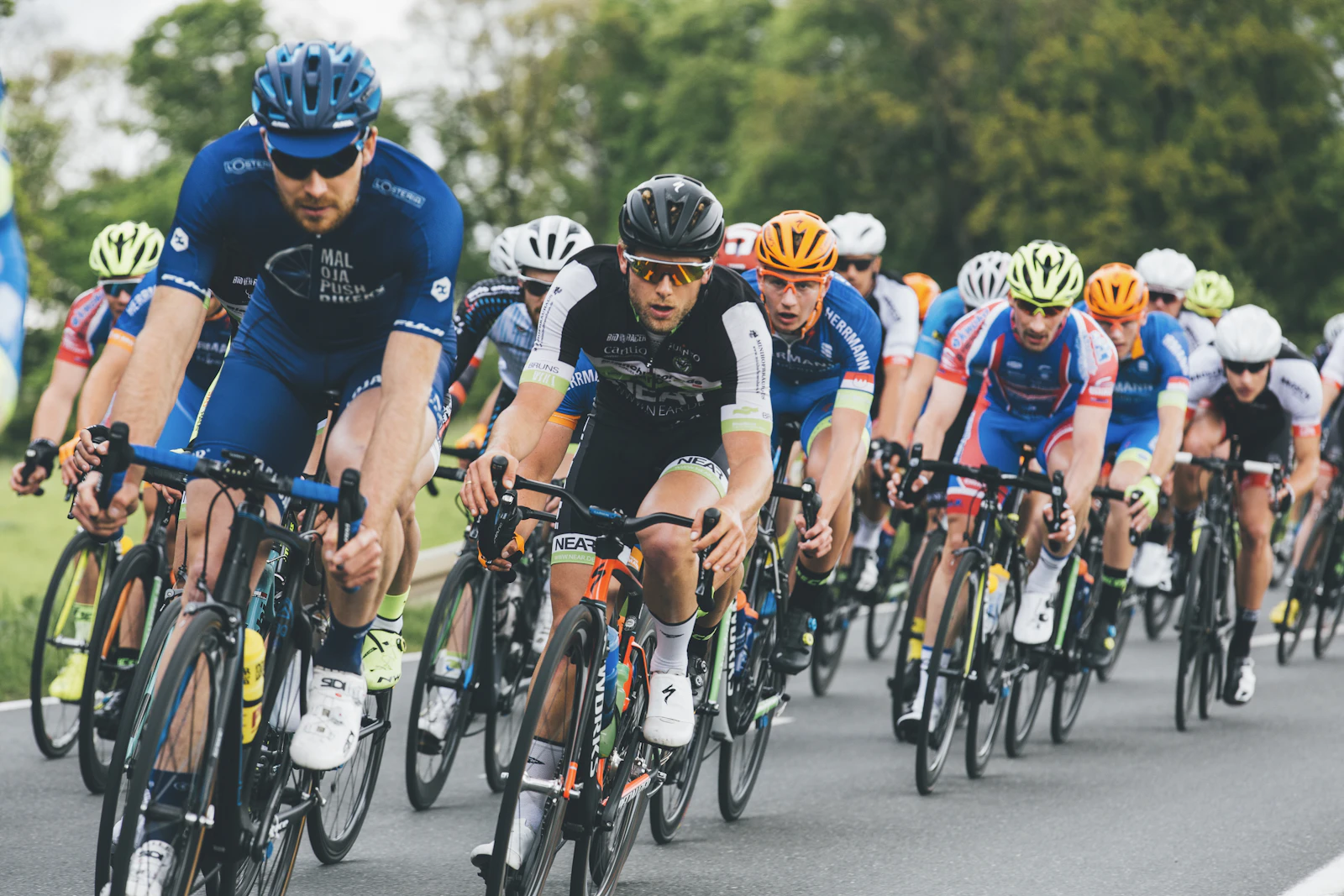
Your first criterium: position, corners and the accordion effect
A crit's average power is often below your FTP, which tells you nothing. What actually decides your first one is where you sit in the bunch — and why the rider at the back is doing a completely different race at the same speed.
Your first cyclocross race: 60 minutes of the hardest fun in cycling
An hour of starting, surging and running with your bike on your shoulder, in the mud, in November. What the power profile of a lap actually looks like, the three skills that beat fitness, and how little kit you really need for race one.
Racing on consecutive days: how to recover between stages
The refuelling rules you can safely ignore in a normal training week become the whole game when you race again in eighteen hours. Glycogen arithmetic, what sleep is worth, and which recovery gadgets survive contact with the evidence.

Should you ride when you're ill? A straight answer
The neck check, the symptoms that mean stop, and how to rebuild afterwards without digging a three-week hole. Plus the reassuring truth about how little fitness a week off costs you.