Ride smarter — one read at a time.
Guides, honest comparisons and the training science behind free coaching and a real route for every ride.
57 posts in Route craft

Planning gravel routes: reading the surface data
The difference between a superb gravel loop and four hours of pushing is usually a few hundred metres of surface nobody recorded. What the OpenStreetMap surface tags actually mean, which one is a coin toss, and the four checks before you commit.

Loop, out and back, or point to point?
Most riders default to one route shape without deciding to. The shape changes what a ride is good for — and for windy days and interval sessions, the usual favourite is clearly the wrong choice.
Finding the climbs near you (even if you live somewhere flat)
A good training climb is a specific thing, and it is rarely the famous one. What makes a climb worth training on, four ways to find them on a map, and three honest options if your area has no hills at all.

Riding at night: seeing, being seen, and the months you get back
For half the year, riding after work means riding in the dark. Two problems most riders confuse, how much light you actually need for each kind of road, and the cheap reflective trick that matters more than a bright jacket.

How to read the wind forecast for cycling (and stop riding into it both ways)
Wind costs a cyclist more than rain ever will, and the weather app's little arrow doesn't tell you what it'll do to your loop. Why headwinds punish you harder than tailwinds repay you, which way to ride your route, what 20 vs 40 km/h actually feels like, and how to plan around gusts before you clip in.
How to ride your Strava routes indoors on a smart trainer
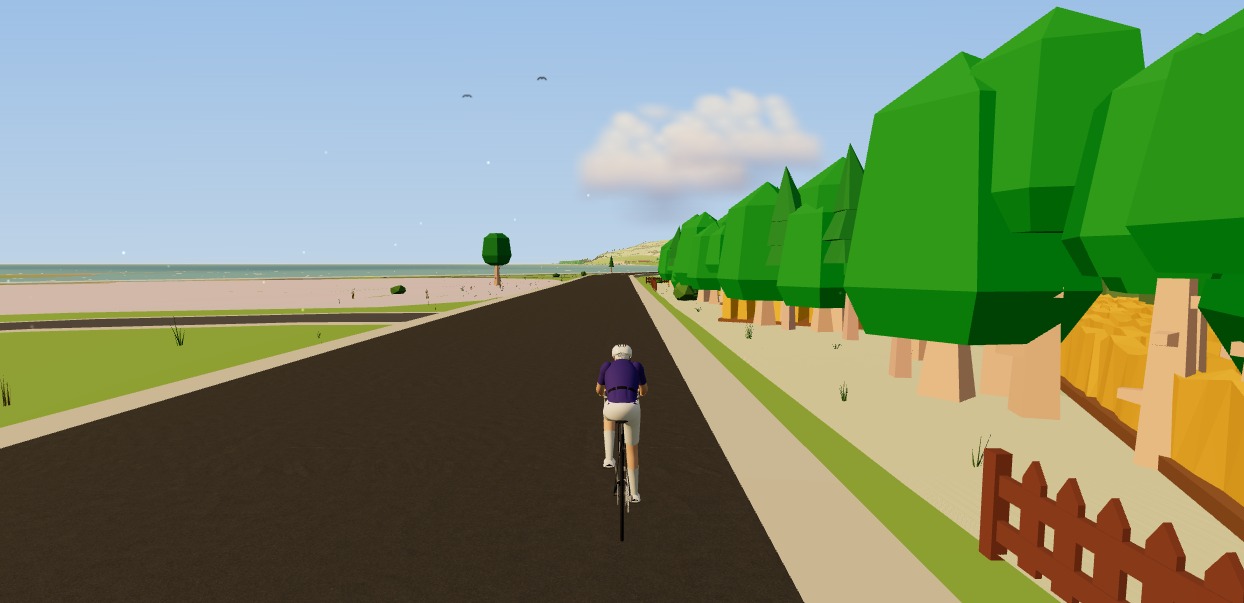
That summer loop you love is a GPX file — so you can ride it indoors in winter. Here's how to ride your Strava routes indoors on a smart trainer, in 3D, from real map and elevation data, without installing anything.
How to ride a GPX file indoors on your smart trainer
Any route you can export as a GPX file, you can ride indoors. Here's how to turn a GPX into a 3D indoor ride on your smart trainer — with real gradients driving the resistance — straight from your browser, no install.

7 rules for building the perfect cycling route (climbs, surfaces, wind and coffee stops)
A great ride is designed, not stumbled upon. These seven rules — from riding into the wind first to matching climbs to your goal — turn any loop into a route you'll want to do again.

Gravel vs road: how to pick the right surface for every ride
Two disciplines, one love of riding. Here's an honest look at gravel vs road — the bikes, the skills, the training value — and how to choose for any given day.

The art of the coffee ride: designing routes around the perfect café stop
The coffee ride is a genre of its own — social, unhurried, and secretly good training. Here's how to design a loop around the perfect mid-ride café stop.

How to plan a cycling trip: turning a bucket-list route into a day-by-day itinerary
Dreaming of the Alps or a week of gravel? Here's how to turn a bucket-list idea into a real day-by-day cycling trip — distances, climbs, stays, food and rough costs.
The same roads backwards: why reversing a route changes the ride
The descent you know by heart is a climb you have never paced, the tailwind is now waiting for you at the wrong end, and the low winter sun is in your eyes at every junction. Why the loop you have ridden forty times is still one ride you haven't done.
Choosing safer roads: what the crash data says about route planning
Riders fear being hit from behind; the collision statistics are dominated by junctions and turning vehicles. What the research says about where risk actually concentrates, and how to turn that into a route-planning habit rather than a worry.

How to descend faster and safer: braking, lines and where to look
Descending is the cheapest free speed in cycling and the skill riders practise least. Braking and weight transfer, the line through a corner, where to put your eyes — and why target fixation puts people in ditches.

Riding in a group: the skills nobody explains to beginners
Sitting in saves a great deal of energy — the wind-tunnel and CFD work puts it higher than most riders assume. How to hold a wheel, rotate, signal and brake in a way that keeps everyone upright.
Ready to ride with a plan?
Connect Strava and get your first three-week block today — free.
Continue with Strava