The Moveee team
Free coaching · a real route for every ride
A smart trainer is probably the highest-leverage purchase in cycling. It converts bad weather, short days and a tight schedule into consistent, measurable training — the thing that actually makes people faster. It's also an area where it's remarkably easy to spend twice what you need to, or to save €200 and end up with something so loud and inaccurate that you quietly stop using it.
Here's what genuinely matters, what doesn't, and roughly what to spend.
Buy a mid-range direct-drive smart trainer in the €500–800 band from a major brand, make sure it supports FTMS over Bluetooth, and spend whatever's left on a big fan. That covers 90% of riders for the next five years. Everything below is why.
The four kinds of trainer
"Smart trainer" covers several quite different machines. This is the honest hierarchy:
| Type | Typical price | Accuracy | Noise | Road feel |
|---|---|---|---|---|
| Direct-drive smart | €500–1,300 | ±1–2% | Very quiet | Excellent |
| Your rear wheel comes off and the bike bolts to the trainer's own cassette. The default serious choice. | ||||
| Wheel-on smart | €250–450 | ±3–5% | Noticeable | Fair |
| A roller presses against your tyre. Cheaper and quicker to set up, but louder and it eats rear tyres. | ||||
| Dumb trainer + power meter | €150 + meter | Meter-dependent | Varies | Fixed curve |
| No electronic resistance control — no ERG. Fine if you already own a power meter and ride to feel. | ||||
| Smart bike | €2,000–4,000 | ±1% | Near silent | Best in class |
| A dedicated indoor bike. Superb, expensive, and you never swap a bike over again. | ||||
For most people the real decision is just wheel-on or direct-drive. Wheel-on saves you a few hundred euros; direct-drive gives you near-silence, better accuracy, no tyre wear and a much nicer ride. If you're at all confident you'll use it through a whole winter, direct-drive is worth the stretch — it's the difference between a machine you tolerate and one you don't think about.
What to actually check on the spec sheet
Controllable resistance (FTMS) Non-negotiable
This is what makes a trainer 'smart'. FTMS is the open Bluetooth standard every modern app speaks — insist on it.
Bluetooth + ANT+ Non-negotiable
Bluetooth for phones, tablets and browsers; ANT+ for head units and older setups. Most trainers do both.
ERG mode Non-negotiable
Lets the app hold your target watts through an interval regardless of your gear or cadence. Effectively standard now.
Stated accuracy of ±2% or better
Anything worse and your zones — and your FTP tests — sit on sand. ±1–2% is the direct-drive norm.
Enough max wattage and gradient
1,500 W and 15% simulated gradient covers virtually every rider. Sprinters and heavy riders should look higher.
Cassette included (or budget for one)
Direct-drive units often ship bare. A cassette plus fitting is another €60–120 you may not have planned for.
Maximum simulated gradient. Manufacturers love quoting 20%+, but almost nobody rides at those numbers for long, and most apps let you scale the difficulty down anyway. A trainer that simulates 12–15% is plenty. Don't pay a premium for a number you'll turn down in the settings on day one.
What to spend
A wheel-on smart trainer. Full app compatibility and ERG, at the cost of noise and tyre wear.
You want to try structured indoor training without a big commitment.
A mid-range direct-drive unit. Quiet, accurate to ±1–2%, and good enough that you'll never need to upgrade.
You know you'll ride indoors regularly. This is where most riders should land.
A flagship direct-drive with road feel, motion, and very high accuracy.
You do serious indoor volume, race virtually, or simply want the best.
A dedicated indoor bike with integrated shifting and adjustable fit.
Indoor riding is a permanent, major part of your training — or the family shares it.

Don't forget the rest of the setup
The trainer is only part of the bill, and the accessories matter more than people expect:
- A serious fan — genuinely the best value purchase in indoor cycling. Heat, not fitness, is what ends most indoor sessions early. See why your indoor FTP is lower.
- A trainer mat — protects the floor, catches sweat, and cuts vibration through the building.
- A cassette — if you're going direct-drive and it isn't included, match it to your bike's drivetrain.
- A front-wheel riser block — usually a few euros, and it levels the bike properly.
- A sweat guard and old towels — sweat is corrosive and finds its way into headsets and bolts.
Then: what will you ride on it?
The hardware is genuinely the easy part now, because almost every trainer talks to almost every app over the same open standard. The choice that actually shapes your winter is the software — see our round-up of the best indoor cycling apps for the full picture.
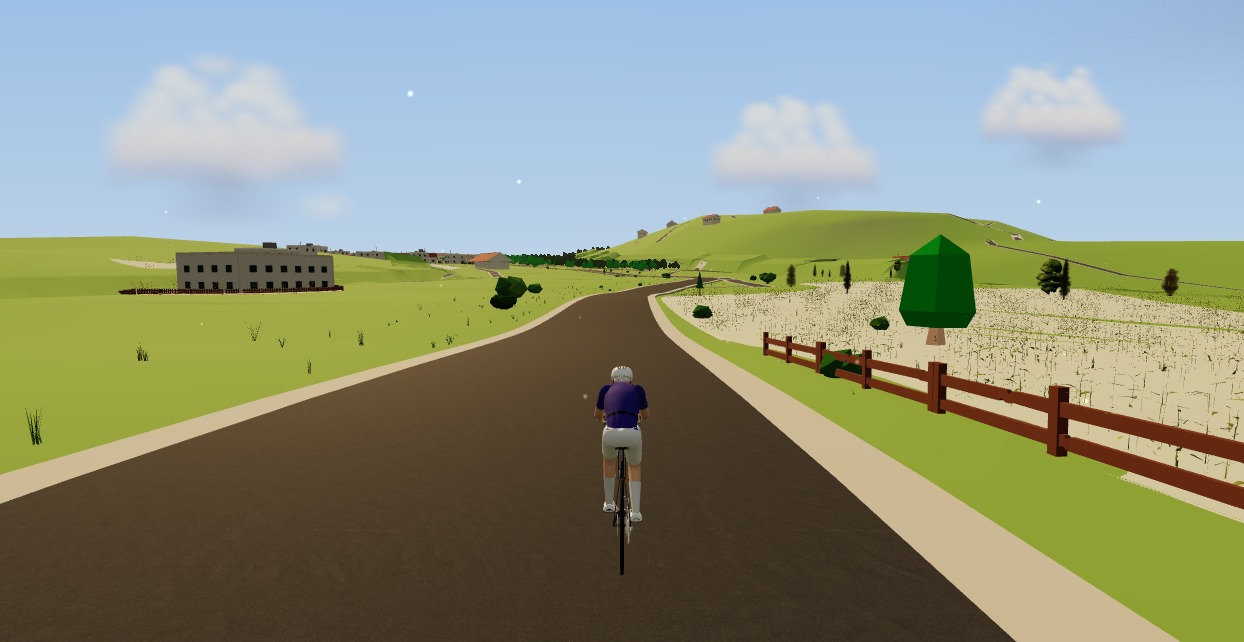
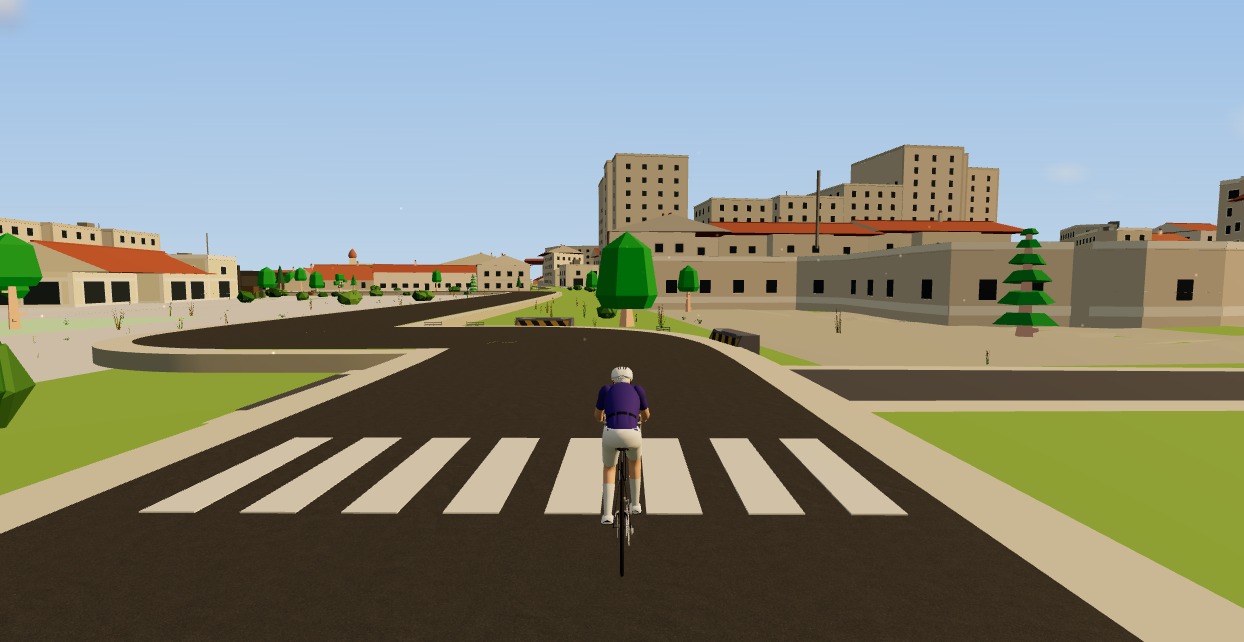
If you'd rather not add another subscription on top of the trainer you just bought, Moveee Indoor is free and runs in your browser — pair the trainer over Bluetooth, pick one of your own saved routes, and it builds a 3D world along the real roads that route follows. There's nothing to install, ERG workouts are included, and the ride saves with full power data into your Moveee training log. It's an easy way to find out whether you like indoor riding before you spend anything more.
Buy once, buy quiet, and put the change toward cooling. Then just use the thing — the trainer that makes you fastest is whichever one you're still riding in February.
Sources 5
Where this article summarises a study, the study itself is linked — not a write-up of it.
- 1 Fitness Machine Service 1.0 (FTMS) specification · Bluetooth SIG · 2017
- 2 ANT+ basics · ANT+ Alliance / Garmin Canada · 2024
- 3 Zadow EK, Kitic CM, Wu SSX, Smith ST, Fell JW Validity of Power Settings of the Wahoo KICKR Power Trainer · International Journal of Sports Physiology and Performance · 2016
- 4 Lillo-Beviá JR, Pallarés JG Validity and Reliability of the Cycleops Hammer Cycle Ergometer · International Journal of Sports Physiology and Performance · 2018
- 5 Coyle EF, González-Alonso J Cardiovascular Drift During Prolonged Exercise: New Perspectives · Exercise and Sport Sciences Reviews · 2001
Your own roads, indoors, in a browser tab
Moveee Indoor pairs your smart trainer over Bluetooth and rebuilds a route you have saved as a 3D road — real gradients, ERG for the intervals, and the ride saved with full power data. Nothing to install. Free while it is in alpha.
Start an indoor rideKeep reading
How to use an indoor cycling app without a smart trainer — a speed sensor is enough
A £30 wheel speed sensor turns any dumb trainer into a real route in a 3D world, with the ride saved to your calendar. What you need, how to set it up, and the one thing about hills you should know before your first session.

Power meter vs smart trainer: which should you buy first?
They measure in different places, and neither is wrong. What independent validation studies show about accuracy, why your two numbers disagree, and which one earns its money first for the riding you actually do.

Turn a dumb trainer smart with a power meter and your browser
You don't need to buy a smart trainer to train with power indoors. Here's how to turn a dumb trainer smart with a power meter (or speed sensor) and a free browser app — including how virtual power fills the gap if you have neither.

Buying a used bike: the ten-minute inspection
Frame first, then wheels, drivetrain, brakes and bearings, then the paperwork. An ordered check that finds the deal-breakers early, with the honest caveat about carbon.

A free app for Elite smart trainers (in your browser)
Own an Elite Suito, Direto or Justo? You don't need a subscription to ride it properly. Here's a free app for Elite smart trainers that runs in your browser — FE-C/FTMS control, ERG intervals, real 3D roads and a Strava upload.

Your first road bike: what to spend and what to ignore
Fit first, then contact points, then a certified helmet. Honest price bands, the spec-sheet numbers that do not matter, and the safety checks that do.

Smart trainer not connecting? Fixing Bluetooth pairing on Mac, Windows and Android
Nine times out of ten a trainer that won't connect is already connected — to an app you forgot was open. A symptom-by-symptom fix-it guide for Bluetooth pairing: not found, won't pair, pairs then drops, power reads zero — with the platform quirks for Mac, Windows and Android that nobody documents.

How accurate is your smart trainer's power? (and why it disagrees with your power meter)
Your trainer says 250 W, your pedals say 262 W — and neither of them is lying. What the accuracy claims on the box actually mean, why drivetrain loss makes a hub always read lower than a crank, when calibration matters, and why consistency beats absolute truth for training.
The best indoor cycling app for Mac (no download, runs in your browser)
Looking for an indoor cycling app for Mac that doesn't need a download? macOS runs a full smart-trainer session straight from a browser tab — pairing, ERG, real 3D roads and a Strava upload. Here's how, and the one thing to watch on Apple Silicon.

Clipless pedals: how to start without falling over at the lights
Which system to start on, how to set cleat position and float so your knees track straight, and a grass-first drill that makes unclipping a reflex before you need it.
The best free Zwift alternative in 2026
Zwift is no longer the only game in town, and some of the best options cost nothing. Here's an honest guide to the best free Zwift alternative in 2026 — what each one does well, and how to pick the one that fits how you ride.

How to build a cycling training plan around a full-time job
You don't need 12-hour weeks to get properly fast — you need the right 6–8 hours, placed where your life can actually hold them. Here's how to anchor a working week around two quality sessions and one long ride, what to cut first when work explodes, and why a plan that adapts beats a plan that's perfect.