
The Moveee team
Free coaching · a real route for every ride
There is a version of winter riding that is cold, wet and grim, and a version that is cold, dry-footed and rather enjoyable. The gap between them is mostly equipment, and most of that equipment is inexpensive.
Mudguards, and why this is not a style question
A wheel throws water forwards and upwards in an arc. Without a front guard, that water goes onto your feet and shins; without a rear guard, it goes up your back and — if you are in company — directly into the face of the rider behind.
Two consequences follow. First, wet feet at 3°C are what ends winter rides early, and a front mudguard with a proper mudflap is the single most effective fix available. Second, the social one: in plenty of clubs, a bike without guards is not welcome on a winter group ride, and the rule exists because the alternative is genuinely unpleasant for everyone else.
Full-length guards beat clip-on ones by a wide margin. Clip-ons keep a bit of water off you and almost none off the rider behind, which is the half that gets you invited back.
What to change, and how much it matters
Keeps a rooster tail of cold gritty water off your feet, your back and — crucially — the rider behind you. A long mudflap on the front guard is what protects your own feet; a long one on the rear is what makes you welcome on a group ride.
Winter roads carry flints, grit and potholes filled with water. A more robust 30–32 mm tyre punctures less and grips better in the wet, at a cost in speed nobody should care about in January.
Not just for the dark. Winter afternoons are gloomy enough that a rear light in daylight is genuinely useful — see our article on riding at night.
Wet lube through the winter, reapplied often. This is the season where dry lube and wax both struggle.
A winter bike is not about the riding — it is about which frame and which drivetrain get destroyed by salt and grit. If you have two bikes, ride the one you mind less about.
Winter destroys cleats and pedal bearings. Some riders keep a scruffy set for the season.

Fitting guards to a bike that was not designed for them
Modern race frames frequently have no mudguard eyelets and limited clearance, which is how the whole category of compromise solutions came about. Realistically:
- If your frame has eyelets and clearance: full-length guards, fitted properly, with mudflaps added. Best outcome by far.
- If it has clearance but no eyelets: guards that mount with straps or brackets. Less elegant, nearly as effective.
- If it has neither: a long clip-on rear guard and an ass-saver-style seat guard is the realistic ceiling. Accept it will not protect anyone behind you, and say so on a group ride.
- Check clearance with the tyre you will actually use. A guard that clears a 28 mm tyre in the shop can jam with a 32 mm and a load of wet grit. Anything rubbing in winter will rub worse in slush.
The maintenance side
Salt and grit are far harder on a bike than mileage is. A winter bike needs the drivetrain cleaned and relubed much more often than a summer one, and the components that fail are usually bearings — bottom bracket, headset, hubs — because water gets in and stays there.
A rinse and a wipe after every wet ride does more for a bike's lifespan than any amount of careful riding. Washing your bike properly covers doing it quickly and without wrecking your brakes, and chain waxing vs lube covers why wet lube is the right call for these months specifically.
The rest of the winter problem
Equipment is one of three things that decide whether you ride through the winter. The other two are clothing — cycling in cold weather — and accepting that some evenings the right answer is indoors.
On those evenings, Moveee Indoor runs your own routes in a browser tab, which at least means the road on the screen is one you will recognise in April. And there is a maintenance bonus: every hour on the trainer is an hour of salt your drivetrain does not have to survive.
Sources 4
Where this article summarises a study, the study itself is linked — not a write-up of it.
- 1 Castellani JW, Young AJ Human physiological responses to cold exposure: Acute responses and acclimatization to prolonged exposure · Autonomic Neuroscience · 2016
- 2 Madsen JCO, Andersen T, Lahrmann HS Safety effects of permanent running lights for bicycles: A controlled experiment · Accident Analysis & Prevention · 2013
- 3 The Highway Code — Rules for cyclists (59 to 82) · GOV.UK · 2022
- 4 Spicer JB, Richardson CJK, Ehrlich MJ, Bernstein JR, Fukuda M, Terada M Effects of Frictional Loss on Bicycle Chain Drive Efficiency · Journal of Mechanical Design · 2001
See this in your own numbers
Moveee builds your power curve, fitness and fatigue from every ride you upload, and writes a training plan around them. It is free, it takes one Strava connection, and it will tell you more about your riding in a week than any article can.
Start freeKeep reading

Can you use a spin bike with cycling apps? What works and what doesn't
The gym-style spin bike in your spare room and the cycling apps on your laptop live in different worlds — but there are honest bridges between them. What a dumb spin bike can and can't do, the sensors that unlock app compatibility, which smart bikes broadcast openly, and when a used smart trainer is simply the better buy.

Gearing for climbing: the arithmetic nobody does
The belief that low gears are an admission of weakness has cost riders a great many good days. A table of what your lowest gear actually forces your legs to do at climbing speed — and why a 34×28 on a steep road is a leg press with a view.
Chest strap or wrist: which heart rate reading to trust
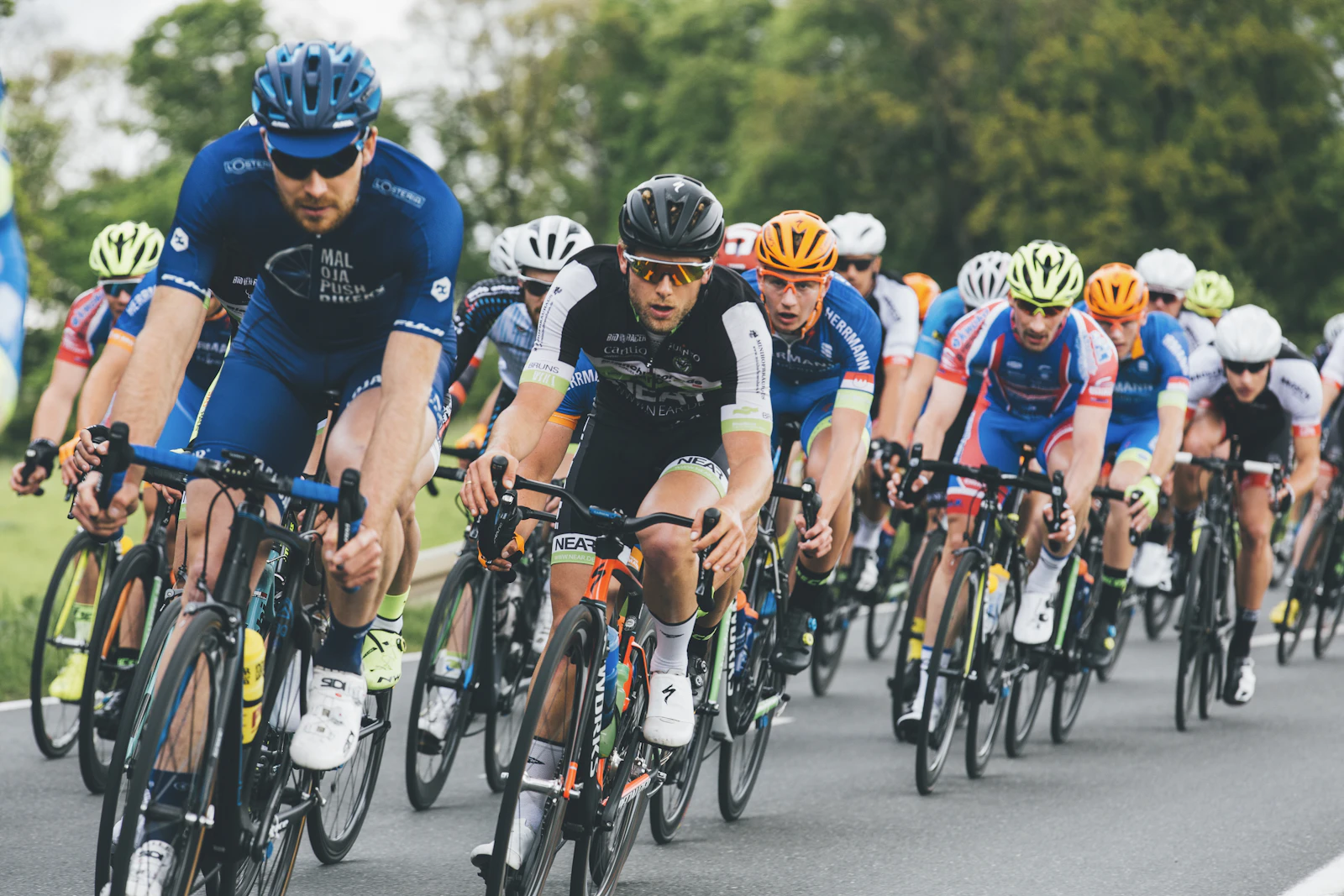
For steady riding an optical sensor is fine. For intervals the strap still wins, and the reason is physics rather than brand quality. Where each one fails, the armband middle ground, and the dry-strap fix that stops the 180 bpm nonsense.
Your first winter on the bike: kit, roads and staying motivated
Winter is where new riders quietly stop. Warm extremities, lower roads, one hard session a week and a fixed ride day carry more fitness into spring than any jacket.

Lower back pain on the bike: what's actually causing it
Usually a position your hips and hamstrings can't hold, rather than a back problem. How reach and drop interact with mobility, what core endurance research supports, and how to tell position pain from something else.

From a browser tab to Strava: how Moveee Indoor runs a full trainer session
Follow one indoor ride from cold trainer to a Strava post — pairing, ERG intervals, a real 3D road, full power analysis and a one-tap upload — all without installing a thing.

Rollers vs turbo trainer: which should you ride this winter?
One teaches you to ride; the other makes you fitter. Rollers build balance, souplesse and bike handling that a locked-in turbo never will — but the turbo owns structure, ERG and every hard interval you'll do all winter. An honest comparison, who should pick which, and why the real answer might be both.

A TrainingPeaks alternative that plans the workouts for you
TrainingPeaks is the coach's clipboard — superb if you have a coach or love building your own plan, but on your own it never answers the question you actually have: what should I ride today? An honest comparison with an app that writes the plan, adapts it when life happens, and brings the indoor world with it.
How to wash a bike without wrecking it
There are two or three ways to clean a bike that cause more damage than the dirt would have — and they are the ones that feel most satisfying. Fifteen minutes, in the right order, without contaminating your brakes.
Try indoor training right now: open Moveee Indoor in your browser
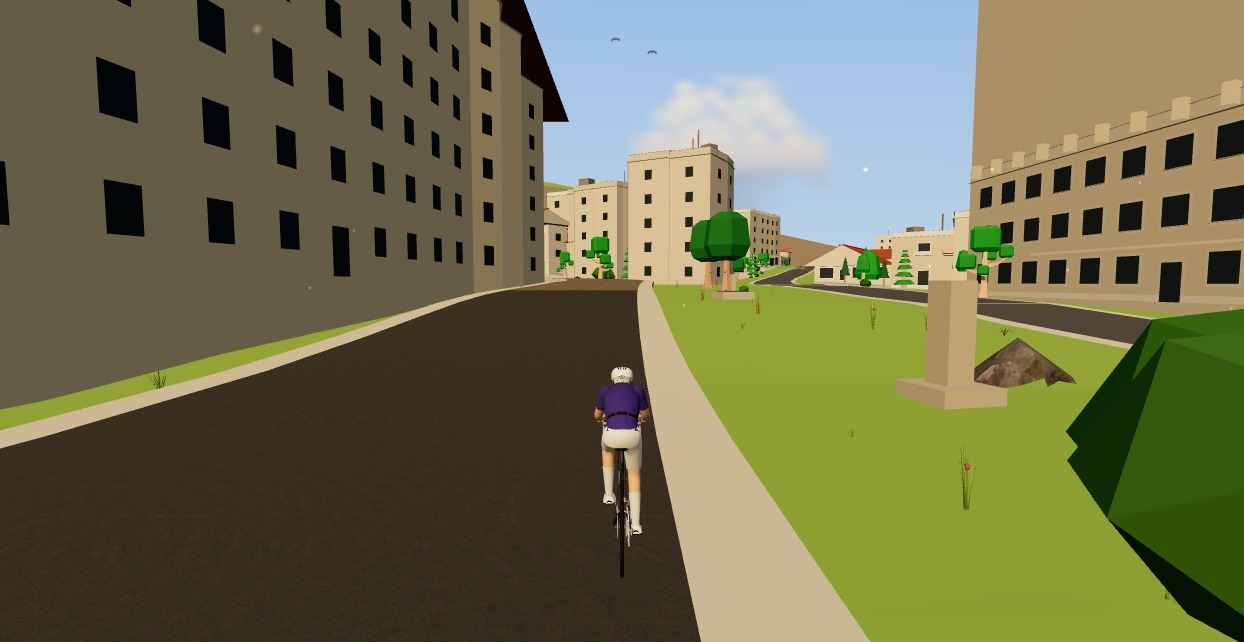
No account wall, no 20-minute download before your first pedal stroke. Here's how to go from cold trainer to riding a real 3D road in about five minutes, straight from a browser tab.

Choosing a bike computer: what actually matters
Easy to overspend on capabilities you will never use, equally easy to buy the cheapest and be quietly annoyed for three years. Three tiers described honestly, the five specifications that matter, and the feature set that is mostly marketing.

Getting out of a city to the good riding
The good roads exist — there are just 45 minutes of traffic lights between you and them. Five strategies, why the exit is a problem you solve once rather than every ride, and the train trick almost nobody uses.