
The Moveee team
Free coaching · a real route for every ride
Short answer: yes — but how well depends entirely on what signals your bike can send. A cycling app is just a listener. It doesn't care whether the thing under you is a €3,000 smart trainer or a gym spin bike; it cares whether anything is broadcasting cadence, heart rate or power over Bluetooth. Some spin bikes broadcast plenty, most broadcast nothing, and a couple of famous ones deliberately keep their data to themselves. Here's the full picture, tier by tier, with no wishful thinking.
- A dumb spin bike sends no signals, so on its own no app can see it — the console's numbers stay on the console.
- Sensors fix that honestly: a heart-rate strap unlocks HR-based training today; a cadence sensor adds pedalling data; power-meter pedals give you real watts on any bike.
- Smart bikes vary wildly: Keiser and Schwinn broadcast, Wattbike is fully open, Peloton is a walled garden. And no spin bike gives you ERG — only a smart trainer does that.
The three tiers of spin bike
A flywheel, a friction or magnetic knob, and no electronics that talk to anything. Most gym-style and budget home spin bikes.
Broadcasts nothing, so apps see nothing. On its own it can't connect to any cycling app — the console's 'watts' number, where there is one, stays on the console.
The same bike, with signals bolted on: a Bluetooth cadence sensor on the crank, a heart-rate strap on you, or power-meter pedals replacing the stock ones.
The honest upgrade path. HR and cadence get you structured HR-based training in an app today; power pedals get you real watts and the full experience.
Bikes with built-in electronics — Keiser M3i, Schwinn IC4/IC8, Peloton, Wattbike and friends. Some broadcast standard Bluetooth; some keep it in-house.
Ranges from 'works with everything' (IC4, Wattbike) to 'walled garden' (Peloton, without workarounds). The brand matters more than the price tag.
What each setup actually unlocks
Match your bike (or your bike plus what you're willing to add) against this table. "Virtual speed" means the app can estimate how fast you'd be moving and drive an avatar; "real power" means genuine measured watts, the currency of structured training:
| Setup | HR sessions | Virtual speed | Real power | ERG mode |
|---|---|---|---|---|
| Dumb bike, nothing added | ||||
| + HR strap | ||||
| + cadence sensor | ||||
| + power-meter pedals | ||||
| Broadcasting smart bike | ||||
| Smart trainer (for comparison) |
"HR sessions" assumes a Bluetooth heart-rate strap, which works with any bike — including a fully dumb one. That row's tick is the cheapest one on the table to earn.
The honest paths in: sensors
A heart-rate strap (~€30–50) is the fastest route from "no data" to "real training". Any standard Bluetooth chest strap pairs with cycling apps directly, and a well-built HR session — steady endurance, long tempo intervals — is genuinely effective training. If this is your route, our guide to training with heart rate only covers finding your zones and building a week around them.
A cadence sensor (~€20–40) straps to your crank arm and broadcasts pedalling rate. On its own it's a modest win — some apps can combine it with your resistance setting for a rough virtual speed — but paired with HR it makes sessions much easier to execute ("90 rpm at Z2 heart rate" is a precise instruction).
Power-meter pedals (~€300–700) are the real unlock. They screw into almost any spin bike with standard pedal threads (check yours — some use one-piece cranks that won't take them) and give you genuine, accurate watts that follow you to any bike you ever own, indoors or out. With power pedals, a spin bike runs power-based structured workouts as honestly as a smart trainer — you just turn the resistance knob yourself instead of the app doing it.
Smart bikes: who broadcasts, who doesn't
Keiser M3i
BroadcastsSends power and cadence over Bluetooth, though in Keiser's own flavour — many apps read it directly or via Keiser's free converter app. Its power meter is well regarded.
Schwinn IC4 / Bowflex C6
BroadcastsStandard Bluetooth power and cadence out of the box. The power number reads optimistic on many units (often ~10–15% high, approximate) — consistent, but not gospel.
Wattbike Atom
Broadcasts + ERGA genuine smart bike: full FTMS, app-controlled resistance, ERG mode. Effectively a smart trainer shaped like a spin bike.
Peloton Bike / Bike+
Walled gardenHonestly: Peloton does not broadcast its power or cadence over standard Bluetooth for other apps to use. The Bike+ can receive HR and do a one-way Apple GymKit link, but third-party cycling apps can't read the bike's data without unofficial hacks. You buy Peloton to ride Peloton.
When a used smart trainer beats upgrading the spin bike
Here's the maths worth doing before you spend anything. Power pedals cost €300+, and even then your spin bike can't do ERG — the mode where the app holds your target watts for you, which is half the point of structured indoor training (ERG mode explained if that's new to you). Meanwhile the used market is full of previous-generation direct-drive smart trainers — Kickr Core, Tacx Flux, JetBlack Volt — at €250–400, each with accurate power and ERG and app-controlled resistance built in. If you own a road or gravel bike you can mount on one, a used smart trainer is very often the better spend than making a spin bike half-smart. The spin bike wins when you don't own an outdoor bike at all, when several household members of different heights share it, or when you already own the pedals.
What you can ride today, whatever tier you're on
If you're at tier 2 with just a heart-rate strap, you're not locked out of the good stuff. Moveee Indoor runs entirely in the browser (Chrome or Edge — no download), pairs any standard Bluetooth HR strap, cadence sensor, power meter or smart trainer over Web Bluetooth, and runs HR-based sessions today — so a dumb spin bike plus a €35 strap is a working setup, riding real roads in 3D and saving to Strava, for free. And if you later add power pedals or a trainer, the same tab simply gets better data. Start where your bike is; the app will meet you there.
Sources 7
Where this article summarises a study, the study itself is linked — not a write-up of it.
- 1 Fitness Machine Service 1.0 (FTMS) specification · Bluetooth SIG · 2017
- 2 Cycling Power Service 1.1 specification · Bluetooth SIG · 2016
- 3 Heart Rate Service 1.0 specification · Bluetooth SIG · 2011
- 4 Cycling Speed and Cadence Service 1.0 specification · Bluetooth SIG · 2012
- 5 Bouillod A, Pinot J, Soto-Romero G, Bertucci W, Grappe F Validity, Sensitivity, Reproducibility, and Robustness of the PowerTap, Stages, and Garmin Vector Power Meters in Comparison With the SRM Device · International Journal of Sports Physiology and Performance · 2017
- 6 Achten J, Jeukendrup AE Heart Rate Monitoring: Applications and Limitations · Sports Medicine · 2003
- 7 McIlroy B, Passfield L, Holmberg H-C, Sperlich B Virtual Training of Endurance Cycling – A Summary of Strengths, Weaknesses, Opportunities and Threats · Frontiers in Sports and Active Living · 2021
Your own roads, indoors, in a browser tab
Moveee Indoor pairs your smart trainer over Bluetooth and rebuilds a route you have saved as a 3D road — real gradients, ERG for the intervals, and the ride saved with full power data. Nothing to install. Free while it is in alpha.
Start an indoor rideKeep reading

ERG mode in the browser: hold your watts on any smart trainer
ERG mode used to mean installing a desktop app. Not any more. Here's how ERG mode in the browser works — how a tab sets the resistance on your smart trainer and holds your target watts through every interval, free.

Mudguards and the winter bike
There is a version of winter riding that is cold, wet and grim, and one that is cold, dry-footed and rather good. The gap is mostly equipment, most of it cheap — and mudguards are not a style question.
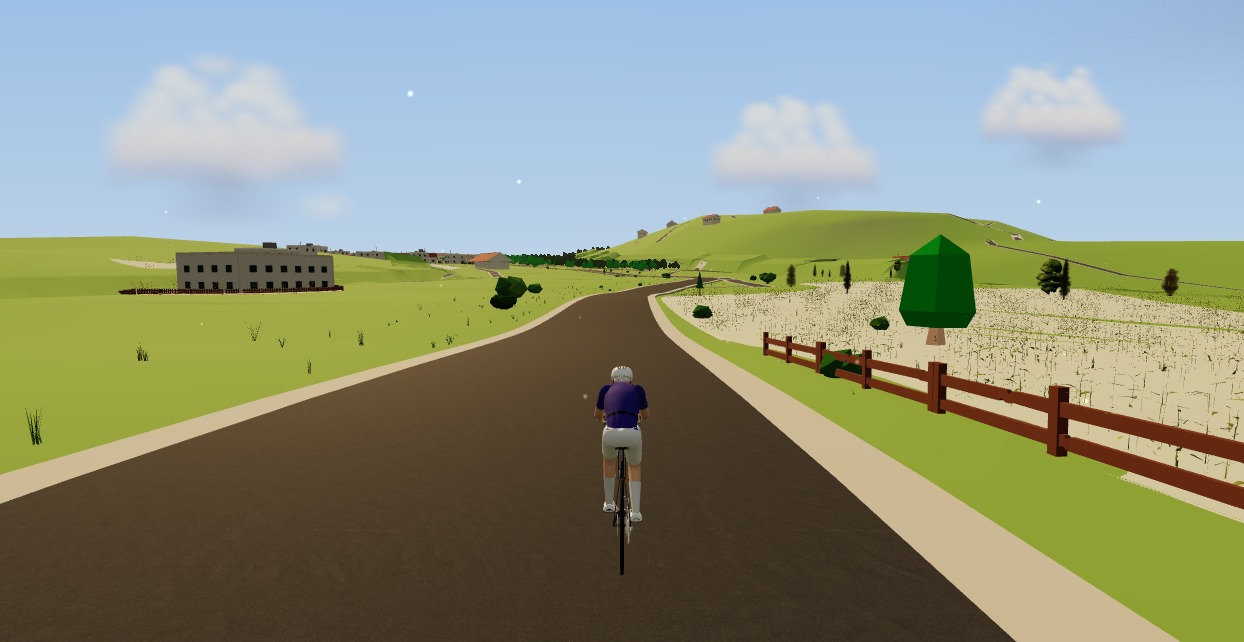
How to use an indoor cycling app without a smart trainer — a speed sensor is enough
A £30 wheel speed sensor turns any dumb trainer into a real route in a 3D world, with the ride saved to your calendar. What you need, how to set it up, and the one thing about hills you should know before your first session.

Indoor cycling on a smart TV: how to ride on the big screen
Riding a trainer on a 55-inch screen beats squinting at a laptop. Here's how to get indoor cycling on a smart TV in 2026 — the setups that work, the ones that don't, and the simplest big-screen route of all.

Pedals, cranks or spider: which power meter to buy
Where a meter measures decides what it can honestly tell you. Single-sided doubling and the error it hides, temperature drift, how easily each type moves between bikes, and what the published validation studies found.

Looking after a smart trainer
Most of what goes wrong with trainers is not wear — it is sweat, and the drivetrain attached to them. Diagnosing the noise (it is usually not the trainer), what the neighbours actually hear, and a maintenance schedule that takes minutes.

How to connect a smart trainer to your browser with Web Bluetooth
Your browser can talk to your smart trainer directly — no app, no dongle, no ANT+ stick. Here's how Web Bluetooth pairing works, what it supports, and how to fix it when it won't connect.
Indoor cycling on an Android tablet or phone (in the browser)
You don't need a laptop or an app-store download to train indoors. Here's how to run a full indoor cycling app on an Android tablet or phone, straight from Chrome — pairing your smart trainer over Bluetooth, holding ERG targets and saving to Strava.
ERG mode explained: when to use it, when to turn it off
ERG mode holds your watts so you don't have to. Here's how it actually works, how to escape the dreaded spiral of death, and the sessions where you're better off without it.
Turn a dumb trainer smart with a power meter and your browser
You don't need to buy a smart trainer to train with power indoors. Here's how to turn a dumb trainer smart with a power meter (or speed sensor) and a free browser app — including how virtual power fills the gap if you have neither.
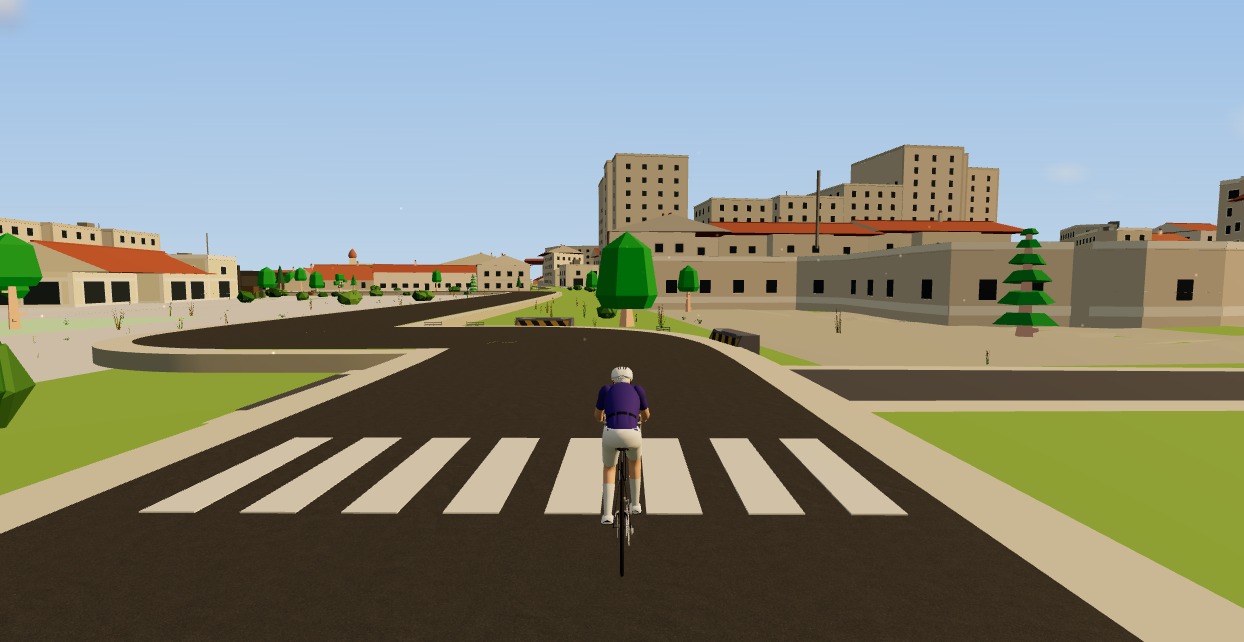
Can you really train indoors in a browser? How Moveee Indoor works in 2026
"In the browser" used to mean toy-grade. Not any more. Here's how a browser now pairs your trainer, holds your watts and renders a real 3D world — and what still needs a native app.

Getting out of a city to the good riding
The good roads exist — there are just 45 minutes of traffic lights between you and them. Five strategies, why the exit is a problem you solve once rather than every ride, and the train trick almost nobody uses.