
The Moveee team
Free coaching · a real route for every ride
Where a bike lives sounds like a trivial domestic question. It is not, because it quietly determines how often you ride: a bike that takes four minutes and two decisions to extract gets ridden considerably less than one you can lift off a hook.
The same is true of a trainer. The best indoor setup is not the one with the biggest screen — it is the one where the gap between deciding to ride and pedalling is under two minutes.
Storage options
Wall hook, vertical
Smallest footprint of anything, cheap, and the bike is off the floor.
Marks the wall, and hydraulic brake purists will tell you not to hang a bike by a wheel — in practice it is fine for modern systems, but bleed quality matters.
Flats and hallways where floor space is the constraint.
Floor stand
No fixings, no damage, moves easily, and getting the bike in and out takes two seconds.
Uses floor area, and wobbles under a knock.
Rented places, and the bike you ride most often.
Ceiling hoist
Uses space nothing else can use. Excellent for a bike you ride rarely.
A faff to raise and lower, which means you will ride that bike even less.
The second bike, the winter bike, the one for guests.
Outdoor shed or box
Keeps bikes out of the house entirely.
Damp is the real enemy — worse for a bike than cold. Needs ventilation, and a serious lock and ground anchor.
Multiple bikes, and households where indoor storage has run out.
One general rule: the bike you ride most should be the easiest one to get at. It sounds obvious and it is routinely violated — riders hoist the good bike to the ceiling to protect it and then wonder why they keep taking the commuter out.
Damp matters more than cold
Bikes tolerate cold perfectly well. What they do not tolerate is repeated condensation — an unheated shed that warms in the afternoon and cools at night puts moisture on every metal surface, and that reaches bearings, chain, bolts and cable ends.
If bikes live outside, ventilation and a cover matter more than insulation, and the maintenance schedule needs to be more frequent. Washing your bike properly covers getting salt off before it sits, which is doubly important for a bike that will spend the night in a damp shed.

The trainer corner
A permanent setup beats a better one you have to assemble. The difference between a trainer that lives set up in a corner and one that comes out of a cupboard is, in practice, the difference between training through the winter and not.
What a workable corner needs, in order of how much it matters:
- A fan, and then a bigger fan. The most important object in the room. Heat, not fitness, ends most indoor sessions early.
- A mat. Protects the floor from sweat, which is genuinely corrosive, and cuts noise transmitted to neighbours.
- A screen at eye level. Not on the floor. A cheap stand or a shelf is enough.
- A towel and a bottle within reach, placed before you start rather than fetched mid-interval.
- Somewhere to put the wet kit afterwards that is not the floor.
Pain cave setup covers the fuller version, and setting up a second screen for indoor training covers the display question specifically.
Flats, shared houses and noise
Two constraints dominate for riders without a garage: floor area and neighbours. Both are solvable.
- Noise is mostly vibration through the floor, not airborne sound. A thick mat, or a mat on top of a rug, makes a substantial difference. Direct-drive trainers are considerably quieter than wheel-on ones.
- The fan will be the loudest thing in the room once the trainer is dealt with, which surprises people.
- Set up and leave it. Even in a small flat, a trainer in the corner of a bedroom that stays there is worth more than a tidier arrangement you have to build each time.
- Keep the software friction low too. A setup where the session starts in three clicks gets used; one that needs a laptop, an update and a login does not.
That last point is a real one. Moveee Indoor runs in a browser tab — nothing to install or update, pair the trainer and ride — which removes one of the reliable excuses on a dark Tuesday. It is free while in alpha, and it rides your own saved routes in 3D, so the corner of the bedroom at least has somewhere decent to look at.
Security, briefly
Bikes stored in communal hallways, sheds and garages are stolen routinely. A ground anchor and a proper lock cost a fraction of a bike, insurance frequently requires specific security measures to pay out, and photographs plus frame numbers recorded somewhere are what make a recovered bike returnable. None of it is interesting, and all of it is cheaper than the alternative.
Sources 7
Where this article summarises a study, the study itself is linked — not a write-up of it.
- 1 Lally P, van Jaarsveld CHM, Potts HWW, Wardle J How are habits formed: modelling habit formation in the real world · European Journal of Social Psychology · 2010
- 2 Gardner B A review and analysis of the use of 'habit' in understanding, predicting and influencing health-related behaviour · Health Psychology Review · 2015
- 3 Galloway SD, Maughan RJ Effects of ambient temperature on the capacity to perform prolonged cycle exercise in man · Medicine & Science in Sports & Exercise · 1997
- 4 Baker LB Physiology of sweat gland function: the roles of sweating and sweat composition in human health · Temperature · 2019
- 5 Museum Handbook, Part I, Appendix O: Curatorial care of metal objects · US National Park Service · 2002
- 6 Caring for metal objects — preventive conservation guidelines for collections · Canadian Conservation Institute · 2018
- 7 Overview of bicycle theft (Crime Survey for England and Wales) · Office for National Statistics · 2017
Your own roads, indoors, in a browser tab
Moveee Indoor pairs your smart trainer over Bluetooth and rebuilds a route you have saved as a 3D road — real gradients, ERG for the intervals, and the ride saved with full power data. Nothing to install. Free while it is in alpha.
Start an indoor rideKeep reading

Looking after a smart trainer
Most of what goes wrong with trainers is not wear — it is sweat, and the drivetrain attached to them. Diagnosing the noise (it is usually not the trainer), what the neighbours actually hear, and a maintenance schedule that takes minutes.
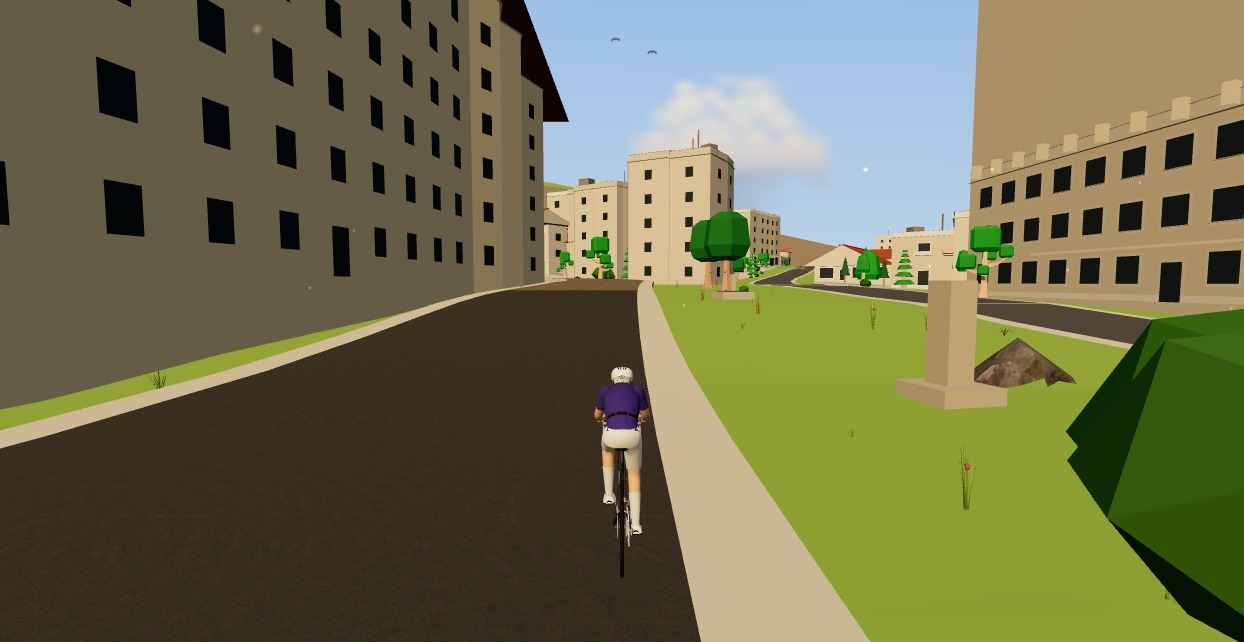
Try indoor training right now: open Moveee Indoor in your browser
No account wall, no 20-minute download before your first pedal stroke. Here's how to go from cold trainer to riding a real 3D road in about five minutes, straight from a browser tab.

Pedals, cranks or spider: which power meter to buy
Where a meter measures decides what it can honestly tell you. Single-sided doubling and the error it hides, temperature drift, how easily each type moves between bikes, and what the published validation studies found.

The one setting that decides if your speed is right inside the cycling app
A speed sensor counts wheel revolutions, not kilometres. Get the tyre circumference wrong and every number is wrong by the same percentage — up to 10% — while looking entirely plausible. The table, and the two-minute roll-out that beats it.

How to ride with traffic: positioning that keeps you safe and seen
Hugging the kerb feels safe and is not. Where crashes happen, when to take the lane, what the overtaking research honestly says, and why a daytime rear light beats a hi-vis jacket.

ERG mode in the browser: hold your watts on any smart trainer
ERG mode used to mean installing a desktop app. Not any more. Here's how ERG mode in the browser works — how a tab sets the resistance on your smart trainer and holds your target watts through every interval, free.

A free indoor ride in your browser: how far Moveee Indoor gets you for nothing
How much real indoor training can you get without paying a subscription or installing anything? Quite a lot, as it turns out. Here's the free browser setup, end to end.

From a browser tab to Strava: how Moveee Indoor runs a full trainer session
Follow one indoor ride from cold trainer to a Strava post — pairing, ERG intervals, a real 3D road, full power analysis and a one-tap upload — all without installing a thing.

Commuting by bike: how to make it count as training
Riding to work has some of the strongest health evidence in all of cycling. How to turn thirty minutes each way into genuine training, when to keep it easy instead, and the logistics that make it sustainable.

Indoor cycling on a smart TV: how to ride on the big screen
Riding a trainer on a 55-inch screen beats squinting at a laptop. Here's how to get indoor cycling on a smart TV in 2026 — the setups that work, the ones that don't, and the simplest big-screen route of all.

Buying a used bike: the ten-minute inspection
Frame first, then wheels, drivetrain, brakes and bearings, then the paperwork. An ordered check that finds the deal-breakers early, with the honest caveat about carbon.

Cooling down and stretching: what actually helps, honestly
The evidence is far less conclusive than the folklore. Here's what a cool-down genuinely does, what stretching is and isn't good for, and the six stretches worth ten minutes after a ride.