The Moveee team
Free coaching · a real route for every ride
It's a fair thing to doubt. For most of the web's life, "in the browser" meant toy-grade — a little game in a tab, not something that could actually train you. So when someone says a browser now runs a full indoor trainer session, the honest first reaction is scepticism. Can a web page really hold your watts, render a real road, and save a ride that counts?
The short answer is yes, and it's worth understanding why — because the mechanism is real, not marketing. We build one of these tools, Moveee Indoor, so we'll use it to show exactly how the pieces fit, and we'll be just as clear about what a browser still can't do.
Two things changed
The browser didn't get magically smarter overnight. Two specific capabilities landed, and together they cover everything a trainer app needs to do:
Web Bluetooth
The browser can now pair directly with your smart trainer, power meter and heart-rate strap — the same live two-way link a native app uses, no dongle or install.
WebGL & WebGPU
Hardware-accelerated 3D graphics, straight from the page. That's what draws a real street, a church, a bridge and a climbing gradient in real time as you ride.
One lets the page talk to the trainer; the other lets it draw a real world. Everything below is just those two working together. And the same pair explains the browser's limits, which we'll come to.
Myth vs reality
Most of the scepticism clusters around a handful of specific worries. Here's each one against what actually happens in a session:
"A browser can't reach my trainer."
Web Bluetooth pairs FTMS trainers, CPS power meters and HR straps directly from the tab.
"It'll be a flat cartoon, not a real ride."
The world is your own route, built from OpenStreetMap and real elevation — actual streets and gradients.
"ERG won't work in a web page."
It does. The trainer holds each interval's target watts across 150+ workouts, or your own.
"The data won't be real training data."
Full power streams with NP, IF, TSS and best efforts — identical to an outdoor ride.
"Close the tab and the ride's gone."
The recording is backed up as you ride — a dropped connection or closed tab can't erase it.
"It won't count toward my plan."
It saves as a virtual ride, lands on your calendar, counts toward your plan, and goes to Strava.

A session, start to finish
Here's the whole thing, from a cold trainer to a saved ride, so you can see there's no sleight of hand:
Pair the trainer
Open Moveee Indoor in Chrome or Edge, hit pair, and pick your trainer from the browser's device chooser.
Choose a route or workout
One of your saved routes, a structured session, or free riding through the world.
ERG holds your watts
In a workout the trainer sets resistance to each interval's target; off a workout it follows the road's real gradient.
Ride real roads
The 3D world streams in from the map around you — the actual streets, buildings and terrain your route passes through.
It saves as a real ride
Full power data with NP/IF/TSS lands on your calendar, counts toward your plan, and publishes to Strava in one tap.
Nothing in that chain is a compromise. The trainer is under proper control, the world is a real place rather than a fantasy island, and the ride that comes out the other end is indistinguishable from an outdoor one in your log. If you want the training side of the picture — how to structure indoor sessions so they actually move your fitness — our guide to training indoors is the place to start.
Indoors still feels different — that's normal
One thing a browser can't change: indoors is its own environment. Many riders find their numbers sit a little lower on the trainer than on the road, and that's expected — heat, no freewheeling, a fixed position and the mental load all play a part. It isn't a fault of the platform, browser or otherwise. If your indoor figures puzzle you, why indoor FTP is often lower explains what's really going on, so you can set your zones honestly.
What still needs a native app
Being straight about the edges is the whole point of a post like this. A browser trainer app genuinely can't do everything yet:
The honest gaps
No iPhone or iPad. iOS browsers can't pair a trainer over Web Bluetooth, and there's no native Moveee Indoor app to work around it.
Chrome or Edge only. Safari and Firefox don't support Web Bluetooth yet, so pairing won't work there.
No racing scene and no group riding — it is a solo trainer app. If a live racing population is what keeps you on the bike, this is not it.
It's alpha. Free while we build it — which honestly means you'll meet rough edges along the way.
None of those are dressed up as features. If you ride from an iPad or you live for mass-start racing, a browser app isn't your tool today, and a native platform will serve you better. But for the core question — can a browser actually train you? — the answer in 2026 is a genuine yes. Open it, pair, and the proof is in your own legs.
See for yourself — it's just a tab
Pair your trainer in Chrome or Edge and ride a real road rebuilt from the map. Full power data, straight to your plan and Strava.
Runs in your browser · Chrome or Edge · no iOS · free while in alpha
Sources 7
Where this article summarises a study, the study itself is linked — not a write-up of it.
- 1 Web Bluetooth (Community Group Draft Report) · W3C Web Bluetooth Community Group · 2025
- 2 Web Bluetooth API — browser compatibility · MDN Web Docs (Mozilla) · 2025
- 3 WebGPU (W3C Working Draft) · W3C · 2025
- 4 WebGL 2.0 Specification · Khronos Group · 2025
- 5 Fitness Machine Service 1.0 (FTMS) specification · Bluetooth SIG · 2017
- 6 Cycling Power Service 1.1 specification · Bluetooth SIG · 2016
- 7 Mieras ME, Heesch MWS, Slivka DR Physiological and Psychological Responses to Outdoor vs. Laboratory Cycling · Journal of Strength and Conditioning Research · 2014
Your own roads, indoors, in a browser tab
Moveee Indoor pairs your smart trainer over Bluetooth and rebuilds a route you have saved as a 3D road — real gradients, ERG for the intervals, and the ride saved with full power data. Nothing to install. Free while it is in alpha.
Start an indoor rideKeep reading

ERG mode in the browser: hold your watts on any smart trainer
ERG mode used to mean installing a desktop app. Not any more. Here's how ERG mode in the browser works — how a tab sets the resistance on your smart trainer and holds your target watts through every interval, free.

Browser vs installed app: why riding indoors shouldn't need a 12 GB download
Installed apps still win on a couple of things — but fewer than you'd think. Here's an honest head-to-head between browser-native and installed indoor cycling, feature by feature.

What a browser-based cycling app can — and can't — do in 2026
Browsers grew up. They can now pair your trainer, render a 3D world and save a ride with full power data. But a few things still belong to native apps. An honest capabilities audit.

No app store, no install: online cycling training with Moveee Indoor
You don't need an app store, an admin password or 12 GB free to train indoors. Here's what "online, no-install" cycling training actually looks like in practice — and who it suits.
Indoor cycling on an Android tablet or phone (in the browser)
You don't need a laptop or an app-store download to train indoors. Here's how to run a full indoor cycling app on an Android tablet or phone, straight from Chrome — pairing your smart trainer over Bluetooth, holding ERG targets and saving to Strava.
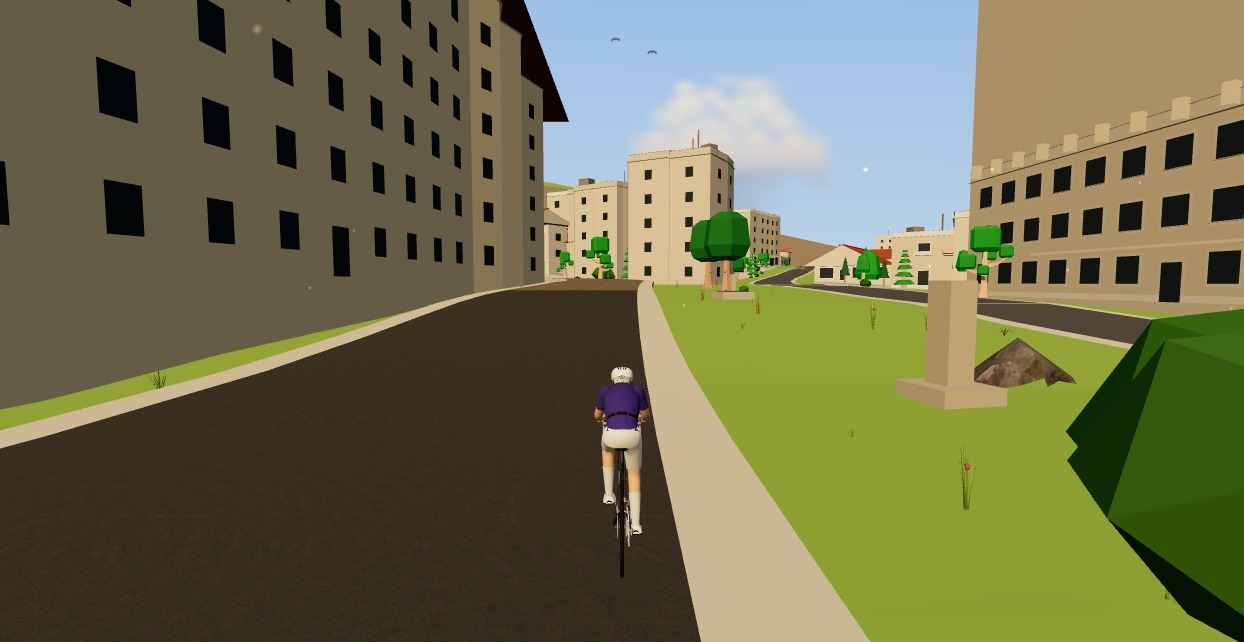
Try indoor training right now: open Moveee Indoor in your browser
No account wall, no 20-minute download before your first pedal stroke. Here's how to go from cold trainer to riding a real 3D road in about five minutes, straight from a browser tab.

Turn a dumb trainer smart with a power meter and your browser
You don't need to buy a smart trainer to train with power indoors. Here's how to turn a dumb trainer smart with a power meter (or speed sensor) and a free browser app — including how virtual power fills the gap if you have neither.
Indoor cycling on a Chromebook: the trainer apps that actually work
A Chromebook can't install Zwift — but it can still run a full trainer session. Here's how to ride indoors on Chrome OS with nothing to download, and exactly what you need.

Browser-based indoor cycling: the apps you can ride with zero downloads
Most indoor cycling apps still want you to install a small game. A handful don't. Here's the honest state of browser-based indoor training in 2026 — what runs in a tab, and how well.
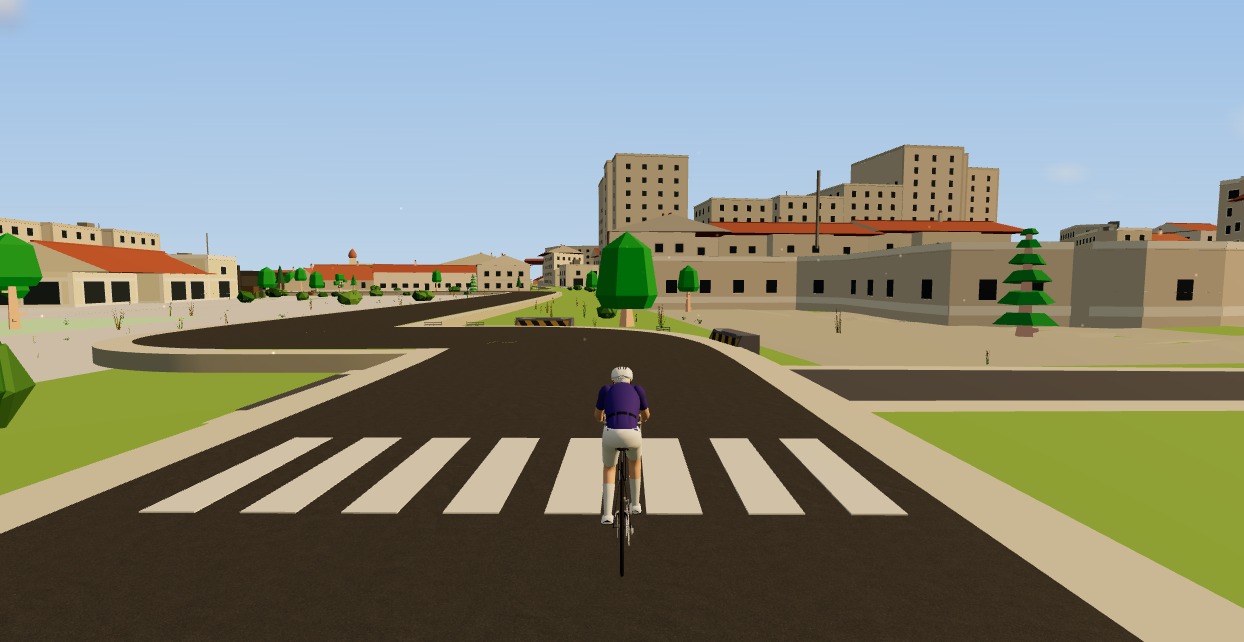
A free MyWhoosh alternative that rides your own real routes
MyWhoosh proved indoor cycling can be free. If you want a free MyWhoosh alternative that rides your own real roads instead of a fictional world — and runs in the browser with nothing to install — here's the honest comparison.

A free indoor ride in your browser: how far Moveee Indoor gets you for nothing
How much real indoor training can you get without paying a subscription or installing anything? Quite a lot, as it turns out. Here's the free browser setup, end to end.

Indoor training with heart rate only (no power meter, no problem)
No power meter, no smart trainer — just a heart-rate strap? You can still train properly. How to find your threshold heart rate with one honest 30-minute test, set five zones from it, structure a week around what HR measures well, and work around what it doesn't (lag, drift and hot rooms).