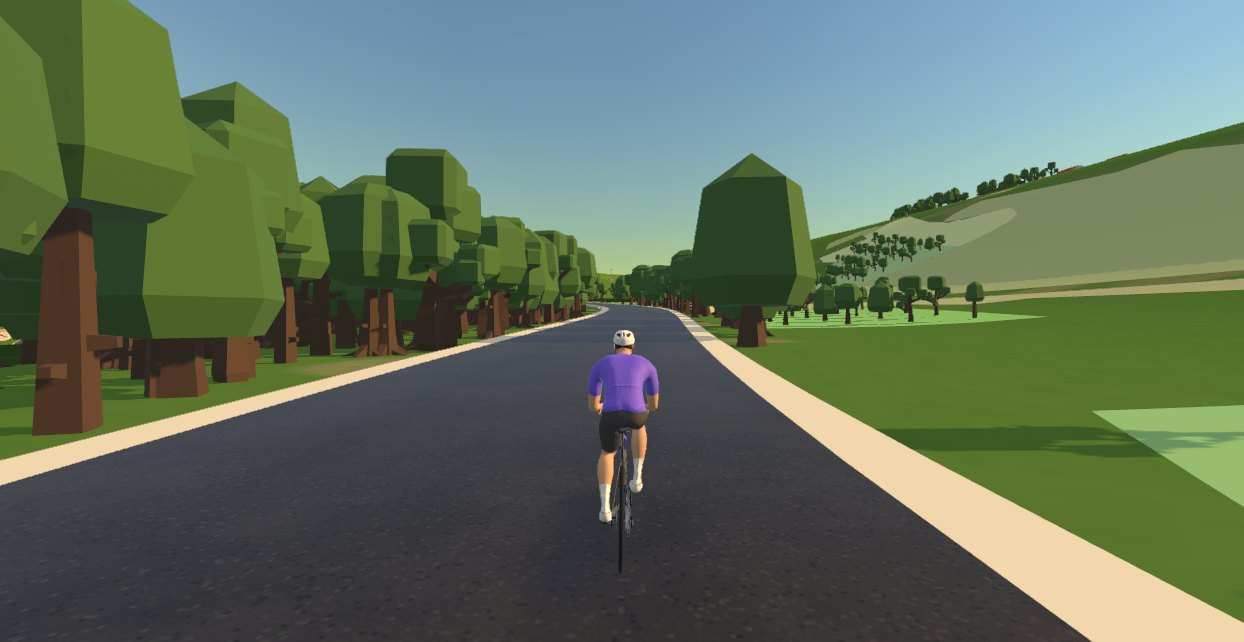
How Moveee adapts your training when you ride indoors
The Moveee team
Free coaching · a real route for every ride
Riding a planned session on the trainer instead of the road shouldn't mean guessing how to adjust it. When you take a Moveee session indoors, the plan shows you what changes, explains why, and waits for you to say yes. Here's exactly what happens.
Step by step
1. You mark it indoor
Set a session to Indoor on the plan, or open it in Moveee Indoor.
2. A card shows both versions
Original targets next to the indoor ones, with the reason in one line.
3. You choose
Use the indoor targets, take the shorter version if offered, or keep the original.
4. The session itself changes
Plan, calendar, exports and ERG in Moveee Indoor all show the same targets.
Until you answer, the session shows a small "Indoor?" marker on the plan. Nothing changes on its own.
Which targets change
Your Indoor FTP (96 % of your FTP unless you've set your own or Moveee has learned it from your rides) applies only to the hard parts of a session: blocks at sweet spot (about 84 % of FTP) and above.
| Part of the session | Indoors | Why |
|---|---|---|
| Recovery, endurance | Unchanged | Easy work isn't limited by the trainer, so it stays as planned. |
| Tempo, up to about 84 % | Unchanged | Below sweet spot, no reason to lower it. |
| Sweet spot and threshold | From your Indoor FTP | Near your limit, where the indoor gap shows. |
| VO2max, anaerobic | From your Indoor FTP | Same reason; the intervals keep their length. |
| Warm-up and cool-down | Unchanged | Only their easy parts, so nothing to adjust. |
For a rider with a 250 W FTP, 2×20 at 95 % would be 238 W outside and about 228 W indoors at 96 %. The structure, the rest between efforts and the purpose of the session stay the same. That's how most coaches handle it too: same intervals, slightly lower targets, never fewer intervals.
Why lower at all? Because the same watts feel harder on a trainer for most riders. Heat is the main reason, and ERG adds another: with no coasting and no change in terrain, the trainer gives your legs a steady load with no let-up. We went through the evidence in why riding indoors feels harder.
Long rides: a shorter option
If the session is longer than 2½ hours, the card also offers a shorter indoor version, at about 80 % of the time. A 3-hour endurance ride becomes about 2 h 25 min.
The reason is coasting. Outside, a long ride is full of descents, junctions and soft-pedalling. Indoors you pedal every minute, so less time gives a similar amount of work. Coaches commonly cut long indoor rides by 20–25 % for exactly this reason. We covered the thinking, and the "1 hour = 1.5 hours" myth, in is an hour indoors worth 90 minutes outside?
How it shortens:
- Only the steady endurance parts get shorter. Warm-up and cool-down stay, and so does every interval, whole.
- It's honestly less load. Less time is less work, so the card shows the shorter version's lower TSS.
- It's an option, not the default. Want the full three hours? Take the indoor targets at full length, or keep the original.
Changing your mind
- Back to original restores the session as it was, any time before you ride it.
- Switch to Outdoor and the original targets come back on their own.
- Keep original marks the session indoor and leaves the targets alone, if you've got a great fan and a cold garage and don't need the help.
What stays the same
Your training load stays the same. Indoor rides are scored against your Indoor FTP, so a session ridden at its indoor targets counts exactly what the plan says: same TSS, same effect on fitness and fatigue. Only the shorter long-ride version counts less, because it is less work. And your FTP stays one number; your Indoor FTP follows it, so outdoor sessions are unaffected.
Fans and room temperature
A lower target is a help, not a fix. If the room is hot and the air still, the session will still feel hard. The coach knows the research on cooling, room temperature and matching your trainer to your power meter, but it only brings it up when you ask. Ask "why does the trainer feel so much harder?" and you'll get the practical version. The long version is in fans, room temperature and power matching.
Try it on your next indoor day
Mark any sweet spot or threshold session in your Moveee plan as indoor, look at the card, and decide. Then ride it in Moveee Indoor, where ERG holds the targets you chose.
Sources 3
Where this article summarises a study, the study itself is linked — not a write-up of it.
- 1 Lipski ES, Spindler DJ, Hesselink MKC, Myers TD, Sanders D Differences in performance assessments conducted indoors and outdoors in professional cyclists · International Journal of Sports Physiology and Performance · 2022
- 2 Mieras ME, Heesch MWS, Slivka DR Physiological and psychological responses to outdoor vs. laboratory cycling · Journal of Strength and Conditioning Research · 2014
- 3 Fernandez A, Wimer GS, Culver MN, Flatt AA, Grosicki GJ Fan cooling improves submaximal exercise capacity in an indoor thermoneutral environment · Research Quarterly for Exercise and Sport · 2023
Your own roads, indoors, in a browser tab
Moveee Indoor pairs your smart trainer over Bluetooth and rebuilds a route you have saved as a 3D road — real gradients, ERG for the intervals, and the ride saved with full power data. Nothing to install. Free while it is in alpha.
Start an indoor rideKeep reading
Indoor FTP: what it is, and how Moveee sets yours
Most riders hold a little less power on the trainer. Moveee sets your Indoor FTP at 96 % of FTP, learns your own number from your rides, and never changes a session without asking.
Can you really train indoors in a browser? How Moveee Indoor works in 2026
"In the browser" used to mean toy-grade. Not any more. Here's how a browser now pairs your trainer, holds your watts and renders a real 3D world — and what still needs a native app.

From a browser tab to Strava: how Moveee Indoor runs a full trainer session
Follow one indoor ride from cold trainer to a Strava post — pairing, ERG intervals, a real 3D road, full power analysis and a one-tap upload — all without installing a thing.

Route Engine: how Moveee picks the right road for tomorrow's workout
How a planned session becomes a route from your door: the spec, the search for real climbs and flat drags near home, fresh wind-aware loops, fixed scoring weights and templated reasons, plus what it needs and what it cannot do.

How Moveee builds your training plan: what the wizard asks and why
A walk through the plan wizard, question by question: what each answer changes in the engine, how the weekly load budget is set, where hard days land, and what the wizard does not ask.

Planned vs actual: reading your Moveee calendar after a week of riding
How to read the week banners, the day cells and the four ride verdicts, how a ride is matched to a session, what the check-in does, and the honest gaps: no missed state, and verdicts only on the ride page.

Upload a lab test and let your zones come from real lactate numbers
How the Power Profile reads LT1, LT2, VO2max, FatMax and the lab's zone table out of a PDF, what it shows, and why it leaves your FTP for you to set.
From Free to Pro: what changes in your plan the day you upgrade
What Free includes, how the 14-day adaptive trial works, and exactly what switches on when you go Pro: adaptation resumes, the coach unlocks, the caps lift. Nothing is rebuilt.
Is an hour indoors worth 90 minutes outside? Indoor vs outdoor training load
The 1:1.5 rule is folklore. What no coasting really changes, why kJ and TSS compare better than hours, and how to replace a long outdoor ride on the trainer without dreading it.

Power Profile explained: how Moveee places you from sprinter to diesel
Where every number on the Power Profile page comes from: the 3–30 minute Critical Power fit, estimated FTP, thresholds and FatMax, the VO2max regression, the Power Index spider, glitch nets, and lab test uploads.

The check-in emails, and what your answers do (and don't) change
Seven check-in emails, three questions, a 30-day pause when you answer, and a clear line: the survey is read by a person and never edits your plan. The post-ride check-in is the one that does.
Indoor cycling on a Chromebook: the trainer apps that actually work
A Chromebook can't install Zwift — but it can still run a full trainer session. Here's how to ride indoors on Chrome OS with nothing to download, and exactly what you need.