The Moveee team
Free coaching · a real route for every ride
There are two ways to write about riding indoors without a power source. One is to list everything that still works and quietly skip the rest, which makes for a cheerful article and a disappointed rider three sessions later. The other is to put both columns side by side and let you decide. This is the second kind.
Everything below is specifically about riding Moveee Indoor with a wheel speed sensor and no power meter or smart trainer. If you have not set that up yet, start with riding indoors without a smart trainer; this article is the honest accounting that goes with it.
What you get
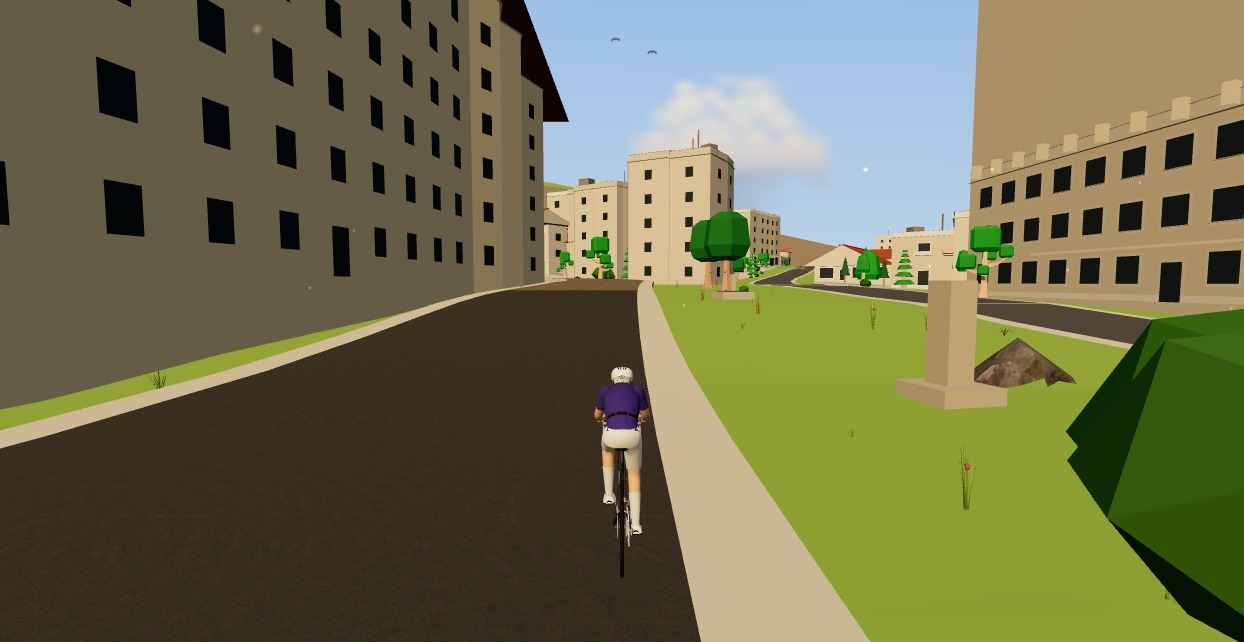
The real route, rendered
Your own routes or the library, built from real map and elevation data. The road you ride is a road that exists.
Distance, time and speed
Recorded properly and saved to your calendar, with average and maximum speed and the route profile.
Heart rate
A chest strap pairs on its own Bluetooth service, entirely separately from the speed sensor. This is your effort gauge.
Cadence, if your sensor sends it
A combined speed-and-cadence sensor gives cadence for free, and it is recorded with the ride.
It reaches Strava
The ride publishes like any other, with its route, distance and time — a speed-only session is not stranded in the app.
A ride that counts
It lands on your calendar as a real session, not a demo, and goes to Strava if you have it connected.
What you do not get
Watts — any watts
No power reading, no Normalised Power, no Intensity Factor. The readout shows a dash, not a zero, because there is nothing there to be zero.
ERG mode
ERG means the trainer holding a target wattage. A sensor cannot make your trainer do anything — it only counts wheel revolutions.
TSS, FTP and the power curve
All three are computed from power. A speed-only ride adds nothing to your power profile and cannot move your FTP estimate.
Gradient changing your speed
Your sensor's speed is the world's speed. A 9% wall does not slow you down on screen, and a descent does not run away from you.
Why there is no "virtual power"
This is the one that needs explaining, because plenty of apps do show a wattage figure from a speed sensor and it is reasonable to ask why we do not.
Virtual power works by assuming a curve. If your trainer is a specific model, set to a specific resistance level, with a specific tyre at a specific pressure, pressed against the roller with a specific number of turns of the knob, after a specific warm-up — then a given wheel speed corresponds to a given wattage, and the app can look it up. That chain of assumptions is doing enormous work. Change the tyre pressure and the number moves. Tighten the roller half a turn and it moves. Ride the first ten minutes cold and it moves, because a fluid trainer's resistance changes as the fluid warms.
None of those movements are you getting fitter or less fit, and none of them are visible to the app. So the number goes up and down for reasons that have nothing to do with your legs, while looking exactly as authoritative as a real power meter's reading. Over a winter that is worse than useless — it is a training signal that lies.
So Moveee shows a dash. It is less satisfying than a number, and it is the truth. If you want power, the fix is a power source — a power meter on the bike, or a smart trainer — and both feed real numbers into everything else the app does.
What this means for training
You can still train. Cyclists got fit for a century without power meters, and the method is not a secret: steer by heart rate and by feel, structure the session by time, and use your gears for resistance. A speed-only setup does that job perfectly well.
You cannot measure progress precisely. Progress indoors is normally measured in watts — the same session at a lower heart rate, or more watts at the same heart rate. Without watts, you have half of that: you can see your heart rate drop over weeks at what feels like the same effort, which is real evidence, but it is noisier and slower to read. Heart rate wanders with sleep, heat, caffeine and stress.
Your plan will not adapt from these rides the way it does from power rides. An adaptive plan re-tunes around measured load. A ride with no power carries no load figure, so it cannot push the plan in either direction. It is a ride that happened, and it counts as one, but it is not evidence the engine can reason over.
Indoor speed is not outdoor speed. This one catches everybody at least once, and it deserves its own explanation — we gave it one in does indoor speed mean anything?
Who this genuinely suits
Someone riding through a wet fortnight who wants to keep the legs turning. Someone testing whether indoor riding suits them before spending six hundred pounds finding out. Someone whose training is built on heart rate anyway. Someone who wants company on a dark evening, on a real route, without a hardware project first.
Who it does not suit: someone chasing a measured FTP improvement over a winter, someone whose plan is written in watts, someone who wants ERG to hold the interval so they can stop negotiating with themselves. Those all need power, and the honest answer is to say so rather than sell a sensor as a substitute.
If you are in the first group, you need about thirty pounds and an evening. If you are in the second, we wrote about when the upgrade is worth making — and the short version is that you will know, because you will start wanting a number the sensor cannot give you.
Sources 6
Where this article summarises a study, the study itself is linked — not a write-up of it.
- 1 Cycling Speed and Cadence Service 1.0 specification · Bluetooth SIG · 2012
- 2 Heart Rate Service 1.0 specification · Bluetooth SIG · 2011
- 3 McIlroy B, Passfield L, Holmberg H-C, Sperlich B Virtual Training of Endurance Cycling – A Summary of Strengths, Weaknesses, Opportunities and Threats · Frontiers in Sports and Active Living · 2021
- 4 Zadow EK, Kitic CM, Wu SSX, Smith ST, Fell JW Validity of Power Settings of the Wahoo KICKR Power Trainer · International Journal of Sports Physiology and Performance · 2016
- 5 Achten J, Jeukendrup AE Heart Rate Monitoring: Applications and Limitations · Sports Medicine · 2003
- 6 Coyle EF, González-Alonso J Cardiovascular Drift During Prolonged Exercise: New Perspectives · Exercise and Sport Sciences Reviews · 2001
Your own roads, indoors, in a browser tab
Moveee Indoor pairs your smart trainer over Bluetooth and rebuilds a route you have saved as a 3D road — real gradients, ERG for the intervals, and the ride saved with full power data. Nothing to install. Free while it is in alpha.
Start an indoor rideKeep reading

Turn a dumb trainer smart with a power meter and your browser
You don't need to buy a smart trainer to train with power indoors. Here's how to turn a dumb trainer smart with a power meter (or speed sensor) and a free browser app — including how virtual power fills the gap if you have neither.
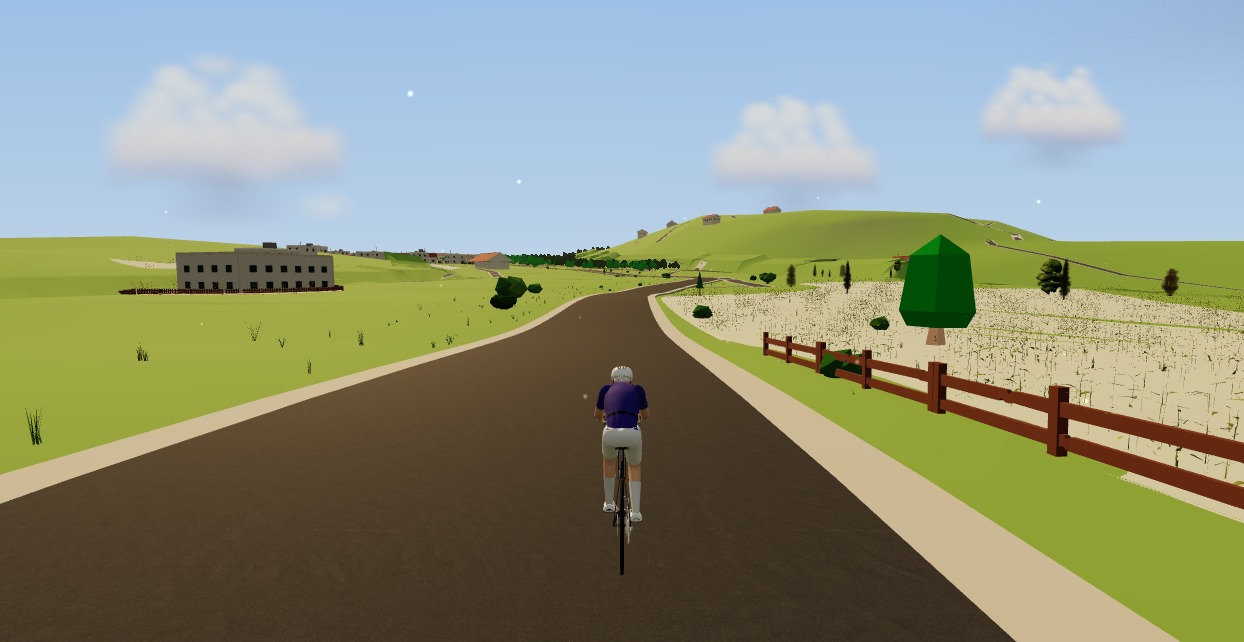
Speed sensor or smart trainer: when is the upgrade actually worth it?
Four signs you have outgrown a speed-only setup, what power actually unlocks, and three routes compared — including the one most people overlook, which is a power meter rather than a trainer. Plus the honest case for staying where you are.

How to record an indoor ride to Strava (without Zwift)
An indoor ride should count. Here's how to record an indoor ride to Strava with full power, cadence and heart-rate data — without Zwift — using a free browser app that saves the ride even if your connection drops.
How to use an indoor cycling app without a smart trainer — a speed sensor is enough
A £30 wheel speed sensor turns any dumb trainer into a real route in a 3D world, with the ride saved to your calendar. What you need, how to set it up, and the one thing about hills you should know before your first session.

Gears explained: what the numbers on your cassette mean
Tooth counts to gear ratios to speed at a cadence, why steps matter more than the number of gears, what cross-chaining costs, and how to pick a gear on a climb.

The one setting that decides if your speed is right inside the cycling app
A speed sensor counts wheel revolutions, not kilometres. Get the tyre circumference wrong and every number is wrong by the same percentage — up to 10% — while looking entirely plausible. The table, and the two-minute roll-out that beats it.
Chest strap or wrist: which heart rate reading to trust
For steady riding an optical sensor is fine. For intervals the strap still wins, and the reason is physics rather than brand quality. Where each one fails, the armband middle ground, and the dry-strap fix that stops the 180 bpm nonsense.
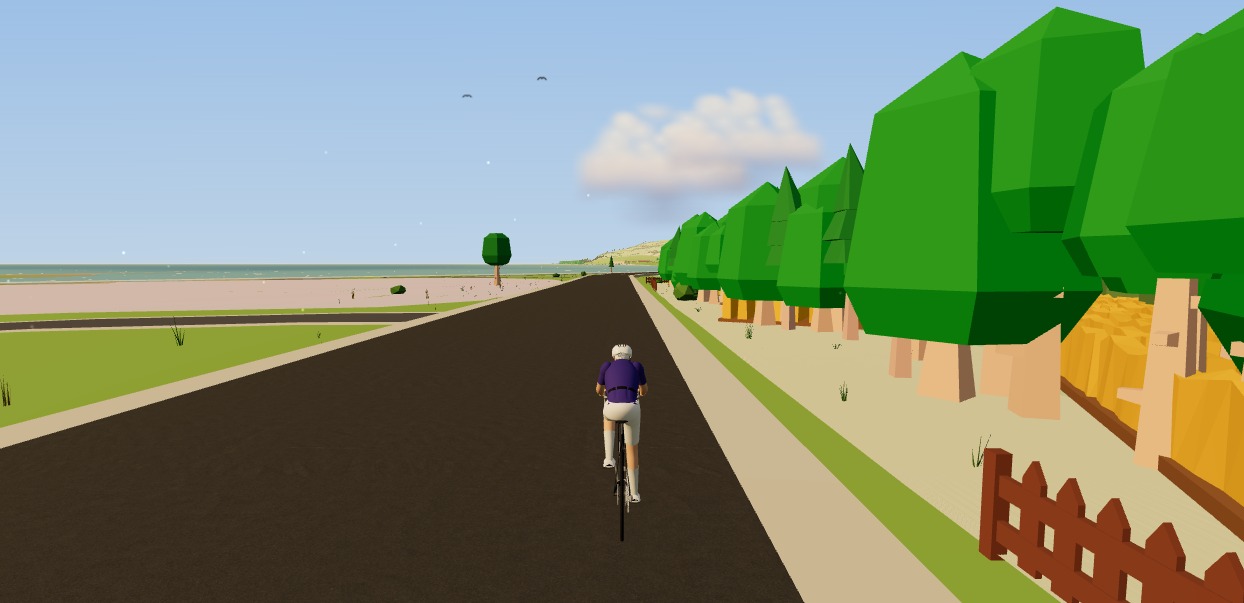
Ride, record and save: a cycling app that lives in a browser tab
A trainer ride is a serious recording — power, cadence, heart rate, the lot. Here's how a browser tab captures all of it safely, saves it even if your connection drops, and sends it to Strava.
No ERG mode? How to use your gears as the resistance dial on a dumb trainer
How to run a structured indoor session with no power and no ERG — the way everyone did it until about 2015. Four sessions that work, how to steer by heart rate despite its lag and drift, and the one caveat about your training plan.
Can you really train indoors in a browser? How Moveee Indoor works in 2026
"In the browser" used to mean toy-grade. Not any more. Here's how a browser now pairs your trainer, holds your watts and renders a real 3D world — and what still needs a native app.

No app store, no install: online cycling training with Moveee Indoor
You don't need an app store, an admin password or 12 GB free to train indoors. Here's what "online, no-install" cycling training actually looks like in practice — and who it suits.

Indoor training with heart rate only (no power meter, no problem)
No power meter, no smart trainer — just a heart-rate strap? You can still train properly. How to find your threshold heart rate with one honest 30-minute test, set five zones from it, structure a week around what HR measures well, and work around what it doesn't (lag, drift and hot rooms).