
The Moveee team
Free coaching · a real route for every ride
The most useful thing anyone can hand you about browser-based indoor cycling isn't a sales pitch — it's an honest inventory. What does the technology actually do in 2026, and where does it still fall short? Get that straight before you set up, and you'll never feel misled halfway through your first ride.
So this is an audit, not a brochure. Two clean halves: what a browser-based cycling app can genuinely do today, and what it can't do yet — with the reasons, and an honest note on which limits are waiting on browser makers and which are simply structural. We build one of these apps, and we'll point to it as the worked example rather than pretend we're neutral.
The two-minute version
If you read nothing else, read this. Green is real today; amber is the honest shortfall.
It can
- Pair a smart trainer, power meter and heart-rate strap over Bluetooth
- Render a real 3D world of your own routes from map + elevation data
- Hold ERG targets — 150+ structured workouts, or your own
- Record the ride and back it up safely as you go
- Give you full power analysis — NP, IF, TSS, best efforts, plan compliance
- Save the ride to your calendar and training plan, and to Strava in a tap
- Let you try the world with no trainer at all (Explore mode)
It can't — yet
- Run on iPhone, iPad, Safari or Firefox
- Talk to ANT+-only hardware without extra help
- Offer a big, always-on racing scene
- Work fully offline
What it can do — and how
Every capability below rests on a web technology that grew up enough to carry it. None of this is a mock-up; it's the ordinary shape of a browser-native ride in 2026.
Pair your hardware — no app, no dongle
Web Bluetooth lets the browser connect a smart trainer (FTMS), power meter (CPS) and heart-rate strap directly. The same pairing a native app does, minus the install.
Build a real 3D world
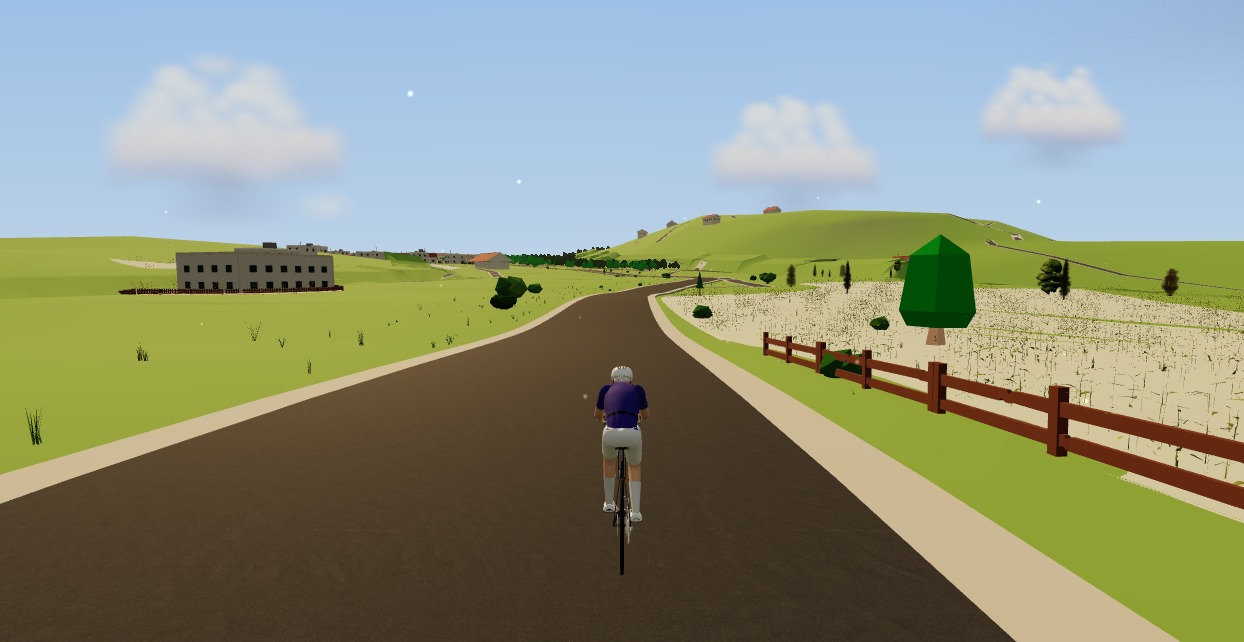
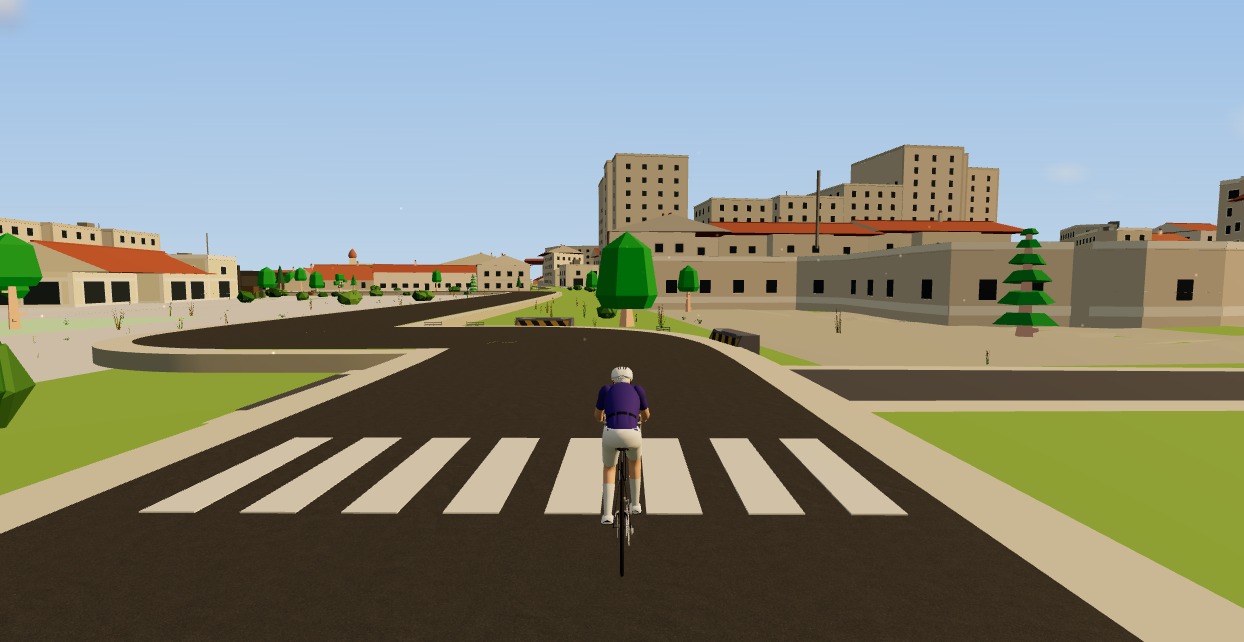
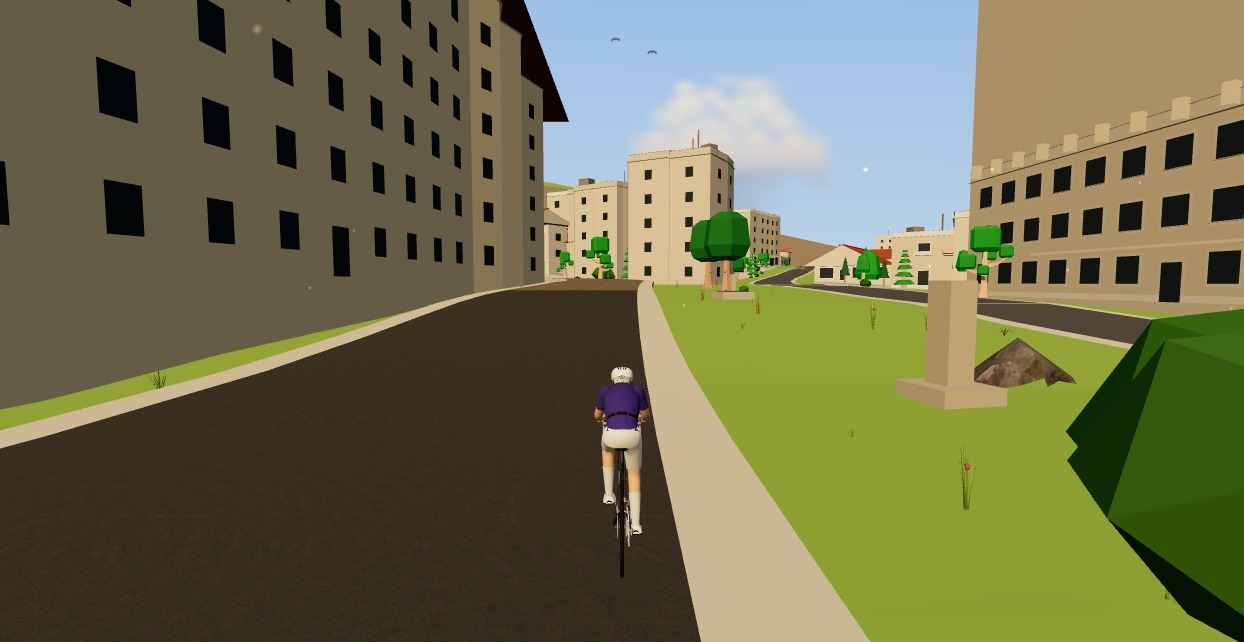
WebGL draws your own saved routes in 3D from OpenStreetMap and real elevation — the actual streets, buildings, bridges, rivers and gradients your route passes through. Not a fantasy island.
Hold watts in ERG
Pick a structured workout and the trainer locks each interval's target watts for you. Off-workout, resistance follows the road's real gradient instead — climbs bite.
Never lose the ride
A good browser app backs your recording up as you ride, so a dropped connection or an accidentally closed tab can't erase the hour you just put in.
Full post-ride analysis
Power streams, NP · IF · TSS, best efforts and plan compliance — the same numbers you'd get from an outdoor ride, not a stripped-down summary.
Pair any gear, no dongle
Smart trainers, power meters and heart-rate straps connect over Web Bluetooth straight from the page. Nothing to plug in, nothing to install.
What it can't do — yet
Now the shortfalls, told straight. Two of these are waiting on browser makers or on a product growing up; two are structural and won't change with a browser update. Knowing which is which saves you a lot of misplaced hope.
iOS, Safari and Firefox
Waiting on browsersPairing needs Web Bluetooth, which Safari and Firefox haven't shipped and iOS doesn't expose at all. So no iPhone or iPad, and no Safari/Firefox on the desktop. Any Chromium browser — Chrome or Edge on Windows, macOS, Linux or Android — is fine. There is no native iOS app to fall back to.
ANT+-only gear
StructuralThe web speaks Bluetooth, not ANT+. Most trainers of the last decade broadcast both, so this rarely bites — but if yours is ANT+-only, a browser can't reach it without a Bluetooth bridge.
A big racing scene
Young productMass-participation racing lives or dies on population — thousands online at once. That's the hardest thing to build, and a young browser-native app simply doesn't have it yet.
Full offline riding
StructuralThe world streams in as you ride, so a live connection is part of the deal. A garage with no Wi-Fi is where a downloaded native app still has the edge.
That iOS line is the one people trip on most, so it's worth repeating plainly: there is no native app hiding behind the browser version. If your setup is an iPhone or iPad, browser-native indoor cycling isn't for you today — full stop. On the flip side, if you've a Chromebook or a Linux box gathering dust, it works there just as well as on Windows or a Mac. We dug into that spread in our piece on indoor cycling on any device with a browser.

The working example
Everything in the "can" column is drawn from Moveee Indoor, which is our own product — declared, so you can weigh what we say accordingly. It runs the whole ride in Chrome or Edge: pair over Bluetooth, ride your real routes rebuilt in 3D, hold watts in ERG, and finish with a session that backs itself up as you go, lands on your calendar, counts toward your Moveee plan and reaches Strava in a tap. If the very first step — getting your trainer talking to a browser — is what you're unsure about, our short guide to connecting a smart trainer in the browser walks the pairing through.
And everything in the "can't" column is true of it too: Chrome or Edge only, no iOS, no racing scene yet, a live connection required. It's free while in alpha precisely because it's young enough to still have those edges.
The honest bottom line
A browser-based cycling app in 2026 can pair your gear, build a real world from your own roads, hold your intervals, protect your ride and file it into your training — the whole loop, in a tab. What it can't yet do is reach an iPhone, speak ANT+ on its own, fill a start line, or ride with the Wi-Fi off. If none of those four is a dealbreaker for you — and for a great many riders, none of them is — then the honest answer is that browser-native already does everything you need.
The only real test is clipping in. Moveee Indoor is free while in alpha, runs in your browser, and asks nothing more than Chrome or Edge and twenty minutes. Try it against this list, and hold it to every line.
Sources 9
Where this article summarises a study, the study itself is linked — not a write-up of it.
- 1 Web Bluetooth (Draft Community Group Report) · W3C Web Bluetooth Community Group · 2024
- 2 Web Bluetooth — standards position: oppose (issue #570) · WebKit standards-positions · 2024
- 3 Web Bluetooth — standards position: harmful (issue #95) · Mozilla standards-positions · 2019
- 4 Fitness Machine Service 1.0 · Bluetooth SIG · 2017
- 5 Cycling Power Service 1.1 · Bluetooth SIG · 2016
- 6 ANT+ Basics · ANT+ Alliance (Garmin Canada) · 2024
- 7 WebGL Overview · The Khronos Group · 2024
- 8 About OpenStreetMap · OpenStreetMap Foundation · 2024
- 9 Copernicus DEM – Global and European Digital Elevation Model · Copernicus Data Space Ecosystem (ESA) · 2024
Your own roads, indoors, in a browser tab
Moveee Indoor pairs your smart trainer over Bluetooth and rebuilds a route you have saved as a 3D road — real gradients, ERG for the intervals, and the ride saved with full power data. Nothing to install. Free while it is in alpha.
Start an indoor rideKeep reading

Browser vs installed app: why riding indoors shouldn't need a 12 GB download
Installed apps still win on a couple of things — but fewer than you'd think. Here's an honest head-to-head between browser-native and installed indoor cycling, feature by feature.
Can you really train indoors in a browser? How Moveee Indoor works in 2026
"In the browser" used to mean toy-grade. Not any more. Here's how a browser now pairs your trainer, holds your watts and renders a real 3D world — and what still needs a native app.

Browser-based indoor cycling: the apps you can ride with zero downloads
Most indoor cycling apps still want you to install a small game. A handful don't. Here's the honest state of browser-based indoor training in 2026 — what runs in a tab, and how well.

Indoor cycling on a Chromebook: the trainer apps that actually work
A Chromebook can't install Zwift — but it can still run a full trainer session. Here's how to ride indoors on Chrome OS with nothing to download, and exactly what you need.

How to record an indoor ride to Strava (without Zwift)
An indoor ride should count. Here's how to record an indoor ride to Strava with full power, cadence and heart-rate data — without Zwift — using a free browser app that saves the ride even if your connection drops.
The best free smart trainer app with no subscription
You bought the smart trainer. Paying a monthly subscription to use it stings. Here's how far a free smart trainer app with no subscription gets you in 2026 — real workouts, ERG, a 3D world and Strava — and where the paid apps still pull ahead.
From a browser tab to Strava: how Moveee Indoor runs a full trainer session
Follow one indoor ride from cold trainer to a Strava post — pairing, ERG intervals, a real 3D road, full power analysis and a one-tap upload — all without installing a thing.
A Rouvy alternative for riding real roads indoors
Rouvy put real roads on the trainer with video. If you want a Rouvy alternative that rebuilds real roads in 3D from map data — including your own routes — and runs free in the browser, here's how the two approaches compare.
A free MyWhoosh alternative that rides your own real routes
MyWhoosh proved indoor cycling can be free. If you want a free MyWhoosh alternative that rides your own real roads instead of a fictional world — and runs in the browser with nothing to install — here's the honest comparison.
The best indoor cycling app for Mac (no download, runs in your browser)
Looking for an indoor cycling app for Mac that doesn't need a download? macOS runs a full smart-trainer session straight from a browser tab — pairing, ERG, real 3D roads and a Strava upload. Here's how, and the one thing to watch on Apple Silicon.

A free app for the Zwift Hub and Zwift Ride (yes, without Zwift)
Zwift's own trainers speak the same standard Bluetooth as everyone else's — which means a Zwift Hub or Zwift Ride works perfectly well without a Zwift subscription. How to pair Zwift hardware with a free browser app, what works (ERG, resistance, power), and the honest caveats around buttons and firmware.
Training young riders: the principles worth holding
The area of cycling where confident advice does the most damage. Three broad stages, four things to get right, and why the only goal that matters is whether they still want to ride at 25.