
The Moveee team
Free coaching · a real route for every ride
Most articles about the benefits of cycling read like a supplement advert — a wall of percentages, each more impressive than the last, most of them lifted from a single study and stripped of context. This isn't that.
What follows is the honest version: what riding a bike regularly genuinely does for you, where the evidence is strong, where it's softer, and — more usefully — how to actually start if you're not already riding.
Cycling's real advantage over most exercise isn't that it's uniquely potent — it's that it's joint-friendly, scalable and genuinely enjoyable, so people keep doing it for decades. The health benefits of exercise accrue to the activity you sustain, not the one that looks best on paper. That's the whole argument.
What regular riding does for you
Cardiovascular health
Regular aerobic exercise is one of the most consistently supported interventions in all of medicine for heart and circulatory health. Cycling delivers it in a form most people will actually keep doing.
Joint-friendly by design
Your body weight is carried by the saddle, not by your knees and ankles. That makes cycling one of the few high-volume aerobic activities available to people who can't run.
Weight management
Sustainable energy expenditure you can scale from 20 minutes to five hours. Best understood as one half of the equation — the kitchen is the other.
Mental health
Time outdoors, rhythmic exercise and a break from screens. Many riders describe this as the single biggest reason they keep going out, and exercise's link to mood is well established.
Metabolic health
Regular aerobic activity supports how your body handles blood sugar and is a mainstay of general public-health advice.
Muscular endurance
Legs, glutes and trunk work continuously for hours. Pair it with a little resistance training and you cover most of the bases — cycling alone won't build bone density.
Sleep quality
Consistent daytime exercise is widely associated with falling asleep faster and sleeping more deeply — which in turn makes the riding better.
It replaces car journeys
The commute is the great cheat code: exercise that costs no extra time, happens automatically, and quietly accumulates hours per week.
General information, not medical advice. If you have an existing condition or haven't exercised in a long time, have a word with your doctor before starting something new.

Two honest caveats
Any article claiming cycling is perfect is selling something. Two genuine limitations worth knowing:
- It's not weight-bearing, so it doesn't build bone. This is a real issue — cyclists as a group are known to be at elevated risk of low bone density, precisely because the saddle carries your weight. The fix is straightforward: some resistance training, twice a week, year round.
- It's a narrow, repetitive movement pattern. Hours in one position shortens hip flexors, stiffens the thoracic spine and neglects the upper body. Ten minutes of stretching and mobility after rides covers most of it.
How much do you actually need?
Public-health guidance for adults generally lands around 150 minutes of moderate activity per week — which, in cycling terms, is three fifty-minute rides, or a half-hour commute each way three days a week. That's the level associated with most of the general health return.
Beyond that you're into training rather than health: more will make you fitter and faster, but the big health dividend is captured in those first few hours a week. Which is genuinely good news — the bar is much lower than most people assume.
If you're starting from zero
Start with 20–30 minutes
Three times a week. Short and repeatable beats ambitious and abandoned.
Ride easy enough to talk
If you can't hold a conversation, you're going too hard for a first month. Almost everyone starts too hard.
Get the saddle height right
The single biggest cause of knee pain and early discouragement in new riders. A shop will set it in ten minutes.
Use the bike for something
Commuting, the shops, meeting a friend for coffee. Purpose beats discipline every time.
Build time before intensity
Add minutes for the first two months. Worry about going fast in month three.
If you want a structured version of exactly that, our zero to your first 100 km roadmap takes a complete beginner from short spins to a confident century.

The thing that decides all of it
Every benefit on this page depends on one variable: whether you're still riding in two years. Not how hard you rode this Tuesday.
That's why the practical advice is so unglamorous — ride somewhere you like, at a pace you enjoy, with people whose company you want, and remove the obstacles that stop you. Weather and darkness are the two biggest obstacles for most people, which is where indoor riding earns its place: Moveee Indoor turns a wet January evening into a browser tab and one of your own real routes rendered in 3D, so the habit survives the months that usually break it. Free while in alpha, nothing to install.
And if you'd like the riding to have some shape to it, Moveee builds a plan around the days you can actually ride — with a real route for every one of them. Also free. But honestly, the most important step is just getting the bike out of the shed on Saturday.
Sources 6
Where this article summarises a study, the study itself is linked — not a write-up of it.
- 1 Bull FC, Al-Ansari SS, Biddle S, et al. World Health Organization 2020 guidelines on physical activity and sedentary behaviour · British Journal of Sports Medicine · 2020
- 2 Oja P, Titze S, Bauman A, et al. Health benefits of cycling: a systematic review · Scandinavian Journal of Medicine & Science in Sports · 2011
- 3 Celis-Morales CA, Lyall DM, Welsh P, et al. Association between active commuting and incident cardiovascular disease, cancer, and mortality: prospective cohort study · BMJ · 2017
- 4 Olmedillas H, González-Agüero A, Moreno LA, Casajus JA, Vicente-Rodríguez G Cycling and bone health: a systematic review · BMC Medicine · 2012
- 5 Schuch FB, Vancampfort D, Firth J, et al. Physical Activity and Incident Depression: A Meta-Analysis of Prospective Cohort Studies · American Journal of Psychiatry · 2018
- 6 Kredlow MA, Capozzoli MC, Hearon BA, Calkins AW, Otto MW The effects of physical activity on sleep: a meta-analytic review · Journal of Behavioral Medicine · 2015
See this in your own numbers
Moveee builds your power curve, fitness and fatigue from every ride you upload, and writes a training plan around them. It is free, it takes one Strava connection, and it will tell you more about your riding in a week than any article can.
Start freeKeep reading

Can cycling actually help you lose weight? An honest look
Riding creates the opportunity for a deficit — it doesn't create the deficit. Here's roughly what you burn, why long and easy beats short and brutal, and the traps that catch almost everyone.

A free app for Saris and JetBlack trainers (in your browser)
A Saris H3 or a JetBlack Volt doesn't need a subscription to earn its keep — both brands speak standard Bluetooth FTMS, so a browser tab can control resistance, hold ERG targets and record the ride. Model-by-model support, pairing steps, and the honest caveats for older wheel-on units.

How to use your Wahoo KICKR without Zwift (a free browser app)
Your Wahoo KICKR doesn't need Zwift — or any subscription — to give you a proper session. Here's how to use a KICKR (or KICKR Core, Snap and Move) with a free browser app that controls resistance, holds ERG targets and saves to Strava.

A free app for the Zwift Hub and Zwift Ride (yes, without Zwift)
Zwift's own trainers speak the same standard Bluetooth as everyone else's — which means a Zwift Hub or Zwift Ride works perfectly well without a Zwift subscription. How to pair Zwift hardware with a free browser app, what works (ERG, resistance, power), and the honest caveats around buttons and firmware.

Clipless pedals: how to start without falling over at the lights
Which system to start on, how to set cleat position and float so your knees track straight, and a grass-first drill that makes unclipping a reflex before you need it.
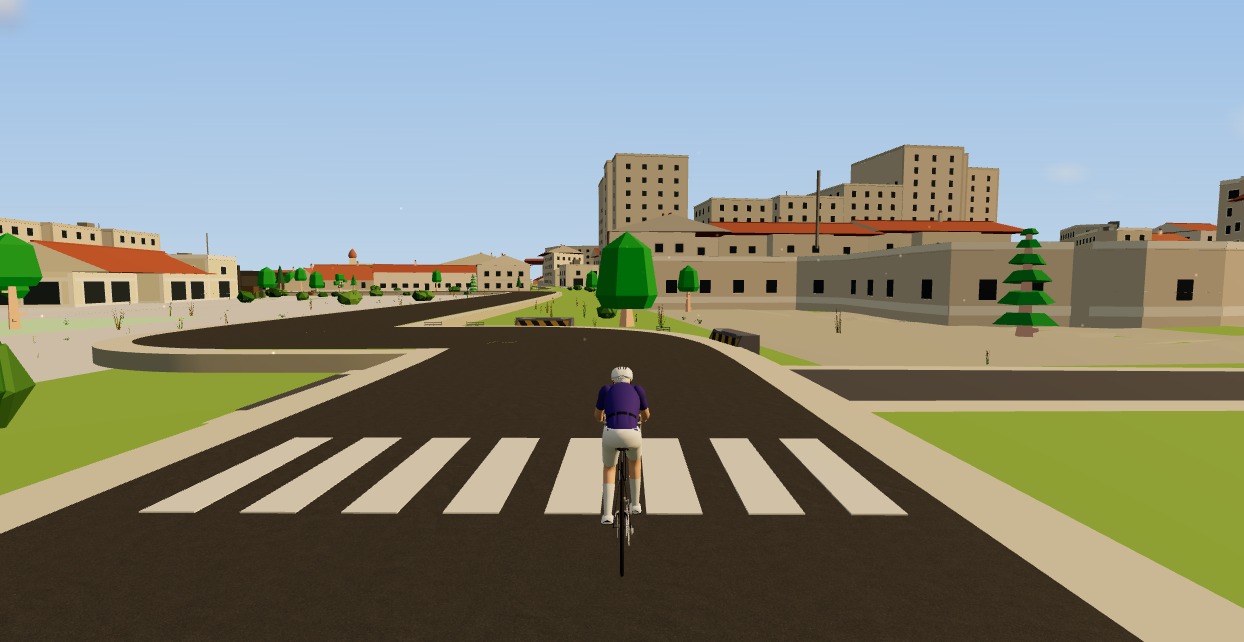
No ERG mode? How to use your gears as the resistance dial on a dumb trainer
How to run a structured indoor session with no power and no ERG — the way everyone did it until about 2015. Four sessions that work, how to steer by heart rate despite its lag and drift, and the one caveat about your training plan.
A free indoor ride in your browser: how far Moveee Indoor gets you for nothing
How much real indoor training can you get without paying a subscription or installing anything? Quite a lot, as it turns out. Here's the free browser setup, end to end.
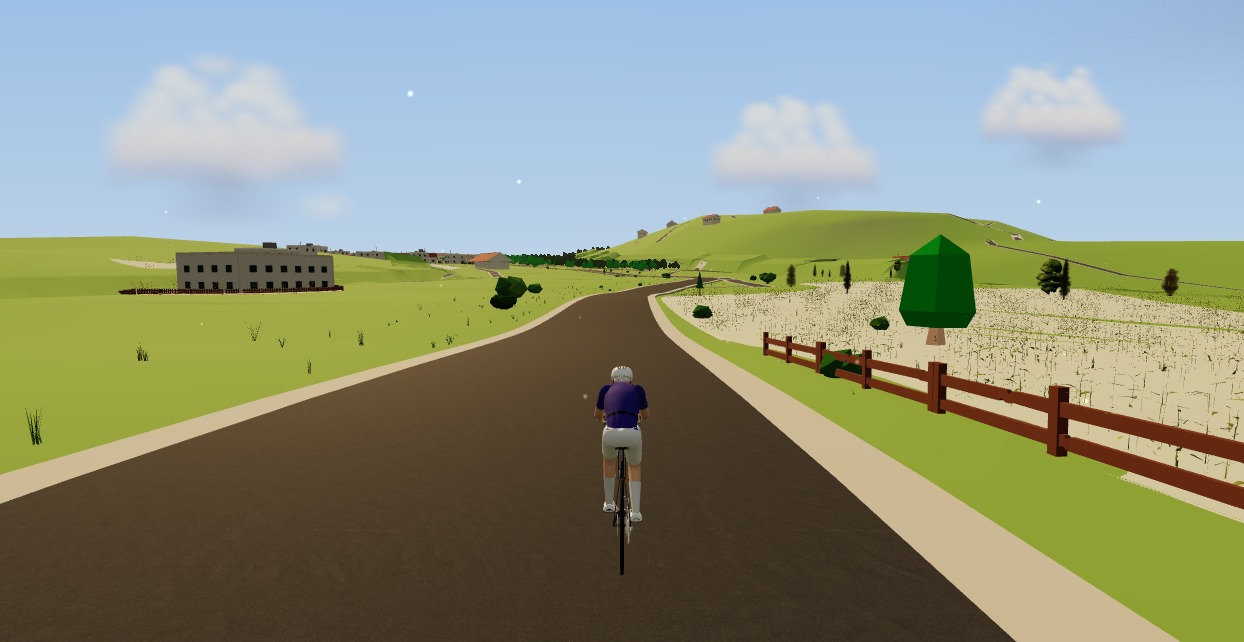
How to use an indoor cycling app without a smart trainer — a speed sensor is enough
A £30 wheel speed sensor turns any dumb trainer into a real route in a 3D world, with the ride saved to your calendar. What you need, how to set it up, and the one thing about hills you should know before your first session.
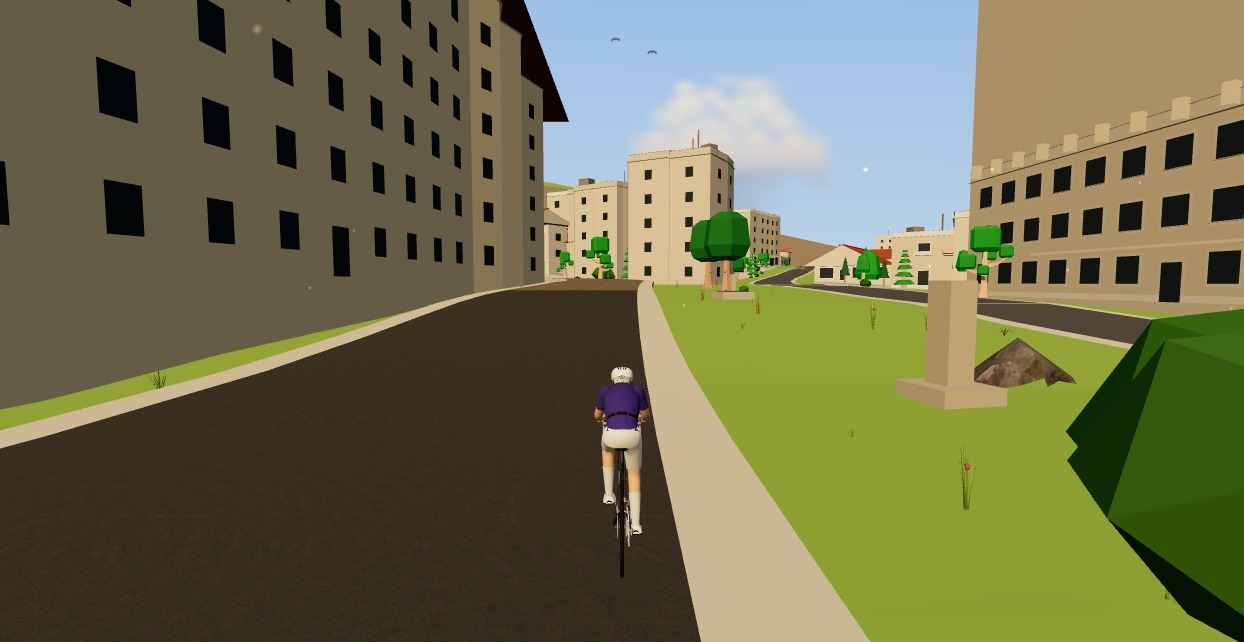
Try indoor training right now: open Moveee Indoor in your browser
No account wall, no 20-minute download before your first pedal stroke. Here's how to go from cold trainer to riding a real 3D road in about five minutes, straight from a browser tab.

A free app for Elite smart trainers (in your browser)
Own an Elite Suito, Direto or Justo? You don't need a subscription to ride it properly. Here's a free app for Elite smart trainers that runs in your browser — FE-C/FTMS control, ERG intervals, real 3D roads and a Strava upload.
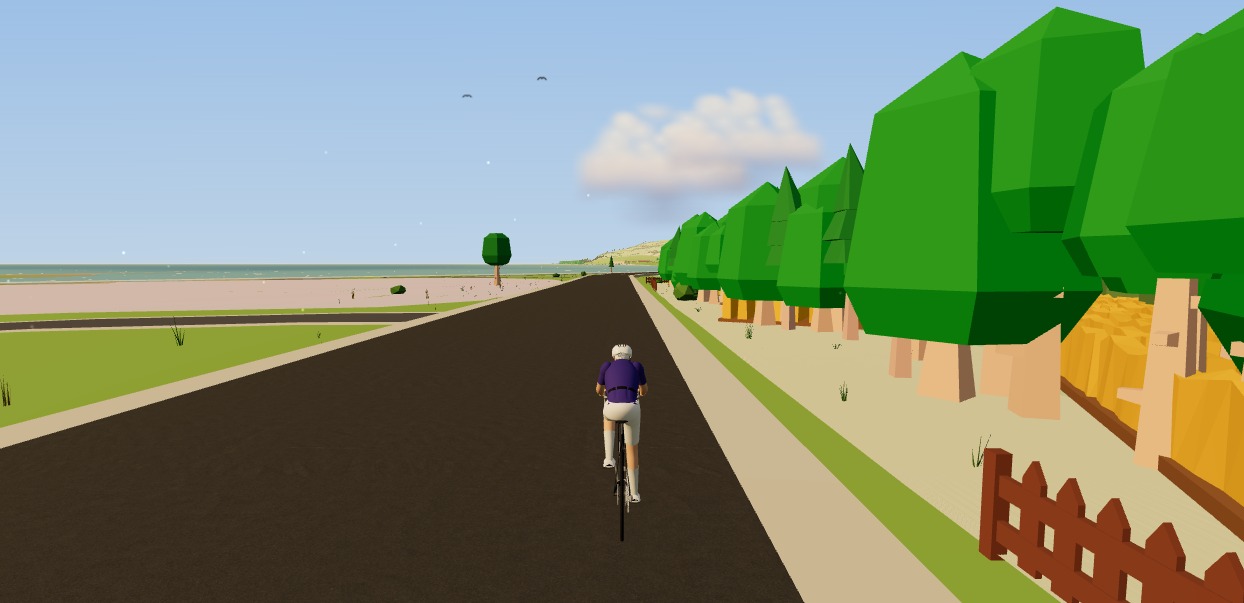
The cycling trainer app that runs entirely in your browser
No launcher, no updates, no disk space — just a tab, your smart trainer and the road. Here's what a browser-native trainer app can do in 2026, and the honest limits of the approach.

Cycling and alcohol: what one beer actually costs you
Alcohol interferes with glycogen storage, muscle repair and — most reliably of all — sleep. An honest look at what the evidence supports, where the dose stops mattering much, and where it really doesn't.